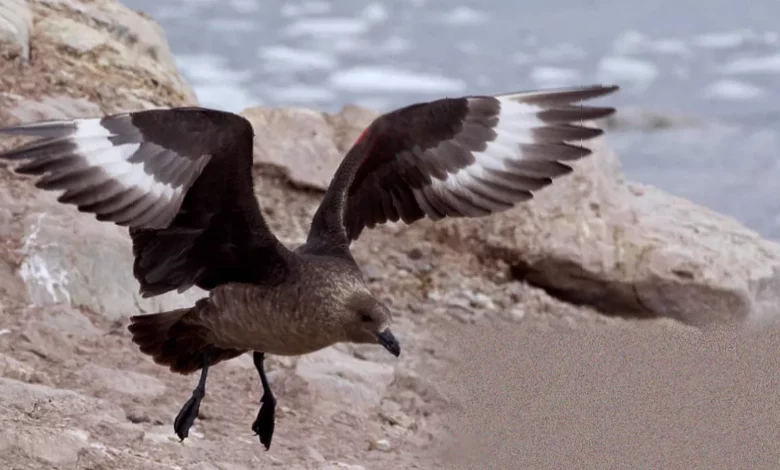
Australia is no longer free of the deadly H5 bird flu virus, after a wild migratory seabird tested positive for the highly pathogenic strain on the mainland for the first time.
Federal Agriculture Minister Julie Collins confirmed this weekend that a brown skua found sick in a national park near Esperance, Western Australia, had died from the H5N1 virus. The bird was discovered on 14 June 2026 and subsequent testing at CSIRO’s Australian Centre for Disease Preparedness (ACDP) confirmed the presence of H5 high pathogenicity avian influenza. A second bird, a giant petrel found sick nearby on 18 June, has also tested positive for H5 avian influenza and is under quarantine while confirmatory testing is completed.
Australia’s biosecurity challenge
The confirmation marks the end of Australia’s status as the only continent free of the virus on its mainland. The country’s previous outbreaks of avian influenza in poultry were caused by different strains – mainly H7 viruses of local or domestic origin – and there have been 13 outbreaks of high pathogenicity H5 bird flu on Australian poultry farms since 1976, but all involved distinct strains unrelated to the current global lineage. The arrival of H5N1 clade 2.3.4.4b – the strain driving the worldwide pandemic since 2020–2021 – is therefore unprecedented for Australia.
The brown skua and giant petrel are migratory seabird species that occasionally visit southern Australian waters. The brown skua breeds in the subantarctic and was found in a remote, isolated part of the national park. Experts have expressed significant concern about the potential impact on Australia’s unique native wildlife, particularly seabirds, shorebirds and marine mammals, some of which are endangered. The virus has already demonstrated the ability to infect at least 48 mammal species globally, raising fears for Australian sea lions and other marine life. In late 2025, H5N1 was confirmed on Heard Island, an Australian territory in the sub-Antarctic geographically close to Western Australia, where mass mortality has been observed in sea lions, penguins and other wildlife.
The poultry industry is also at risk, with backyard and free-range flocks more exposed to wild birds. Vaccination is not currently permitted in domestic poultry in Australia. The Australian Government has invested more than $113 million to strengthen preparedness, established a dedicated taskforce in 2024, and tightened biosecurity measures along coastlines, including intensified monitoring and emergency response simulations. The Department of Agriculture, Fisheries and Forestry is coordinating the national response.
For the public, the Australian Centre for Disease Control advises that H5 bird flu presents a low health risk, as human infections are rare and occur only through direct, close contact with infected birds. There is no evidence of human-to-human transmission. Eggs and poultry meat are considered safe to eat if handled and cooked correctly.
A global pandemic in birds
The H5N1 virus was first identified in domestic waterfowl in southern China in 1996 and began spreading widely in 2003, carried by wild birds to Africa, the Middle East and Europe by 2005. The current global outbreak, driven by the highly adaptable clade 2.3.4.4b, emerged around 2020–2021 and has since caused mass mortality in more than 485 bird species worldwide, as well as severe die-offs in marine mammals such as seals and sea lions in South America, and smaller epidemics in seals in North America and Europe. Millions of wild birds and thousands of marine mammals have perished.
Wild bird migration is the primary driver of this global spread, and the brown skua and giant petrel are migratory species that connect distant regions. The virus is fast-mutating, and its increasing ability to infect mammals – including marine mammals – has heightened concern for species like Australia’s endemic sea lions. A national wild bird surveillance program coordinated by Wildlife Health Australia is in place, and the public is urged to report any sick or dead birds or animals showing signs of bird flu to the Emergency Animal Disease Hotline on 1800 675 888.
Samples from the giant petrel are still undergoing confirmatory testing at the CSIRO facility, with results awaited as the country grapples with this new incursion.