US military capabilities must match those of its allies for the relationship to be meaningful, Donald Trump’s war secretary has declared, warning that Washington will no longer tolerate “freeloading” by wealthy nations.
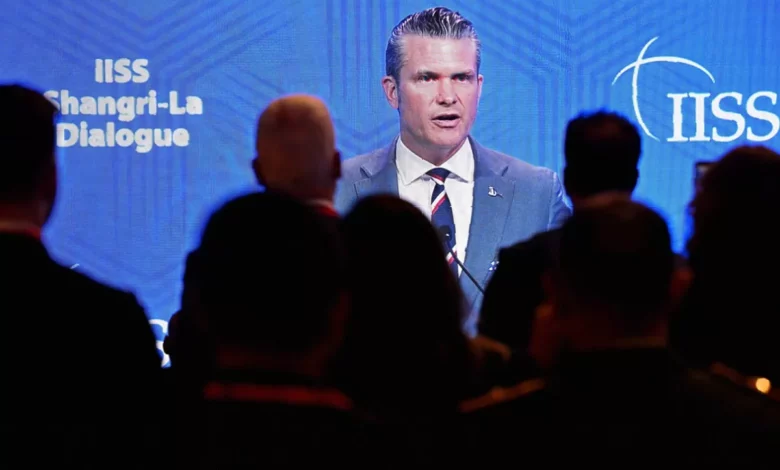
Speaking at the Shangri‑La Dialogue in Singapore – Asia’s annual defence and security forum, organised by the London think‑tank the International Institute for Strategic Studies – Pete Hegseth delivered a blunt message: “You can’t just say, ‘Oh, we’ve been friends for a long time, so let’s work together.’ It’s: ‘We’ve been friends for a long time, so you better have the same capabilities we do, because if we don’t, our alliance is meaningless.’”
Hegseth, who serves as US defence secretary, stressed that “model allies” who comply with American demands will be moved to “the front of the line” for closer ties. In return, he promised them “expedited arms sales, deep industrial base collaboration, expanded intelligence sharing – the list goes on, the benefits [are] many”. Those deemed to be “free riding on the generosity of the American taxpayer” would face a sharp reversal, he added: “The era of the United States subsidising the defence of wealthy nations is over.”
He singled out South Korea, Japan and Vietnam as countries that have stepped up their military capabilities and would therefore receive preferential treatment. The warning comes as the Trump administration increasingly presses European allies – particularly the United Kingdom – to raise defence spending and align their armed forces more closely with US standards.
What capabilities does the US demand?
Hegseth was explicit about the condition for a meaningful alliance: allies must “lock arms and shields” with America, matching its military capabilities. He said he had been “probably the most blunt with our closest friends about what our capabilities are and where they need to be”, referring to conversations with UK Defence Secretary John Healey and Australian Defence Minister Richard Marles.
While the speech did not lay out a detailed checklist, the demand is understood to cover both equipment and industrial capacity. The AUKUS partnership – the trilateral pact between the UK, US and Australia – is seen as a model for deep collaboration on advanced defence technologies, including uncrewed underwater vehicles. Hegseth’s language about “deep industrial base collaboration” signals that allies must not only buy American hardware but also integrate their own defence industries with Washington’s supply chains. Countries such as South Korea, Japan and Vietnam have been praised for expanding their arsenals and modernising their forces, giving them priority access to US arms sales and intelligence.
He told the conference, which included Healey and other defence ministers, that “allies who refuse to step up and carry their own weight for our collective defence will face a clear shift in how we do business”. Hegseth has also previously used a written statement to Congress to brand the failure of allies to support the US military offensive against Iran as “unconscionable”, adding: “We will remember.”
UK defence spending under scrutiny
The warnings have landed heavily in London, where the government is already under pressure over its long‑term defence spending commitments. Prime Minister Sir Keir Starmer has pledged to increase total spending on “national security” to 5 per cent of gross domestic product by 2035, with 3.5 per cent of GDP allocated to “core defence”. That target aligns with new NATO benchmarks, but the UK has also set interim goals: 2.5 per cent of GDP by 2027 (brought forward from the previous Conservative government’s 2030 deadline), and a broader 2.6 per cent figure that includes additional security and intelligence spending. Starmer has separately spoken of reaching 3 per cent of GDP by 2030.
However, the publication of the Defence Investment Plan (DIP), which is meant to set out spending priorities over the next decade, has been repeatedly delayed. Originally expected in autumn 2025, it has still not been released – a hold‑up that industry groups warn is causing companies to “bleed cash” and forcing some small‑ and medium‑sized enterprises to leave the defence sector altogether. Reports suggest a funding gap of around £28 billion in the existing plans, and the exact details of the spending uplift have not been agreed by the Treasury. There have been reports of Cabinet splits between the Treasury and the Ministry of Defence over the plan.
Pensions minister Torsten Bell said on Friday that the plan will be set out “when it’s ready”, while the Conservative Party is seeking to force a vote on an amendment to the Armed Forces Bill that would require Defence Secretary John Healey to lay the DIP before both Houses of Parliament within a month of the legislation receiving Royal Assent. The Tories have also proposed increasing defence spending to 3 per cent of GDP by the end of the current parliament and outlined a £50 billion Sovereign Defence Fund.
Lord George Robertson, a former Labour defence secretary and one of the authors of the Strategic Defence Review, used a lecture last month to accuse the government of “corrosive complacency” and to claim that the prime minister is unwilling to “make the necessary investment”. Robertson suggested that defence spending should not come at the expense of the welfare budget, while other voices, such as former Labour shadow chancellor John McDonnell, have argued against escalating military spending, calling it often “misspent and wasted”.
Marles, the Australian defence minister, has indicated that his country’s defence spending is around 2.8 per cent of GDP – a figure he compared favourably with NATO standards. Healey, for his part, has said the government is “working flat out to settle the defence investment plan” and has argued that increased defence investment can keep manufacturing and jobs within Britain. The pressure from Washington shows no sign of easing: Trump has repeatedly accused the UK and other European allies of not spending enough, and the breakdown in relations has been compounded by the prime minister’s perceived failure to stand by America in its conflict with Iran.