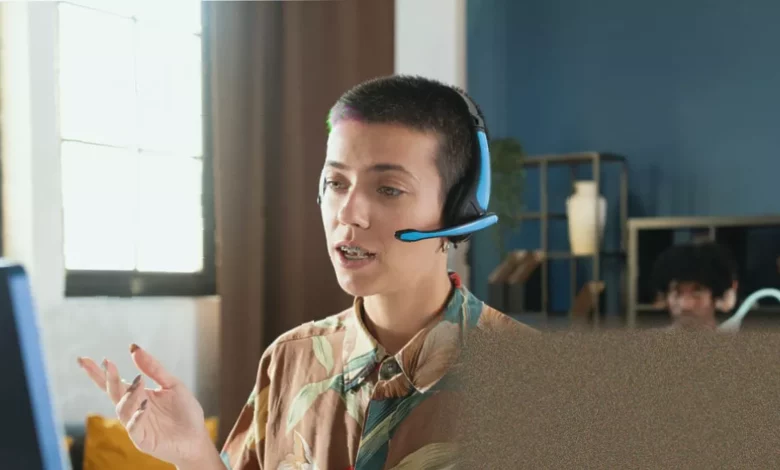
Reid Hoffman, the co-founder of LinkedIn, Manas AI and Inflection AI, has declared himself “voicepilled” — a term he coined to describe the moment of clarity that comes from using your voice to interact with technology. In a LinkedIn post last autumn, Hoffman wrote: “Being ‘voicepilled’ is that moment of realization that once you start seriously using your voice to interact with technology, you unlock a new way to amplify your ability.” The phrase deliberately echoes the red-pill/blue-pill choice in The Matrix, suggesting that adopting voice interaction is a kind of awakening.
The voicepilled revelation
At its core, the concept is simple: humans speak far faster than they type. Average speaking speed is around 120 to 150 words per minute, while typing typically manages only 40 words per minute. The productivity gains are significant — some estimates suggest users can save up to 145 hours a year by dictating instead of typing. Hoffman’s post pointed to products such as Wispr and ChatGPT Voice as examples of tools that deliver on this promise. “If you use products like Wispr or ChatGPT Voice, you know what I mean,” he wrote.
The term “voicepilled” captures a deeper shift in mindset. Traditional dictation tools often frustrated users with poor accuracy, forcing them to spend time correcting errors. But modern AI-powered voice dictation has advanced considerably. Tools such as Wispr Flow, Aqua Voice, TalkTastic, Typeless and Superwhisper now operate with near-instantaneous latency — Wispr Flow claims around 500 milliseconds — and actively clean up speech in real time. They remove filler words like “um” and “uh”, eliminate repetitions, add punctuation and formatting automatically, and understand corrections made mid-sentence. Some tools can adapt their tone and style based on the application being used, switching seamlessly between formal emails and casual chats. Multilingual support now covers more than 100 languages, and offline functionality is available for privacy-conscious users.
How the technology works
Wispr Flow, described as an “AI voice keyboard”, inserts polished text directly into emails, chats and documents across Mac, Windows and iOS, and carries enterprise-grade security certifications. Typeless claims to turn natural speech into polished messages up to four times faster than typing, focusing on intelligent text refinement and auto-formatting. TalkTastic, a macOS application, uses multimodal AI to understand context and tone. Aqua Voice, a voice-native platform for document editing, boasts a word error rate of 0.05 and can start up in under 50 milliseconds. Superwhisper runs OpenAI’s Whisper models locally on macOS and iOS, offering strong privacy with offline capabilities and a mode system that customises dictation for coding, email or notes. Other brands in the space include Willow Voice, Ito, Alter, MacWhisper, Voibe, Otter.ai and Dragon Professional.
Adoption and workplace noise
The rise of these tools is already reshaping office environments. The Wall Street Journal reported this week that “across Silicon Valley, work is being remade as once mellow spaces become dens of din.” One anecdote involved a woman who runs her own AI company and whose mutterings to her computer at home in the evenings allegedly caused tensions in her marriage. The shift from the reassuring clack of keyboards to a cacophony of voices is prompting discussions about workplace etiquette, “voice zones” and updated company policies.
Benefits and challenges
Proponents point to ergonomic and health advantages: dictation reduces strain on hands, wrists and forearms, lowering the risk of repetitive strain injury, and can improve posture and relieve eye strain. It also offers inclusivity for people with disabilities that make typing difficult, such as dyslexia, visual impairments or motor challenges. The natural flow of speaking allows users to capture tone and rhythm better than typing, and dictation permits multitasking — creating content while driving, cooking or walking.
Yet challenges remain. Accuracy can still suffer with strong accents, background noise or unclear speech. Cloud-based processing raises privacy concerns, especially for sensitive data. Some advanced tools, such as Superwhisper, have a steep learning curve due to extensive customisation options. Cost is another barrier: free options exist, but advanced features often require subscriptions or one-time purchases. The social dynamics are also complex: shared workspaces become noisier, and as the marital tension anecdote illustrates, the habit of talking to one’s computer does not always go down well at home.
The legacy of typing
The emergence of voice dictation inevitably invites comparison with the past. Mavis Beacon, the fictional typing instructor created by The Software Toolworks in 1987, taught generations to type. The character — modelled on Haitian-born model Renee L’Esperance — was a marketing masterstroke, selling more than six million copies by 1998, despite early pushback from some retailers over depicting a Black woman as a typing instructor. Today, as workers increasingly speak to their machines, the keyboard’s dominance is being questioned. Some observers predict keyboards could become significantly less prevalent — or even obsolete — by the 2030s. Microsoft has predicted that by 2030, keyboards and mice might feel as alien to Gen Z as DOS does today. The future, many argue, will be a hybrid one where users fluidly switch between voice, keyboard, gestures and potentially neural interfaces depending on the task. Hoffman, for his part, is unequivocal: “To be voicepilled is to glimpse this future.”