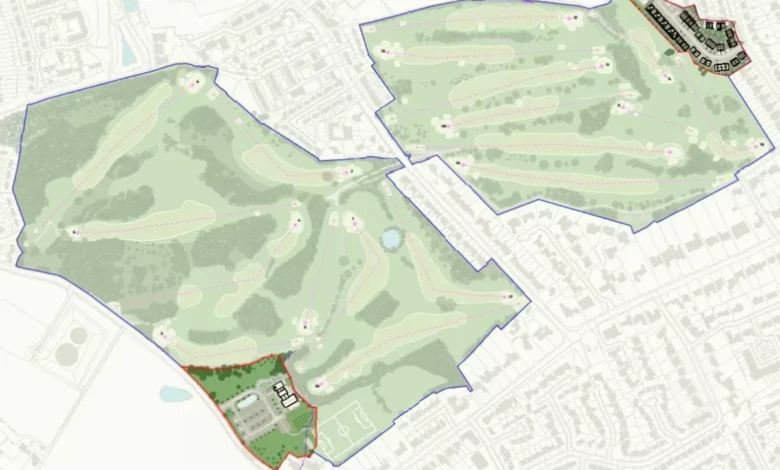
More than 100 formal objections have been lodged against a controversial plan to build 105 homes on part of Stand Golf Course in Whitefield, with residents warning the development would be “catastrophic” for the quiet residential neighbourhood and its surrounding green belt.
Objections highlight environmental and infrastructure fears
The vast majority of the objections, submitted to Bury Council, focus on what opponents describe as the irreversible damage the scheme would cause to local wildlife, the loss of established trees, and a worsening of already severe traffic congestion on roads including Ashbourne Grove, Dales Lane, Higher Lane and Ringley Road. One resident, who has lived in the area for twenty years, said the proposal “breaks my heart” and questioned “when will we ever learn about the importance of our green areas”. Another described the plan as “cheap, ugly and overdeveloped”, adding that it would bring “excessive noise pollution, drainage issues and a horrific effect on an already stretched road system”.
Among the environmental concerns, objectors pointed to the presence of bats, hedgehogs, deer and a wide variety of bird species on the green belt land. The proposed development would involve cutting down established trees, raising fears of habitat destruction. The issue of light and noise pollution was also repeatedly raised, with one objector arguing the area is “quiet, residential homes” and that a project of this scale would “completely change the area”.
Local Reform councillor Shadman Zaman has formally registered his objection, saying he is “deeply concerned” the plan would “result in significant and harmful impacts upon the surrounding residential area, local infrastructure, environmental character and wider community amenity”. He noted that “the locality already experiences substantial peak-time congestion, school-related traffic pressures and parking difficulties” and that residents fear the development would “materially worsen existing infrastructure pressures”.
A further layer of concern comes from a nearby business. The company secretary of James Halstead plc, which operates the Polyflor factory, has expressed serious worry about the placement of 60 retirement apartments within metres of the industrial site, fearing noise complaints and visual intrusion, as well as potential impacts on the factory’s water supply, which is drawn from the golf course drainage system.
One objector who is also a club member described the scheme as “ridiculous” and a “clear cash grab”. A campaign leaflet circulated by the local “Stand Together” group warns residents to expect “three years of disruption from construction traffic”.
Plan details and funding
The application, submitted jointly by Stand Golf Club and construction firm Westshield Ltd, proposes building 45 houses (a mix of two-, three- and four-bedroom properties) and 60 retirement apartments on the land currently occupied by the clubhouse. The existing clubhouse, built in 1926 from a converted hay barn, would be demolished and replaced with a new facility on the opposite side of the course. The new clubhouse would include a shop, indoor swing rooms, a members’ lounge, bar, kitchen, terraces, and a separate suite for weddings, events and community bookings.
The scheme also includes the regeneration of the Old Standians sports ground, described as “disused and in poor condition”, whose changing facilities were destroyed in a fire. Access to the new homes would be primarily off Ashbourne Grove, with four houses accessed via West View Grove. A total of 89 parking spaces are proposed.
Applicants say the housing development is necessary to fund the new clubhouse, which they argue is essential to “secure the long term viable and sustainable future of Stand Golf Club”. Documents submitted to the council state that the current clubhouse is in “declining” condition and that income is suffering because clubs and community groups are unwilling to use it. The retirement apartments will all be delivered as affordable housing, making up 57% of the total homes proposed.
Supporters argue club viability at stake
Despite the scale of opposition, a handful of supporters have also submitted comments. One resident said the proposal would bring “a much needed boost to the local economy”, creating construction jobs and jobs at the golf club, and added that housing “will ease burden on council housing”. Another, who has lived on Ringley Road for twenty years, said their family is “delighted and 100% behind this application”, warning that “it would be a disaster if the club closed” and that the land could then be sold for a much larger housing development.
That supporter also pointed to existing parking problems on Ashbourne Grove at weekends, arguing that relocating the clubhouse to Ringley Road would be in residents’ interests. “The investment in the community would benefit everyone in Whitefield and the surrounding areas,” they said.
The plan has also drawn wider context from national debates around green belt policy and golf course land use. Stand Golf Course sits within Bury’s green belt, where development is strictly controlled and requires “very special circumstances” for approval. Around 60% of the borough is designated as green belt, and the Greater Manchester Spatial Framework has proposed reducing the amount of green belt land loss. The concept of “grey belt” — lower-quality land within the green belt — has emerged as a potential route to facilitate development, though this remains contentious.
Westshield Ltd, the co-applicant, is a construction firm experienced in residential infrastructure and groundworks. The club itself has a history stretching back over 120 years. A previous application at nearby Whitefield Golf Club in 2005, which involved demolishing its clubhouse for apartments and building a new one, also attracted objections over over-development, noise, traffic and green belt impact.
The application is now set to be reviewed by Bury Council at a later date.