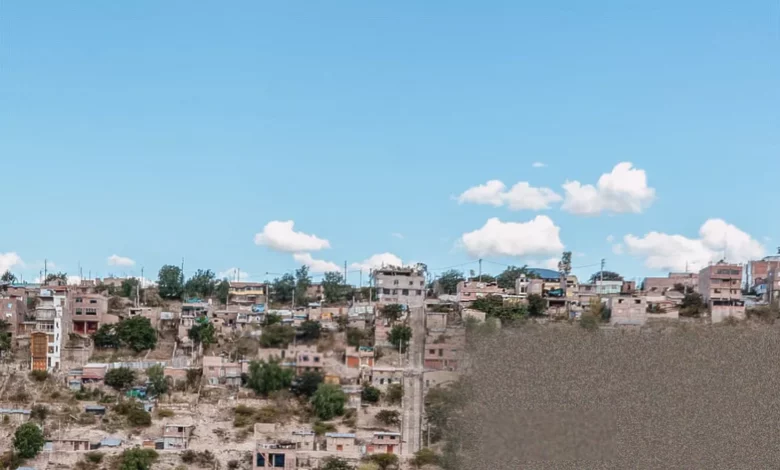
Thousands of people in the Peruvian city of Ayacucho are living in areas at high risk of extreme weather, nearly 17 years after a devastating flood killed ten and destroyed or damaged 530 homes in the city’s poor hillside neighbourhoods. The deadliest event in recent memory – a late-afternoon storm in December 2009 that turned streams into lethal torrents of mud, stones and debris – has not stopped families from building ever deeper into the danger zone.
The 2009 disaster that changed nothing
On that December afternoon, the downpour overwhelmed drainage systems. Drivers were trapped at a busy junction. According to a government inquest, ten people died, 18 were injured, and more than 500 houses were wrecked. “It was a disaster,” recalls Edgar Castro, a community leader in Mollepata, Ayacucho’s largest informal settlement. Yet, as property prices soared in the city centre, the former grazing land on Ayacucho’s rural outskirts began to fill with new arrivals. Mollepata grew explosively: between 2007 and 2017 its population increased 20‑fold, from 316 to 6,624, according to Ayacucho authorities, who estimate it will reach 17,000 by 2027. Local residents dispute even those figures; Castro says the true number, counting children and elderly, is more than 30,000.
Ayacucho lies in the heart of the Peruvian Andes, a region acutely sensitive to climate change. Annual rainfall has halved since 1984 and the local glacial peak has lost 95% of its snowcap. The result is a shorter, less predictable rainy season. When rain does come, it falls in short, intense storms that overwhelm the valley, causing flash floods and landslides. For most of the year, residents endure severe water shortages and soaring temperatures. Concrete structures trap heat, and poorly constructed homes in informal settlements lack adequate ventilation and cooling. “They turn whole neighbourhoods into little ovens,” says Juan Carlos Prado, an environmental specialist working for the municipality.
Living on the edge of disaster
Across Latin America, one in five people live in unplanned settlements built on floodplains, steep slopes or coastal zones that are inherently vulnerable to flooding, landslides and drought. In Peru alone, 8.2 million people – 34% of the urban population – live in peri‑urban informal settlements. Between 2001 and 2018, 93% of urban growth in the country consisted of informal dwellings, often constructed on unsafe land without basic infrastructure. The urban poor, says Cynthia Goytia, professor of urban economics at Torcuato Di Tella University in Buenos Aires, “are simultaneously exposed to temperature extremes and least equipped to manage them”.
Mollepata epitomises this vulnerability. Two-thirds of its population and all of its schools sit in zones the authorities deem high‑risk for natural disasters. The settlement is about seven times denser than Ayacucho itself. Self‑built adobe or brick houses with corrugated metal roofs balance precariously on steep slopes. A single unpaved access road and one bridge connect Mollepata to the rest of the city. “If that collapses, they’re isolated in an instant,” Prado warns. Reliable water systems, emergency services and medical care are scarce. When disaster strikes, the community is the least prepared to respond.
Families are not blind to the danger. “They make calculated trade‑offs between affordability, proximity to livelihoods and existing social networks, often accepting elevated environmental risk as the price of urban access,” Goytia explains. Prado, who runs education campaigns, says many people “still don’t take these consequences into account”. The only real solution for those on hazardous terrain, experts agree, is to move. “We can’t negotiate with nature. We can’t get in the way of the rivers,” Prado says, but he cannot recall a single case where people voluntarily abandoned their plots. The city has no money for relocation programmes. “They say to us, ‘Where can I go?’ ‘Where do you want me to live?’ ‘Solve it for me’,” Prado adds. “The only thing we can say is, ‘Try to find another place because you are too exposed’.”
The challenge of retrofitting order into chaos
In 2025, the Ayacucho municipal government published a plan to improve public services, structure private and public land, and establish disaster‑risk management measures. Since then, officials have begun meeting association leaders – Castro represents 34 community groups – to bridge the gap between plans drawn up in municipal offices and the reality on the ground. The immediate focus is Mollepata. By grading and compacting the main road, officials hope to minimise the dust that damages health and quality of life, and to improve access to emergency services in the city centre. Drainage ditches will be built to mitigate the risk of flash floods.
Yet bringing government services into an existing informal settlement is fraught with difficulties. Because of irregular water infrastructure laid by residents under the road, the drainage ditches must be shallow. The municipality will provide machinery, but local people have to remove debris and guide the machines – only they know exactly where the underground tubes run. Community leaders have promised to rent a dump truck and coordinate volunteer groups. They also discuss the need for more green spaces to counter the urban heat‑island effect. The town official responsible for reforestation has promised tree seedlings during the rainy season, when water is less scarce, and land has been set aside for a park.
These modest steps underline a much larger problem. Integrating Mollepata fully into the city will cost more than 530 million soles (about £116 million), almost five times Ayacucho’s entire annual municipal budget, according to official estimates. Even a shorter list of high‑priority projects would cost 460 million soles. “Over the past four decades, Latin American governments have largely moved away from demolition and forced eviction toward formalisation, regularisation and comprehensive neighbourhood upgrading programmes,” Goytia notes. But the efforts in Mollepata demonstrate how challenging this policy shift can be when local governments are strapped for resources.
The difficulties are compounded by competing priorities. For residents, insecurity, a lack of transport and rubbish disposal are often more urgent than water shortages, floods or avalanches. And even as authorities and established leaders work to bring Mollepata into the urban fold, new informal settlements are springing up elsewhere. With most of the relatively safe areas already built on, recent years have seen a sharp increase in construction on steep slopes, in ravines and along riverbanks. “The situation is becoming critical,” Prado says.
Still, in Mollepata itself, a cautious optimism prevails. Castro views the approval of his settlement’s integration plan as a major achievement and praises officials who have travelled to the community to meet residents face to face. “By getting their boots dirty,” he says, “they see how we live here and the situation we are in.”