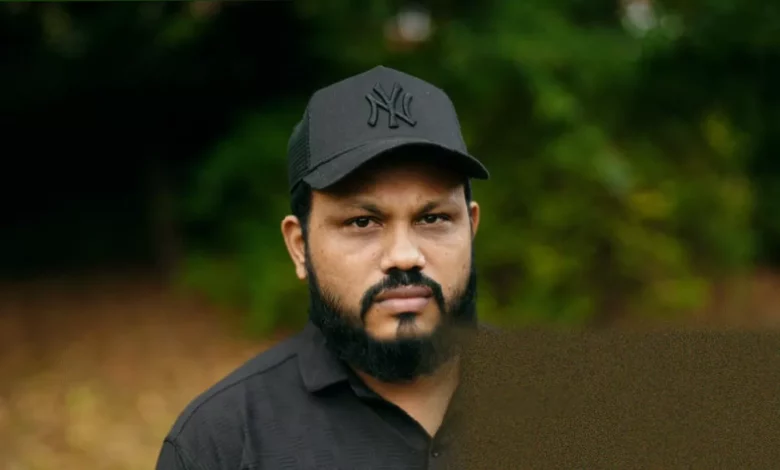
The only survivor of the Air India crash that killed 260 people a year ago today has demanded “honesty, transparency and answers”, laying bare the “significant psychological scars” and financial hardship that have defined his life since the disaster.
Vishwash Kumar Ramesh, a British national who lost his brother in the accident, described his trauma as far from over. “I live with the significant psychological scars, the loss of my brother, and the constant unanswered questions around how and why this happened,” he told the Press Association. “Nothing will ever change what happened, but families deserve clarity.”
Survivor’s ongoing ordeal
Ramesh, who was the sole occupant of the Boeing 787 Dreamliner to survive when it crashed into student hostels of Byramjee Jeejeebhoy Medical College in Ahmedabad on 12 June 2025, has been unable to return to work. According to his representative, Sanjiv Patel, his family – including his wife and five-year-old son – now lives on less than £1,000 a month.
Air India has paid Ramesh £21,500 as an interim payment, but Patel said that sum has not been enough to address the family’s mounting needs. “We’ve repeatedly asked to meet the chief executive of Air India but that has not happened,” Patel said. He added that recent meetings with executives from Air India and the Tata Group, which holds a controlling stake in the airline, were “constructive and have resulted in some positive progress, although a number of important issues remain under discussion.”
An Air India spokesperson confirmed that representatives from the airline and Tata Group had met Ramesh and remained “in close contact” with him and his team, adding that they were “actively working to ensure that appropriate support continues to be extended to him”.
Ramesh is pursuing civil action, with his legal team at Hudgell Solicitors considering claims against multiple potential defendants. Paul McClorry of Hudgell Solicitors said: “We are awaiting the findings of the investigations, and we should finally start to see some clarity as to how and why this awful disaster happened, and, crucially, how it could have been avoided.”
Patel also criticised the UK government’s response. “Despite one of the worst aviation disasters involving British citizens in recent years, neither Vishwash nor many of the affected families we have spoken to have received any direct contact or tailored support from the UK government,” he said. The Foreign Office has been approached for comment.
Investigation findings and unanswered questions
The crash – the first fatal accident involving a Boeing 787 Dreamliner and the deadliest aviation incident of the 2020s – occurred 32 seconds after take-off from Ahmedabad’s Sardar Vallabhbhai Patel International Airport, with the aircraft striking the medical college just 1.7 km from the runway. Of the 242 people on board, 241 died, including 169 Indian nationals and 52 Britons, along with 19 people on the ground. A further 67 were seriously injured.
Exactly 30 days after the disaster, Indian authorities released a preliminary report that revealed both of the aircraft’s engine fuel control switches had moved to the “CUTOFF” position “immediately” after take-off, starving the engines of fuel. The cockpit voice recorder captured one pilot asking the other whether the fuel supply had been cut off, with the other pilot denying doing so.
Despite promises from India’s civil aviation minister last month that the final report would “mostly” be finished by the anniversary, it is now expected to be delayed. The hold-up is due to ongoing, complex analysis of the GE Aerospace-made engines and associated control systems, which has involved engine testing in April and visits to France, as well as examination at GE Aerospace’s facility in the United States.
The UK’s Air Accidents Investigation Branch (AAIB) is participating as an “Expert” in the Indian-led inquiry under international rules, given the number of British victims, but does not have the authority to conduct a technical review. The US National Transportation Safety Board (NTSB) and Boeing are also involved as representatives of the aircraft’s state of design and manufacture.
The father of the captain has separately asked India’s top court to order an independent investigation, arguing that causes other than deliberate pilot action should be considered.
Safety concerns around the Boeing 787’s fuel control switches have persisted. In February 2026, Air India grounded one of its 787-8 Dreamliners after a pilot reported a possible defect in a fuel control switch similar to the component central to the crash investigation. The Federation of Indian Pilots has repeatedly warned about potential malfunctions and called for inspections of all Boeing 787s. US aviation regulators had cautioned as early as 2018 about potential malfunctions of such switches that could lead to inadvertent engine shutdown.
Compensation, legal action and government response
The Tata Group has announced compensation of Rs 1 crore (approximately £85,000) for each family of the deceased and pledged to cover medical expenses for the injured. It also committed to rebuilding the damaged medical college hostel. However, Air India has reportedly offered settlement amounts that require families to waive future legal claims, a move that has drawn criticism for potentially limiting families’ ability to seek further damages if new evidence emerges.
Air India agreed to pay ₹25 lakh (the minimum liability under the Montreal Convention) to families of each deceased victim. Some release forms initially barred lawsuits against Air India, Boeing, GE and Safran, later adding Honeywell.
Legal claims have been pursued on multiple fronts. Family members of four deceased passengers filed a lawsuit in the United States on 16 September 2025, suing Boeing and Honeywell for negligence. Meanwhile, families of nine British victims have filed a lawsuit against Air India in UK courts, seeking accountability and compensation. Some British families have also reported that the remains of their loved ones repatriated to the UK were misidentified. The remains of Vasuben Narendrasinh Raj, 70, were sent under another name and only correctly identified after DNA testing, while in another case DNA from multiple victims was commingled in a single casket.
The UK government activated crisis teams in India and London immediately after the crash and increased consular assistance, setting up a reception centre in Ahmedabad for British nationals. The AAIB deployed a team to support the investigation. Yet some affected families have accused the government of a “disjointed, inadequate and painfully slow” response. Discussions are also ongoing regarding the establishment of a welfare trust by Tata Sons for affected families.
The crash site, where the damaged hostel buildings still bear the physical scars of the disaster a year later, stands as a stark reminder of the tragedy. The intense heat of the post-crash fires, estimated at 1,500°C, complicated victim identification. The Tata Group assumed direct command of Air India’s operations in the immediate aftermath to restore passenger confidence.