Oil prices surged on Monday after Iran reimposed its blockade of the Strait of Hormuz, shattering a brief period of market calm and plunging fragile US-Iran ceasefire talks into crisis.
The price of Brent crude jumped 5% to $95.60 a barrel, clawing back almost half of Friday’s 9% plunge, which had followed a short-lived Iranian announcement that the critical waterway was open. The renewed closure has underscored the extreme volatility of the situation, with analysts warning that hopes for a swift peace deal are now hanging by a thread.
Iran’s Rationale: A Blockade for a Blockade
The decision to seal the strait again was announced by Tehran, which placed the blame squarely on Washington. Iranian officials stated that the US-maintained naval blockade on Iranian ports had not been lifted, making their reciprocal action necessary. The Islamic Revolutionary Guard Corps (IRGC) Navy declared the strait closed until the US blockade ends, warning that any vessel approaching would be targeted.
This stance was crystallised by Iran’s first vice president, who stated, “The security of the Strait of Hormuz is not free. One cannot restrict Iran’s oil exports while expecting free security for others.” The move appears calculated to gain leverage, drive up global shipping and oil prices, and force a change in the US position. Iran’s state media added that Tehran is not currently planning new talks with the US, citing the ongoing blockade, threatening American rhetoric, and what it called Washington’s shifting positions and “excessive demands”.
Tit-for-Tat Actions at Sea
The tension escalated into direct confrontation over the weekend. According to US authorities, an Iranian-flagged cargo ship, the TOUSKA, attempted to bypass the US naval blockade near the strait. President Donald Trump announced that US forces seized the vessel after it refused orders to stop, with the US Navy disabling it by blowing a hole in its engine room. US Marines took custody of the ship. Trump posted on social media, “We have full custody of their ship, and are seeing what’s on board!” Iran has accused the US of “armed piracy” and violating the ceasefire.
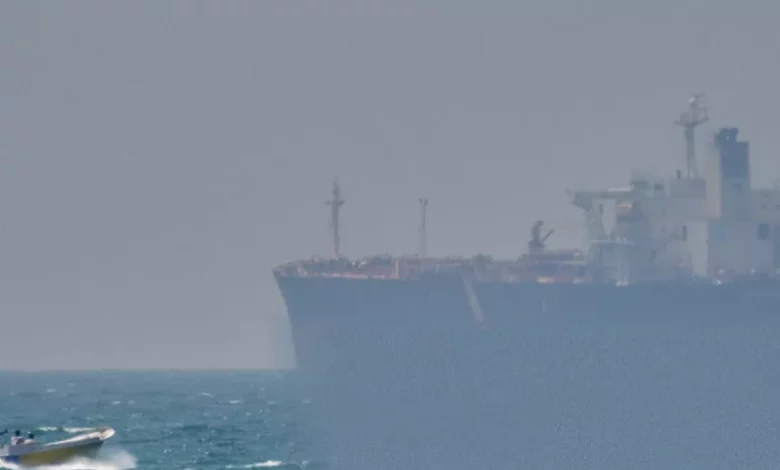
The past days have seen chaotic scenes in the strategic channel. After a 50-day blockade was briefly lifted on Friday, more than a dozen tankers raced to pass through. However, the window slammed shut on Saturday. The UK Maritime Trade Operations Centre reported that IRGC ships fired at a tanker, the India-flagged Sanmar Herald, as it attempted to pass through, damaging its bridge windows. Most commercial shipping through the strait has now effectively halted.
Broader Conflict and Economic Fallout
The crisis is not occurring in isolation. Tensions have also flared between Israel and Hezbollah, following the killing of two Israeli soldiers and attacks in Southern Lebanon. Israel has warned of using full force in Lebanon, while Hezbollah has stated its fighters are prepared to retaliate against any strikes.
The economic repercussions are widening swiftly. In the UK, the month-ahead gas price rose over 6% to 103p a therm. The EY Item Club forecasts that the UK economy will flatline in the second and third quarters of this year, with unemployment set to rise. The International Monetary Fund predicts the UK will be the most affected by the energy shock, lowering its growth forecast for the year to 0.8%. The Chancellor is summoning bank bosses to discuss limiting the crisis’s impact, amid concerns over inflation and mortgage costs.
The ripple effects are global. In Canada, higher gasoline prices in March—up 21% from February—are expected to push year-over-year CPI growth to 2.5%. The eurozone construction sector, meanwhile, continued to contract in February, albeit at a slightly slower pace.
Corporate warnings have begun. UK advertising group M+C Saatchi told shareholders the conflict is likely to significantly impact its sport, entertainment, and consumer-facing businesses, after already reporting a 7.3% drop in like-for-like net revenues and a 26% fall in profits.
Market sentiment has turned sharply. Kyle Rodda, senior market analyst at Capital.com, noted there had been “a high degree of complacency” that the ceasefire would hold. Jim Reid of Deutsche Bank drew an uncomfortable parallel with the early weeks of the Ukraine war, when stock markets rallied on hopes for a quick settlement only to be disappointed. Some, like Mohit Kumar of Jefferies, maintain that “Mutually Assured Destruction” principles will ultimately push both sides toward a deal, but for now, the path to peace appears more obstructed than ever.