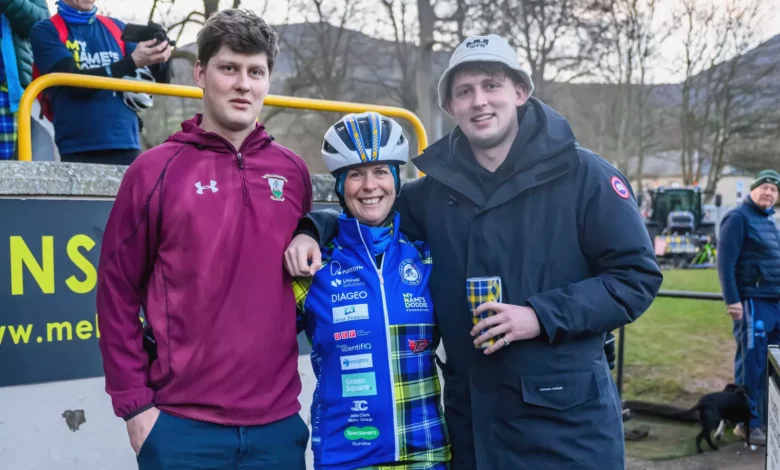
More than £2 million has been raised by supporters of rugby legend Doddie Weir’s foundation, a surge in funding that is being directly funnelled into the frontline search for treatments for motor neurone disease.
The latest total, bolstered by a major cycling challenge in March, has been met with profound gratitude from the late star’s family. Kathy Weir, Doddie’s widow, said the public’s enduring support for the My Name’5 Doddie Foundation showed the momentum to find a cure was “bigger than ever”.
“To go past £2 million once again is just incredible,” Mrs Weir said. “People are still turning up, still giving, still pushing themselves, and that means everything. We’re just incredibly grateful.”
The Triple Crown Challenge
The significant push came from Doddie’s Triple Crown, a formidable endurance cycling challenge held from 10-13 March. The 750-mile event saw riders, including Mrs Weir in an all-female relay team, traverse a route from the foundation’s spiritual home in Melrose to a finish in Dublin.
The challenge alone raised £1.6 million, with previous events helping to push the total raised past the £2 million mark. Former Ireland rugby international Gordon D’Arcy was among the participants, delivering the match ball for the Ireland v Scotland Six Nations match.
Reflecting on the physical toll, Kathy Weir admitted she had dreaded the challenge beforehand. “You worry you’re not ready, that you might hold people back, but at some point you just have to get on the bike and go,” she said. “There were moments where you don’t know how you’re going to get up a climb, but you just keep pedalling. And then you meet people along the way who are living with MND, and that brings home exactly why you’re doing it.”
A Growing Legacy: Doddie Aid and Family
The foundation’s momentum is sustained year-round by its annual mass-participation event, Doddie Aid. Conceived by Doddie’s former Scotland teammate and close friend Rob Wainwright, the virtual event encourages people to log miles through walking, running, or cycling.
Nearly 13,000 people took part in the most recent event, which has raised over £6 million since its inception five years ago. The 2025 edition raised £1.35 million.
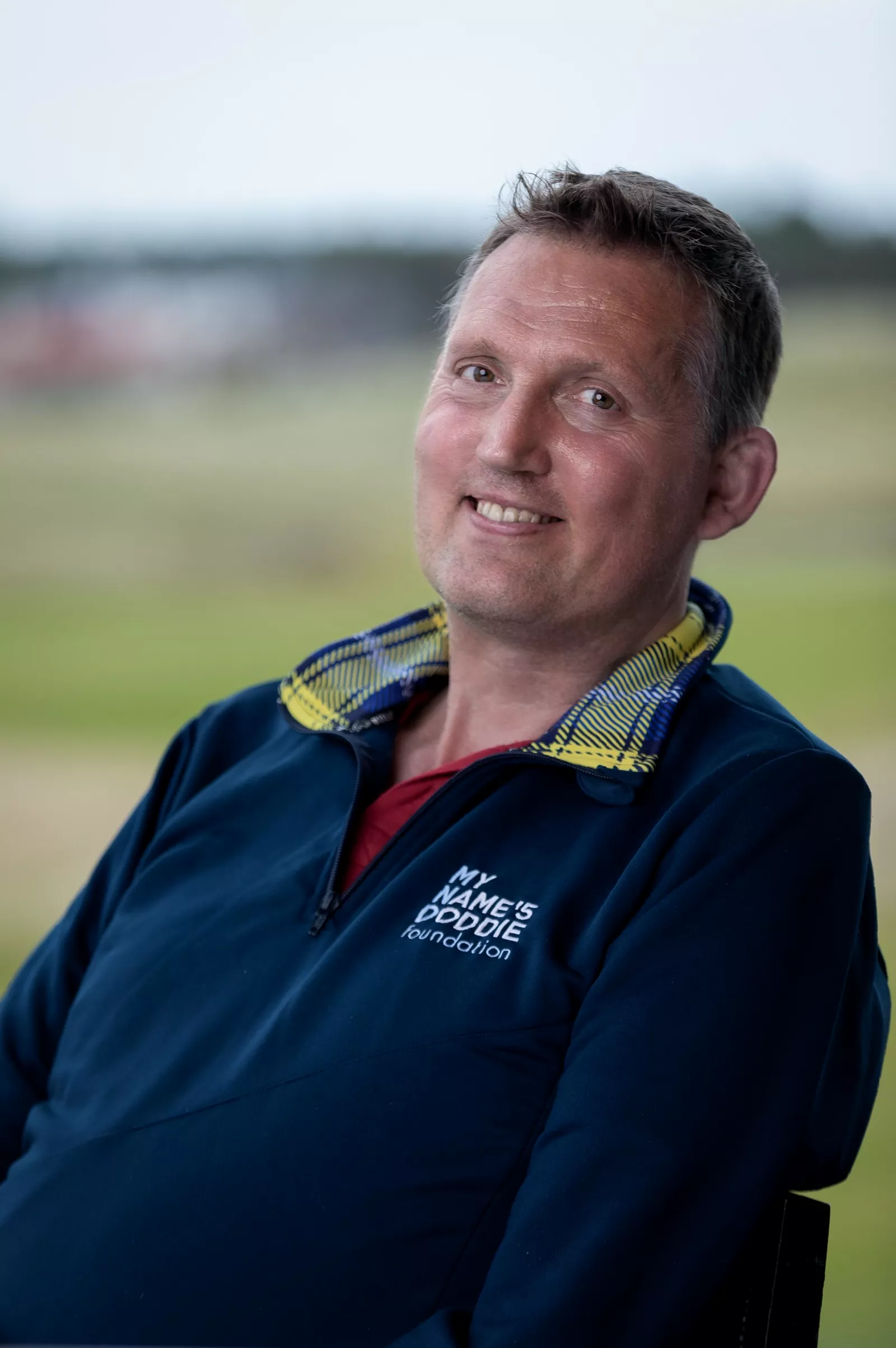
This year held special significance for the Weir family as Doddie and Kathy’s eldest son, Hamish, 24, took on a captain’s role for the first time. “Seeing Hamish take on that role meant a huge amount,” Mrs Weir said. “It’s about continuing what Doddie started and keeping that connection alive as a family. He’s doing it in his own way, but with the same spirit. We all are.” Hamish will captain Team Scotland in Doddie Aid 2026.
Where the Money Goes: Catalysing a Cure
The £2 million raised from these recent efforts is not a standalone figure but a substantial addition to a targeted research war chest. Rob Wainwright confirmed every penny would go “straight to the front line of MND research”.
To date, the My Name’5 Doddie Foundation has now committed almost £20 million to research since its founding in 2017, following Doddie Weir’s diagnosis in 2016. The Scottish rugby international, who earned 61 caps for his country and toured with the British and Irish Lions, died in November 2022 at the age of 52.
The foundation’s research strategy, titled “Catalysing a Cure”, aims to accelerate the development of treatments for MND, a progressive, incurable neurological condition that affects around 5,000 people in the UK at any one time. The disease leads to muscle weakness and paralysis and is ultimately fatal.
Under the direction of its research head, Jessica Lee, the foundation funds a pipeline of work from early-stage discovery to clinical trials. This includes supporting the UK MND Research Institute, a national collaboration of universities and charities, and pioneering an “open science” Discovery Network to fast-track collaboration.
This funding environment is seeing tangible progress. The UK government has pledged £50 million over five years for MND research, and innovative trial designs like the MND-SMART platform are testing multiple treatments at once. Promising clinical trials for genetic subtypes of the disease are underway, with one patient in a Phase 3 trial for a SOD1 gene-related form regaining the ability to walk.
For those driving the foundation, the escalating public support validates their mission. “There were people who thought this might fade after Doddie, but the opposite has happened,” said Rob Wainwright. “The support is still growing, and we’ll keep going for as long as it takes. Doddie’s legacy is not only enduring – it’s driving real progress.”