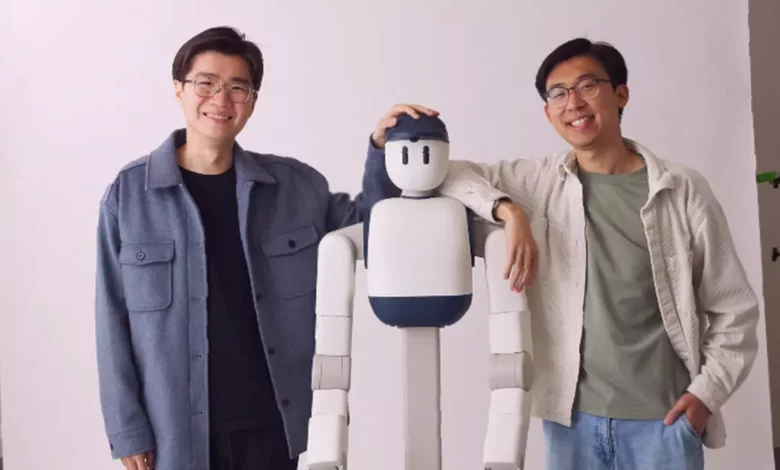
A robotics startup based in Mountain View has secured $165 million in new funding to tackle one of technology’s most elusive goals: building a genuinely useful robot for the home. Sunday Robotics, now valued at $1.15 billion, plans to use the capital to move from controlled demonstrations to placing its wheeled ‘Memo’ robots in real households later this year.
The Series B round was led by Coatue, with participation from Bain Capital Ventures, Fidelity Management & Research Company, Tiger Global, Benchmark, Conviction, and Xtal Ventures. It follows a previous seed round of $35 million led by Benchmark and Conviction. The funding will fuel Sunday’s Beta program, for which thousands have already applied since the company emerged from stealth in 2024.
The Data Flywheel: Solving Robotics’ Core Bottleneck
According to the company and its investors, Sunday’s potential edge lies not just in hardware, but in a proprietary system for gathering the high-quality data needed to train robots. The central challenge for home robotics is the unpredictable, complex nature of domestic environments, where tasks vary endlessly.
Sunday’s innovative solution is its Skill Capture Glove, a wearable device that records human movements while performing chores. Priced at around $200, it is a fraction of the cost of traditional teleoperation systems, which can run to $20,000 per unit. The company claims to have deployed these gloves in over 500 homes, collecting tens of millions of movement episodes to create a vast, real-world dataset of household activities.
“Data has always been the biggest bottleneck in robotics,” said Tony Zhao, Sunday’s CEO. “We built the only pipeline that turns the complexity of real-world homes into autonomous intelligence at scale.” This “data flywheel,” as the company calls it, allows for rapid model iteration. Sunday states its AI demonstrated major capability improvements in just three months, a velocity that impressed investors.
“At Coatue, we look for founders who can maintain a very high velocity of excellence as they scale,” said Thomas Laffont, the firm’s co-founder. “Sunday’s velocity is the best signal we have that they will be the first to ship truly helpful, autonomous home robots at scale.”
The Memo Robot: A Pragmatic Design for the Home
Sunday’s robot, named Memo, opts for a wheeled base over a bipedal humanoid form, a design choice focusing on stability, safety, and cost. It has a low centre of gravity and arms that can reach up to seven feet, though most tasks are performed at a four-foot resting height. Its dual-gripper end-effector is designed for precision, capable of handling delicate items like wine glasses.
The company says Memo can be tasked with clearing tables, loading dishwashers, folding laundry, and operating appliances like espresso machines. The current prototype cost is approximately $20,000, but Sunday aims to bring the manufacturing cost below $10,000 per unit at scale, targeting a consumer price point under $20,000.
“Consumers don’t want hardware or software — they want a complete system that addresses their needs,” said Aaref Hilaly, Partner at Bain Capital Ventures. “Sunday’s integrated approach moves past one-time, teleoperated demos and into a world where robots reliably serve humans every day.”
Founders with a Research Pedigree in Imitation Learning
Sunday was founded in 2025 by Tony Zhao and Cheng Chi, researchers known for their work on robotics AI projects including ALOHA (A Low-cost Hardware for Bimanual Teleoperation) and diffusion-based learning systems. Their academic and research background, including time at Stanford University, focused on enabling robots to learn by observing humans, a field known as imitation learning.
This expertise underpins the company’s use of diffusion models, a type of AI that allows robots to learn complex behaviours from large, unstructured datasets. The team of over 70 engineers and researchers includes alumni from leading tech organisations such as Tesla, DeepMind, Waymo, Meta, OpenAI, and Apple.
A Crowded and Challenging Market Landscape
Sunday enters a competitive field featuring well-funded rivals like Tesla’s Optimus, Figure AI, and 1X Technologies. The fundamental hurdles are significant: homes are not designed for robots, and tasks require fine motor control and adaptive problem-solving that remains difficult to engineer.
Public interest in domestic robots is growing, particularly for assisting the elderly or disabled, but surveys indicate persistent public concerns over privacy, security, and trust. Some studies suggest a preference for specialised robots over humanoid forms for specific tasks.
Sunday’s full-stack approach—controlling hardware, software, and its unique data pipeline—is seen by backers as a critical advantage for navigating these challenges. While the company benefits from public advancements in AI, such as better world models and Vision-Language Models (VLMs), it argues its proprietary “in-the-wild” data is what will enable reliable deployment in complex environments.
The company’s stated mission is to end the era of flashy demos. “We raised our Series B to stop giving demos,” CEO Tony Zhao stated. “Now, we’re focusing entirely on deployment, with Beta deliveries starting in just months.” The success of that deployment will determine whether Sunday can finally translate the decades-long dream of a household helper into a practical, everyday reality.