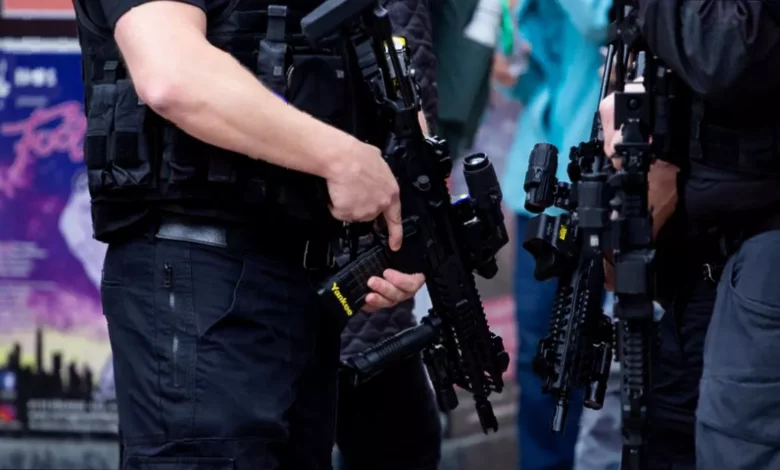
The UK’s national terrorism threat level has been raised from “substantial” to “severe” by the Joint Terrorism Analysis Centre (JTAC), the government body that assesses the likelihood of an attack on British soil. The change, announced on 30 April 2026, means that an attack is now considered “highly likely” within the next six months.
What a ‘severe’ threat level means
The five-tier threat system, which applies to all forms of terrorism regardless of ideology, places “severe” as the second-highest level. The levels are: low (an attack is highly unlikely), moderate (possible but not likely), substantial (likely), severe (highly likely), and critical (highly likely in the near future). JTAC, which is based within MI5, sets the level based on available intelligence, terrorist capability and intentions, and the timescale of potential attacks. Threat levels do not have an expiry date and can change at any time as new information becomes available.
The decision to escalate the threat level from “substantial” to “severe” was driven by a combination of factors, including a sustained increase in threats from both Islamist and extreme right-wing terrorism. Officials have pointed to the stabbing of two Jewish men in Golders Green, north London, on 29 April 2026, which has been formally declared a terrorist incident. The attack is being investigated as a potential deliberate targeting of the Jewish community and follows a series of arson attacks against Jewish sites in the same area. The current threat landscape also includes an elevated risk to Jewish and Israeli individuals and institutions, as well as increased state-linked physical threats linked to the global situation.
This is the first time the threat level has been at “severe” since November 2021, when the Liverpool Women’s Hospital bombing and the murder of Sir David Amess prompted a similar assessment. It was lowered to “substantial” in February 2022. The threat level system was updated in July 2019 to cover all forms of terrorism, rather than separate categories for different ideologies. Separately, the threat level for Northern Ireland-related terrorism within Northern Ireland remains at “substantial”.
Enhanced policing and public vigilance
The government has responded with a significant increase in investment to protect Jewish communities, including a record allocation of funding for policing and security at synagogues, schools and community centres. An additional £25 million has been set aside for this purpose. The Home Office has urged the public to remain vigilant but stressed that people should “not be alarmed”. Anyone who sees suspicious activity is asked to report it to police by calling 999 in an emergency, or the confidential Anti-Terrorist Hotline on 0800 789 321.
BREAKING: UK terror threat raised from “substantial” to “severe” meaning a terror attack is highly likely in next six months
— Paul Brand (@PaulBrandITV) April 30, 2026
Counter-terrorism policing and all police forces are reviewing and enhancing their operations. On the government website it states: “Our overriding priority is to keep the public safe by working closely with all of our communities. We constantly review our operations and contingency planning, liaising with central and local government, emergency services and other agencies. We also use a wide range of overt and covert policing tactics. Covert tactics, by their nature, are not obvious to the public, but we also use overt tactics such as high visibility policing at a variety of locations.”
Among the most prominent tactics is Project Servator, a programme that deploys officers who have been specially trained to spot the tell-tale signs that someone is planning to commit a crime, including an act of terrorism. These officers patrol towns and cities at unpredictable times and locations, making their presence both highly visible and deliberately hard to anticipate. The tactic is designed to disrupt criminal activity, reassure the public, and identify hostile reconnaissance before an attack can be carried out. The government says: “We use these extra measures for a variety of reasons. For example, it could be as a response to seasonal crime patterns or as a precautionary measure in the light of the current threat from international terrorism.”
Alongside this, the Prevent strategy aims to stop vulnerable people from being radicalised by terrorists or extremists in the first place by intervening early and tackling the ideological causes of terrorism. The strategy is part of the wider CONTEST counter-terrorism framework, which is built on four themes: Prevent, Pursue, Protect and Prepare. The government has said that people who live, work or visit towns and cities “will continue to see a selection of policing tactics used in the future.”
The impact of terrorism extends well beyond the immediate casualties. Officials have warned of the significant psychological and social effects, including elevated rates of PTSD, depression and anxiety in affected populations. The threat of terrorism can also influence social attitudes, trust in institutions and civil freedoms, making the maintenance of public confidence a central goal of the increased security measures.