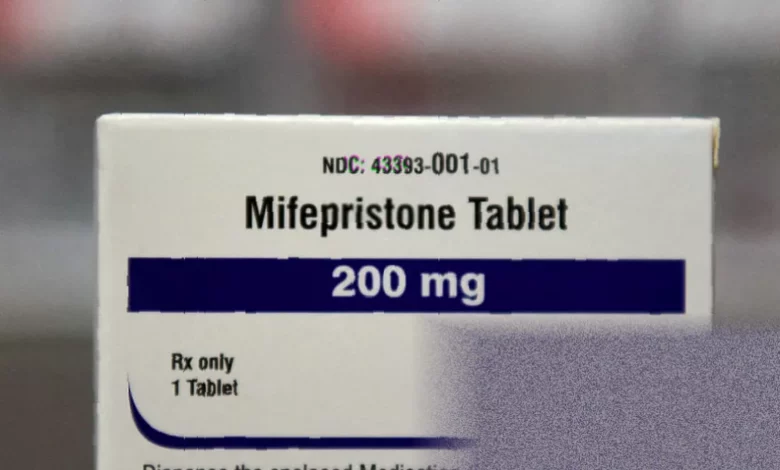
The US Supreme Court has temporarily halted restrictions on the abortion pill mifepristone, restoring nationwide access to the medication and blocking a lower-court ruling that would have effectively ended mail-order prescriptions.
Justice Samuel Alito signed the order on Monday, pausing a decision by the Fifth US Circuit Court of Appeals that had reinstated an in-person dispensing requirement. The stay will remain in effect until at least 5pm ET on 11 May, giving the Court time to consider the broader legal challenge. Alito has set a deadline of 5pm ET on Thursday, 7 May for Louisiana – the plaintiff in the underlying lawsuit – to respond to emergency appeals lodged by the drug’s manufacturers.
Supreme Court Grants Temporary Stay
The emergency appeals were filed on Saturday by Danco Laboratories, one of the manufacturers of mifepristone, and GenBioPro, which produces a generic version. Both companies warned that the appellate ruling would “inject immediate confusion and upheaval into highly time-sensitive medical decisions” and cause “chaos”. Alito’s order temporarily blocks the Fifth Circuit’s decision from taking effect, meaning patients can continue to receive mifepristone by mail and through telemedicine.
Responding to the development, Alexis McGill Johnson, president of the Planned Parenthood Action Fund, said: “While mifepristone access returns to where it was on Friday morning, the whiplash and chaos that patients and providers are navigating have already had real consequences for real people’s lives and futures.” Julia Kaye, a senior staff attorney with the American Civil Liberties Union’s Reproductive Freedom Project, added: “While this is a positive short-term development, no one can rest easy when our ability to get this safe, effective medication for abortion and miscarriage care still hangs in the balance. The supreme court needs to put an end to this baseless attack on our reproductive freedom, once and for all.”
The Legal Challenge to Mifepristone Access
The emergency intervention follows a ruling on Friday, 1 May by a conservative three-judge panel of the Fifth Circuit, based in New Orleans. That decision reinstated a requirement that mifepristone be dispensed only in person, effectively barring abortion providers from prescribing the drug through the mail. The panel acted in response to a lawsuit filed by the state of Louisiana against the US Food and Drug Administration (FDA). Louisiana argues that mail distribution of mifepristone ignores potential health risks and allows patients to circumvent state abortion bans. The state sought to reinstate an in-person dispensing requirement that the FDA had lifted in 2023.
The FDA first approved mifepristone in 2000, and decades of research have shown the two-drug regimen – taken alongside misoprostol – to be safe and effective. The drug is used in nearly two-thirds of all abortions across the United States and is also prescribed for miscarriage management. In 2023, the agency permanently removed the in-person dispensing requirement, a change consistent with its broader effort to reduce unnecessary burdens on patients. That decision allowed for telemedicine prescribing and mail-order access, which had been temporarily permitted during the COVID-19 pandemic.
Louisiana’s lawsuit, filed in October 2025, challenges those 2023 regulations. In early April 2026, a district court paused the case to allow the FDA to conduct a review, denying Louisiana’s request for a temporary injunction. Louisiana immediately appealed, and the Fifth Circuit handed down its ruling on 1 May.
Opponents of mifepristone access – including the state of Louisiana – contend that the FDA’s relaxed regulations were not adequately supported by data and that mail distribution circumvents state-level abortion bans enacted after the Supreme Court overturned Roe v Wade in 2022. Advocates for access, including the ACLU, counter that the in-person dispensing requirement was medically unnecessary and that restrictions disproportionately affect vulnerable populations, including those in rural areas, low-income individuals, people with disabilities, and communities of colour.
The current legal battle comes after the Supreme Court unanimously rejected a separate challenge to mifepristone access in June 2024. In that case, brought by the Alliance for Hippocratic Medicine, the Court ruled that the plaintiffs lacked legal standing to sue the FDA. That decision did not preclude other challenges, and Louisiana’s lawsuit represents a new avenue for opponents of the drug. Monday’s temporary stay is the latest twist in a rapid sequence of court rulings that have left patients and providers in a state of uncertainty, with Louisiana required to respond to the emergency appeals by Thursday evening.