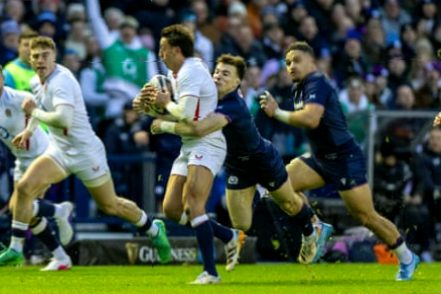
England reignited their Six Nations campaign with a tense 23-22 victory over Ireland at a packed Twickenham Stadium on Saturday, March 9, 2024, a result that shattered the visitors’ dreams of consecutive Grand Slams. In front of 81,686 spectators, Steve Borthwick’s side delivered what was widely regarded as their finest performance of his tenure, keeping their own championship hopes alive in the process.
Experience Versus Momentum
Facing a potential second successive defeat after a loss to Scotland, England’s title aspirations were on the line. Ireland, meanwhile, arrived with a squad rich in know-how, as head coach Andy Farrell recalled a core of veteran campaigners. The selection of Josh van der Flier, Tadhg Beirne, Tadhg Furlong, and Jamison Gibson-Park was a clear statement of intent, reassembling a group as familiar and formidable as a classic rock band for one more major stadium gig.
The presence of such figures was designed to disrupt England’s rhythm. Tadhg Furlong, the pivotal tighthead prop instrumental in Ireland’s 2018 Grand Slam and subsequent championship wins in 2023 and 2024, brought his considerable British & Irish Lions experience. Scrum-half Jamison Gibson-Park, a fixture under Farrell with over 40 caps and the 2025 Six Nations MVP award, returned to orchestrate play.
A Historical Echo and a Young Pretender
Farrell’s faith in seasoned operators evoked memories of a storied recall from the same fixture over half a century ago. In 1970, Ireland brought back the 33-year-old Tony O’Reilly after a seven-year international hiatus. As legend has it, O’Reilly confessed to captain Willie John McBride—the legendary lock who would later lead the Lions on their unbeaten 1974 tour of South Africa—that he was nervous about marking England’s rapid Keith Fielding. McBride’s wry response was: “I wouldn’t worry too much. By the time he runs around you he’s going to be bloody tired.”
The modern parallel centred on a new generation. The original match buildup highlighted the anticipated first Test start for young English flanker Henry Pollock, seen as a dynamic counter to Ireland’s seasoned back row. While subsequent match records for the 2024 fixture do not list Pollock in England’s matchday squad, the thematic contrast was clear. Former Ireland captain and World Rugby Hall of Fame inductee Keith Wood had previously evaluated Pollock’s combative style, stating: “I looked at him at the start and I said: ‘My God, he’s a pain in the arse.’ I look at him now and I think: ‘My God, he’s a pain in the arse but he is box office.’”
For this crucial encounter, England’s actual lineup blended youth and milestone achievements. Captain Jamie George led a side featuring vice-captains George Ford, Ellis Genge, and Maro Itoje, who was winning his 100th Test cap for England. The team also included Danny Care, earning his 100th cap, and the returning Ollie Lawrence, with Immanuel Feyi-Waboso and Marcus Smith adding attacking threat.
The Deciding Moments
The match’s narrative was ultimately shaped by a familiar hero for England. Two years prior, Marcus Smith’s last-gasp drop goal had edged a 23-22 win for England over Ireland, and this latest victory mirrored that exact scoreline. The result halted England’s slide and extended their home winning run to ten matches, dating back 15 months.
For Ireland, coached by Andy Farrell and captained by Peter O’Mahony in this Six Nations, the defeat was a significant setback. Their squad, featuring the likes of Caelan Doris, Bundee Aki, and Hugo Keenan, had been outmuscled on a day where England’s tactical kicking and set-piece parity proved decisive. Despite possessing threats such as Stuart McCloskey’s offloading game, Ireland fell short.
The victory provided England respite before the tournament’s final two rounds, but the championship destiny ultimately remained with Ireland. Despite the Twickenham defeat, Farrell’s side recovered to win their remaining matches, securing the 2024 Six Nations title—their second consecutive championship—with four wins from five games.
The match also reignited the perennial debate around player welfare, coming in a modern Six Nations schedule that offers less recuperation time between bruising fixtures. As the tournament moves towards its climax, the clash at Twickenham served as a potent reminder of the fine margins and enduring physical demands that define the sport’s oldest rivalries.