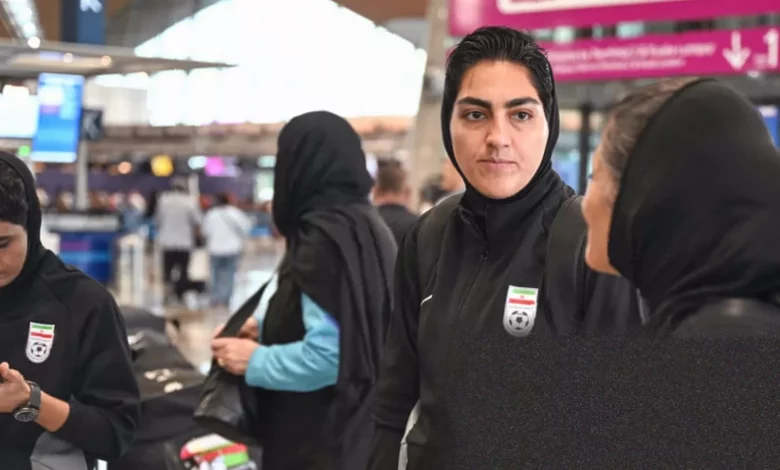
The assets of the Iranian women’s football team captain, Zahra Ghanbari, have been released by court order after she withdrew an asylum claim made in Australia last month and returned to Tehran.
Iran’s judiciary news agency, Mizan, announced the move on Monday, stating it followed a “declaration of innocence” prompted by Ghanbari’s “change in behaviour”. The release of her assets comes just two days after her name appeared on a list of so-called “traitors” published by Iranian media, whose assets had been frozen by court order following the outbreak of war with Israel and the United States on 28 February.
The Asylum Bid, Return, and Pressure
Ghanbari was one of six players and a backroom staff member from the “Iranian Lionesses” who sought asylum in Australia in March after competing in the AFC Women’s Asian Cup. The tournament, hosted by Australia from 1-21 March, took place against the tense backdrop of the ongoing conflict.
The team had immediately drawn fierce criticism from hardliners at home when they failed to sing the national anthem before their opening match against South Korea, a gesture seen as solidarity with domestic protests. State media branded them “traitors”. In subsequent matches, they sang the anthem, a shift that raised immediate concerns among rights advocates about possible coercion.
Of the initial seven asylum seekers, five—including Captain Ghanbari—withdrew their claims and returned to Iran with the rest of the squad on 19 March. They were met with a staged “hero’s welcome” at a ceremony in central Tehran, where the national anthem featured prominently. Iranian officials, including the parliament speaker and football federation president, framed their return as a patriotic rejection of “deception and intimidation by anti-Iran elements”.
Human rights groups have long accused Iranian authorities of systematically pressuring athletes competing abroad by threatening their relatives or seizing property to prevent defection or criticism of the state. In this case, campaigners alleged that Tehran pressured the women’s families, including by summoning their parents for interrogations by intelligence agents. Iranian authorities, conversely, alleged it was Australia that had sought to force the athletes to defect.
The seizure of Ghanbari’s assets fits a documented pattern. The list on which her name appeared is part of a broader crackdown; former national team star Ali Karimi and current player Masoud Shojaei were among over 400 figures reportedly targeted with asset confiscations for alleged support of “the enemy”.
Broader Context and Repercussions
The controversy surrounding the women’s team has erupted as the Iranian men’s side prepares for the 2026 World Cup, scheduled to be held in the United States—a nation Iran is currently at war with. FIFA President Gianni Infantino has been emphatic, telling AFP last month that “Iran will be at the World Cup” and that there is “no Plan B, C, or D” for their scheduled matches in the US, despite earlier reports that Iran had sought to relocate its games to Mexico.
Meanwhile, two of the women’s players, Fatemeh Pasandideh and Atefeh Ramezanizadeh, chose not to return and have remained in Australia, where they have been training with the A-League club Brisbane Roar.