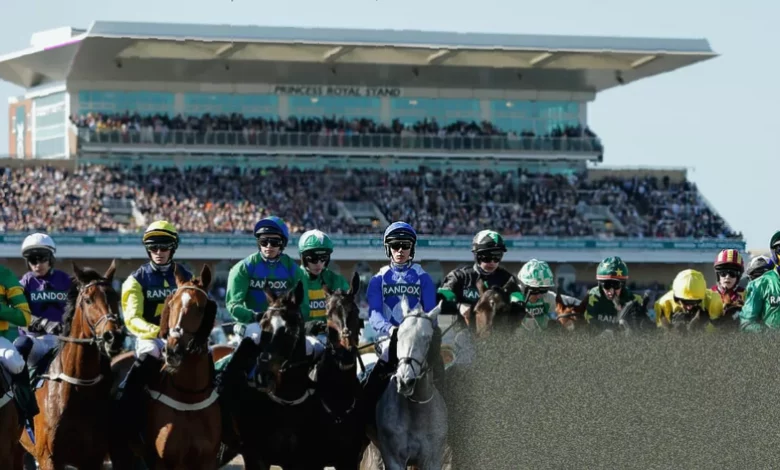
The defence of the Randox Health Grand National crown is over before it could begin, with last year’s winner Nick Rockett ruled out of Saturday’s race. The horse was withdrawn on a self-certificate issued by trainer Willie Mullins, with coughing cited as the reason. The decision is a particular blow for jockey Tom Bellamy, who had been a surprise choice for the ride on the horse attempting to become only the sixth dual winner in the race’s history.
The focus now shifts to a field capped at 34 runners, where Mullins still holds a formidable hand as he bids to equal the record of four Grand National wins. The race, run over 4 miles 514 yards and 30 fences at Aintree, carries a £1 million prize fund, with £500,000 going to the winner. It will be broadcast live on ITV1 on Saturday afternoon, with the ground currently described as Good to Soft and further rain possible.
The Leading Contenders
At the head of the market is stablemate I Am Maximus, the 2024 winner who pressed Nick Rockett all the way to the famous Elbow last year before finishing second. He carries top weight of 11st 12lb, a significant burden given no top-weight winner has succeeded since the 1970s. However, his proven Aintree aptitude is a serious weapon, and his form this season—a Grade One second in December—is stronger than it was before his previous victories here.
Another from the powerful Mullins squad, Grangeclare West, carries 11st 10lb. He was third last year, a position that could have been better but for a costly blunder at the final fence. He arrives this time having ended a long losing run with victory in the key Bobbyjo Chase trial in February. His jumping remains a slight concern, but his course experience is a major positive.
Perhaps the most compelling profile belongs to the younger, less exposed horses at the foot of the weights. Jagwar, a seven-year-old carrying 10st 10lb for British trainers Olly Greenall and Josh Guerriero, fits the modern trend perfectly. Four of the last eight winners have been eight or younger. He was a fine second in the Ultima Handicap at Cheltenham last month, a form line that ties in closely with another leading hope, Johnnywho. Trained by Jonjo O’Neill, who has a strong National record, Johnnywho won that Ultima and is now set for a stern stamina test off 10st 4lb.
The mare Panic Attack attempts to make history, as no mare has won the National since Nickel Coin in 1951. Dan Skelton’s charge has been a revelation stepped up in trip, winning the Coral Gold Cup and the Paddy Power Gold Cup this season. The question is whether her stamina extends to the full Aintree marathon under 10st 5lb.
Monty’s Star represents last year’s winning trainer, Henry de Bromhead, and is another with solid Grade One form. He is unproven over the extreme distance but is a fresh, nine-year-old contender. For sheer romance, the story of Oscars Brother is unmatched. He represents 50% of 29-year-old trainer Connor King’s tiny string, will be ridden by the trainer’s brother, and was bought by their father. At eight years old with 10st 13lb, his profile is positive, and a big run would electrify Aintree.
The Established Outsiders
Several runners with proven class but lingering questions fill the midfield. Joseph O’Brien’s Banbridge, a King George VI Chase winner, is top-class but inconsistent and unproven over the trip. The 2024 Gold Cup runner-up Gerri Colombe carries 11st 10lb but has not shown that elite form recently. Rebecca Curtis’s Haiti Couleurs, winner of the Welsh Grand National, is an old-fashioned chaser capable of carrying a big weight, but his last run in the Cheltenham Gold Cup was poor.
Gordon Elliott, chasing his third National win, has a fascinating contender in Favori De Champdou. The eleven-year-old goes against the recent age trend—no winner that age since 2012—but is following a path Elliott knows well: a preparation featuring cross-country races at Cheltenham, the same route used for Silver Birch and Tiger Roll. Another cross-country graduate, Final Orders, won at Cheltenham last month but may be vulnerable to younger legs.
Others have clear chances on their day but must overcome specific hurdles. Iroko was fourth last year but comes off a less encouraging run. Stellar Story has a light weight and could improve for the trip. Captain Cody, the Scottish Grand National winner, has time on his side but a stiff weight. For every horse like the consistent Three Card Brag—11th last year and now 10lb higher—there is a Spillane’s Tower, an improving eight-year-old for a small yard, whose stamina is unproven.
Training the Aintree Specialist
The preparation for a modern Grand National is a precise science, and trainers have adapted their strategies to the race’s evolving nature. The reduction of the field to 34 runners and modifications to the fences—including foam and rubber toe boards—have altered the challenge. Trainers now increasingly target young, improving stayers with a handicap mark just high enough to guarantee a run, as seen with the profiles of Jagwar and Johnnywho.
Willie Mullins’s dominance, seeking a third consecutive win, is built on a deep squad of horses campaigned with Aintree in mind. His approach with I Am Maximus and Grangeclare West has been to mix top-level engagements with key handicap trials, ensuring they arrive race-fit and with an appetite for a battle. Gordon Elliott’s use of the Cheltenham cross-country race as a prep is a proven, patient strategy to build a horse’s stamina and jumping agility without the intensity of a conventional Grade One chase.
For British trainers like Dan Skelton with Panic Attack or the Greenall/Guerriero team, the focus has been on stepping horses up in trip gradually to unlock untapped stamina. The aim is to have a horse that is still ahead of the handicapper, a crucial factor given that six of the last 18 winners were officially 5lb or more “well-in” after the weights were published. With the race now a standing start to reduce initial speed, trainers also emphasise schooling for a calm, efficient beginning, conserving every ounce of energy for the four-and-a-quarter-mile test ahead.