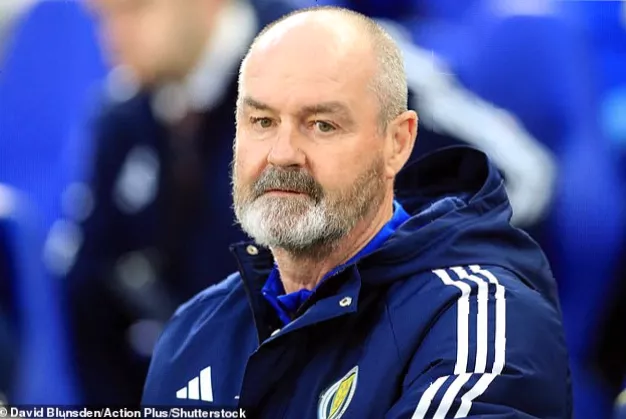
Scotland manager Steve Clarke has made it clear that his unresolved contract will not be a distraction, declaring his total focus is on steering the national team through their first World Cup in nearly three decades. Despite recent talks with the Scottish Football Association’s chief executive, Ian Maxwell, Clarke stated his future beyond the tournament remains uncertain, but he is adamant that speculation will not cloud the campaign ahead.
Contract clarity on hold for World Cup focus
Clarke, whose current deal expires after Scotland’s World Cup journey ends, revealed he has had only initial conversations with the SFA regarding an extension. He has previously described his chances of staying on as “50-50” and admitted he would “quite like future settled” before the tournament. However, speaking after a friendly defeat, he struck a definitive note. “No. I want to concentrate on the World Cup,” he said when asked if he wanted his situation resolved before the team’s final send-off match in May. “I want to be in the right frame of mind. I want my players to be in the right frame of mind. What happens will happen.”
Having taken charge in 2019 and ended the nation’s long major tournament exile by qualifying for two European Championships, Clarke is widely regarded as one of Scotland’s most successful managers. The contract he signed in March 2023 was designed to see him through to the 2026 finals, but with the tournament now imminent, he has not ruled out a return to club football should no new agreement be reached.
Sobering lessons from Ivory Coast defeat
Clarke’s immediate priority is addressing form, after a 1-0 loss to Ivory Coast at Everton’s Hill Dickinson Stadium marked a second consecutive friendly defeat. Following a 1-0 loss to Japan days earlier, the performance in Liverpool was marginally better but still ended with a section of travelling supporters booing the team off the pitch.
The manager made nine changes to his side, deploying a back-five system for the first time in a while. A bright start was undone on 12 minutes when former Arsenal forward Nicolas Pépé scored on the counter-attack, a moment Clarke pinpointed as critical. “Good teams will punish you and that’s what happened,” he said. “The organisation behind that attack was not right.”
Most telling, however, was Clarke’s analysis of what followed the goal. He devoted significant attention to a flaw he believes must be corrected before the World Cup begins. “Our reaction to going 1-0 down wasn’t good,” Clarke stated. “We lost control of the game when we should have kept control of the game because we started well. That’s something we need to get better at.” He acknowledged his team improved after the break, dominating possession and creating pressure, but could not find an equaliser against the Ivorians, who are ranked five places above Scotland and are also bound for the summer’s finals.
These matches continue a concerning pattern in friendlies, with Scotland having won only two of their last 12 non-competitive fixtures. Analysis of the earlier defeat to Japan highlighted a lack of ideas in possession and technical shortcomings, issues that resurfaced in the first half against Ivory Coast.
Robertson defends experimentation ahead of tough group
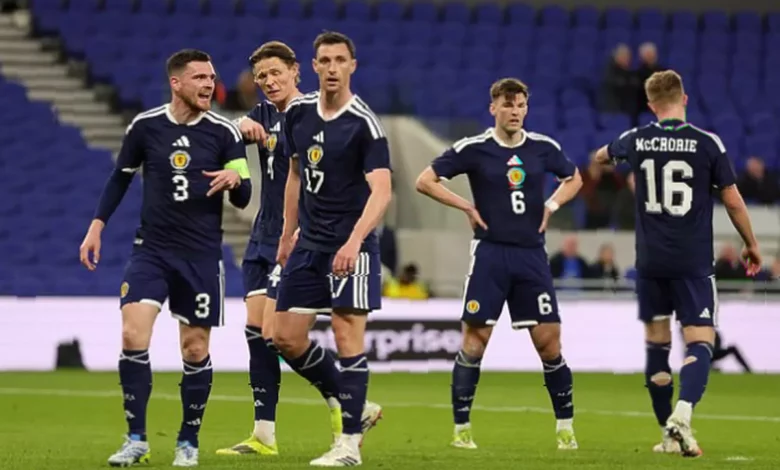
Captain Andy Robertson echoed his manager’s more positive assessment of the second-half display and defended the experimental nature of the preparations. “There were big improvements,” said Robertson. “The manager is trying both systems because you need to play more than one way.” He acknowledged the goal stemmed from committing too many men forward in the new system, but saw encouraging signs. “We caused them problems… We want to win these games – of course we do – but we’re also trying stuff.”
The need for flexibility and resilience is clear, given the daunting World Cup group Scotland face. Drawn in Group C alongside Brazil, whom they have never beaten in ten attempts, a Morocco side that defeated them 3-0 at the 1998 World Cup, and Haiti, Clarke’s squad will begin their campaign on June 13 in Massachusetts. The expanded 48-team format offers a potential route for third-placed teams to advance, but performances will need to escalate significantly.
Clarke confirmed the final piece of preparation will be a warm-up match against Bolivia in New Jersey after the squad arrives in the United States. As that fixture approaches, the manager’s message is one of tunnel vision, with his own future and the fans’ dissatisfaction relegated in favour of solving the pressing issue on the pitch: ensuring his team can withstand the shock of conceding a goal when the world is watching.