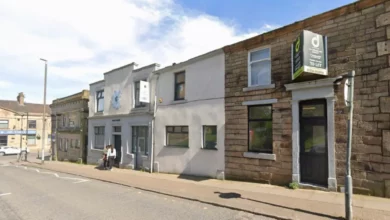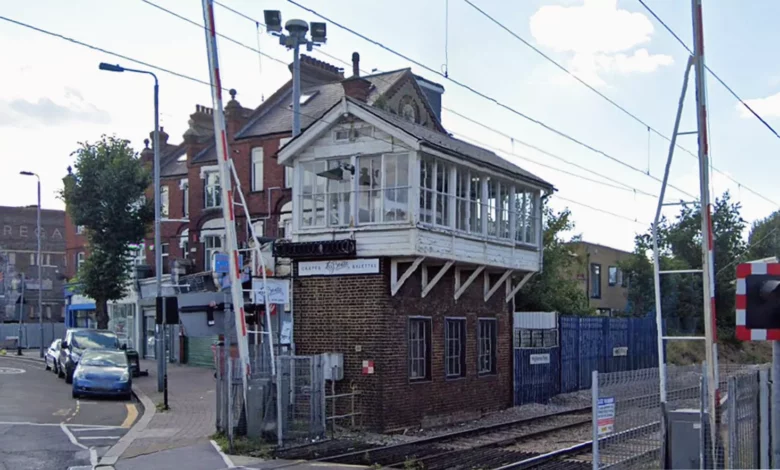
A disused signal box in east London is to be given a new lease on life for half a century, transforming from a railway relic into an affordable hub for local groups after a community interest company secured a 50-year agreement with Network Rail.
The Highams Park Community CIC, established by members of the local Highams Park Planning Group, has taken on the Grade II listed building next to Highams Park station. The organisation states its dual aim is to preserve the iconic structure as a feature of the town centre and to provide a dedicated space for community activities.
Due to what the CIC describes as operational constraints imposed by Network Rail, the building cannot reopen as a café. However, the group has permission to hire it out for a wide range of other uses, including as office space, a meeting and exhibition area, or any ancillary use that promotes local engagement, creativity, wellbeing, or enterprise. This could encompass administrative functions for community organisations, hobby groups, seasonal events, and participation in public programmes like Open House.
A building saved by community action
The signal box’s journey to this point is a story of persistent local campaigning. It was built by the London and North Eastern Railway (LNER) in 1925 to control the adjacent level crossing. The station itself, originally named Hale End in 1873, was redesigned by Neville Ashbee and opened in its current form in 1903.
The signal box became redundant in 2002 when signalling was modernised and the crossing began to be operated remotely via CCTV from Liverpool Street station. Network Rail subsequently earmarked it for demolition, a move that sparked a successful campaign by residents. Groups including The Highams Park Forum and the later Highams Park Signal Box Association, with support from the then-local MP Iain Duncan Smith, fought to save it, securing local listing status and a blue plaque.
In 2013, businessman Dennis Swain of Dendale Construction Ltd signed a 25-year lease and undertook repair works, eventually reopening the box as a café and crêperie named La Boîte in 2017. That venture closed in 2019, reportedly due to disputes with Network Rail over essential drainage and plumbing issues, leaving the building empty for nearly seven years.
Restoration and future plans
The CIC acknowledges the building is now in poor condition, both internally and externally, and that it will take considerable time and effort to return it to a usable state. The new 50-year lease, secured in March 2026, provides the long-term security needed to justify that investment.
The revitalised signal box is expected to complement other recently enhanced community facilities in the area. Notably, the refurbished station rooms at Highams Park Station, just a short distance away, are also available for local groups to hire at a rate of £6 per hour. Those rooms were improved with contributions from Arriva Rail London, the Highams Park Planning Group, the Greater London Authority’s ‘High Streets for All’ fund, and Waltham Forest Council.
This community asset transfer aligns with Network Rail’s broader initiatives to encourage community use of railway assets, such as its Station Adoption and Community Licence schemes. The signal box’s revival also forms part of a wider wave of regeneration in Highams Park, which is receiving investment from the national Levelling Up Fund for improvements to the high street, station car park, and public spaces.
Past considerations for the building’s use, explored by the Highams Park Signal Box Association in 2008, included a community meeting room or a police base for Safer Neighbourhoods Teams, but concerns over maintenance costs, size, and accessibility proved prohibitive. The current plan for a flexible hireable space seeks to navigate those historical challenges by serving multiple groups and functions over time.