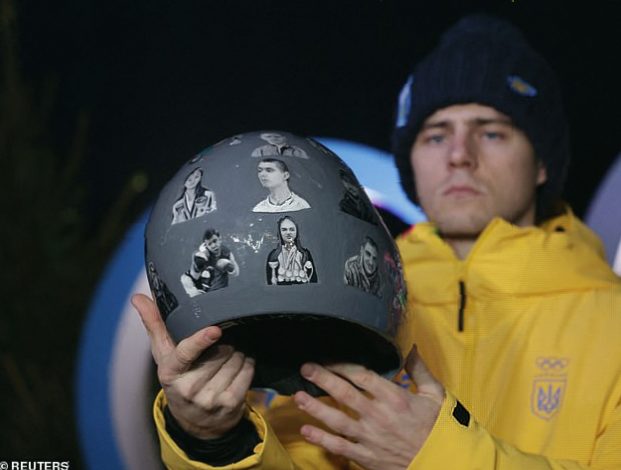
Ukrainian skeleton racer Vladyslav Heraskevych is poised on the brink of disqualification from the Winter Olympics, with a poignant helmet tribute at the centre of a bitter dispute that threatens his participation just as the competition begins.
The 27-year-old, who was the Ukrainian flag-bearer at the opening ceremony and topped practice times on Wednesday to emerge as a serious medal contender, has issued a final demand to the International Olympic Committee to withdraw its threat over his “Memory Helmet”. The helmet honours compatriots killed since the Russian invasion.
With the skeleton event scheduled to start at 9.30am local time on Thursday, Heraskevych took to social media two hours beforehand to declare he would not relent. In a post at 6.51am, he set out three conditions to end the standoff: an immediate lifting of the helmet ban, an apology for the pressure placed on him, and for the IOC to provide electric generators for Ukrainian sports facilities suffering daily shellings. He expressed hope for a response before the competition commenced.
The IOC now faces a fiendish dilemma: relax its strict rules on political messaging or eject a Ukrainian hero, a move that would constitute the worst imaginable public relations outcome for the Games organisers. IOC spokesman Mark Adams, speaking in Milan on Wednesday, stated the committee would contact Heraskevych to reiterate the many opportunities available to express his grief and emphasised their desire for him to compete. However, Adams added that while it was unhelpful to dwell on hypotheticals, the rules would ultimately be enforced.
How a potential disqualification would be administered remains uncertain. Sources have suggested it could be triggered at the conclusion of his first run should he wear the helmet, but other figures within the Games have told Daily Mail Sport they do not expect Heraskevych to even reach the start line.
The committee’s reticence is underpinned by a fear that allowing the tribute could prompt athletes from other nations to adopt similar displays, potentially in support of questionable regimes. Heraskevych, who stated he never sought a scandal but views the IOC’s rule interpretation as discriminatory, has acknowledged the dispute distracts from the competition itself. Despite this, he remains evidently prepared to risk disqualification on this point of principle.