Bending Spoons valuation climbs from $11bn to $18.4bn after $1.68bn Nasdaq float, report says

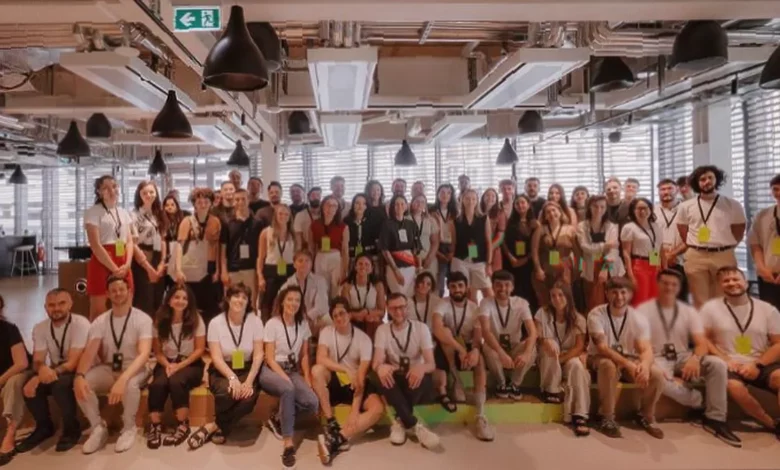
Bending Spoons’ valuation surged 67% to $18.4 billion in just eight months, as the Milan-based software group priced its Nasdaq initial public offering at $29 per share, above the $26 to $28 target range, raising approximately $1.68 billion. Shares began trading on 1 July 2026 under the ticker BSP.
The jump from the $11 billion valuation the company commanded after raising $710 million in October 2025 reflects a financial transformation that took place over a single quarter. Bending Spoons reported first-quarter 2026 revenue of $601 million, more than double the $259 million it generated in the same period a year earlier, while swinging from a $112 million net loss to a $27.5 million net profit. For the full year 2025, revenue reached $1.31 billion, up 95% year-on-year, with operating income more than doubling to $277.9 million.
Financial turnaround
The company that was still burning cash a year ago went public profitable, and investors priced it accordingly. Gross margin climbed to 68% in the first quarter of 2026, up from 66% in 2025 and 61% in 2023. Subscription revenue accounted for 84% of first-quarter turnover, with advertising contributing 12% and other sources 4%. Revenue per employee reached $2.57 million in 2025, rising from $1.12 million in 2023, a metric the company highlights as central to its thesis.
That profit growth was achieved despite a substantial debt load. Bending Spoons carried total debt of $4.36 billion and net debt of around $3.6 billion as of March 2026. Interest expenses for the full year 2025 were $143 million, a 337% increase year-on-year, with the first quarter of 2026 alone accounting for $93 million in interest costs. The debt has been instrumental in funding the aggressive acquisition programme that underpins the company’s strategy.
The buy-and-rebuild engine
Bending Spoons was founded in Milan in 2013 by Luca Ferrari, Francesco Patarnello, Matteo Danieli, Luca Querella and Tomasz Greber, after their first startup failed, leaving them with just $40,000. The company took its name from a scene in the film The Matrix. Ferrari, co-founder and CEO, holds degrees in information and electronic engineering from the University of Padua and telecommunications engineering from the Technical University of Denmark.
The core strategy is to acquire established but often overlooked digital brands, rebuild them through engineering and artificial intelligence, and then reinvest in further acquisitions rather than inventing new products from scratch. Bending Spoons has completed over 50 acquisitions to date. Its portfolio includes AOL (acquired for $1.5 billion), Vimeo (acquired in September 2025 for $1.38 billion), Eventbrite (acquired in 2025), Evernote (acquired in 2023), Brightcove, WeTransfer, Harvest, komoot, Remini, StreamYard, Splice (2018), Meetup, Tractive (March 2025) and Hopin (April 2024). In the first quarter of 2026, these businesses collectively served over 500 million monthly active users and more than 9 million monthly paying customers.
Rather than taking a traditional private equity approach of cutting costs and exiting within a few years, Bending Spoons holds its acquisitions indefinitely and applies a proprietary operational platform it calls the “Spoon Engine”. The system integrates artificial intelligence, data analytics and other services to optimise acquired businesses while keeping teams lean. AI-authored or co-authored pull requests across the company jumped from under 10% in the first quarter of 2025 to over 90% in the first quarter of 2026, with approximately 70% written entirely by AI. The company also focuses on developing new graduates into leaders; the CEO of Evernote, for example, is 27 years old.
Bending Spoons has maintained a dual-class share structure through the listing, meaning the founders retain voting control even as outside shareholders come in — a feature that will be closely watched as the company settles into public-market scrutiny.
Competitive landscape
Bending Spoons largely created its category in Europe, but it is no longer alone. Toronto-based Beacon, an AI-native technology holding company that acquires and rebuilds businesses in essential industries, raised $225 million in a Series C round in June 2026, taking its total funding past $550 million. London-based Circeus, an AI-native holding company for mission-critical software, launched in June 2026 with an equity investment from the European Bank for Reconstruction and Development, pursuing a similar buy-and-rebuild playbook with a central engineering team that embeds AI into acquired vertical software businesses.
Traditional private equity firms such as Thoma Bravo and Vista Equity Partners remain active software buyers, but they typically look to exit their investments. Bending Spoons does not. The dual-class structure ensures that the founders’ control — and their long-term ownership commitment — remains in place, distinguishing the company from both PE-backed roll-ups and pure venture-backed startups as it begins trading on Nasdaq.