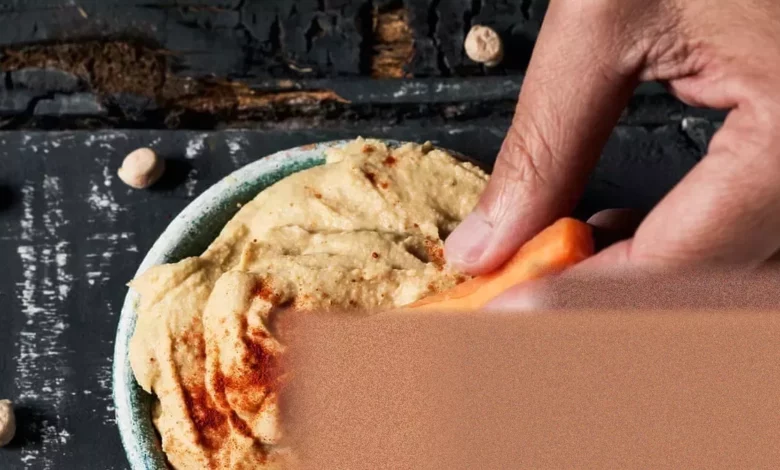
The transformation of hummus from a curious import to a kitchen cupboard staple is now so complete it has earned a formal place in the nation’s economic ledger. This week, the Office for National Statistics (ONS) confirmed it is adding the chickpea dip to its official inflation basket—the definitive list of goods used to measure the cost of living.
An Economic Indicator of Changing Tastes
Stephen Burgess, the ONS deputy director for prices, stated that the inclusion of hummus, alongside alcohol-free beer for the first time, showcases how consumer spending is being shaped by “healthier lifestyle choices.” The move, which sees hummus replace items like premium bottled lager, is a potent symbol of dietary change. With annual UK spending on hummus estimated at £170 million, its economic significance is clear. Market analysts project even more dramatic growth, with one valuation expecting the UK hummus market to swell from approximately £202.53 million in 2023 to £476.33 million by 2032.
The ONS’s decision has led commentators to dub hummus the “new ketchup,” a testament to its ubiquity across mealtimes. Jonny Forsyth, a senior analyst at Mintel, notes that hummus “has become a British staple, something people buy and consume almost as habitually as bread and milk.” This is a far cry from its debut on British shelves, when Waitrose became the first supermarket to stock it in 1987. A contemporary staff magazine ad promoted its “exotic Mediterranean flavour,” with 150g and 300g tubs costing 42p and 79p respectively. Today, a basic 300g pot costs around £1.85 at the same retailer.
From Kitchen Startup to Supermarket Mainstay
The commercial journey of hummus mirrors its cultural ascent. Entrepreneur Ramona Hazan started her eponymous brand in her London flat kitchen in 2004 with a £25 blender. Her company now produces 80-100 tonnes of hummus weekly and was recently valued at £24 million. “What this shows us is that the UK diet is now global,” Hazan says. “There is a lot more Middle-Eastern food as mainstream and supermarket ranges are reflecting that.”
She rejects the idea that hummus is solely “officially middle-class ketchup,” arguing “it is everywhere.” Its rise has been powered by a fundamental shift in how it is used. “You used to take it to a party and dip your crisps in it, whereas now it is not just a dip,” Hazan explains. “Use it instead of mayonnaise. It’s a sandwich filler.” Social media feeds are filled with influencers incorporating it into health bowls, pasta, and soups, promoting its versatility and plant-based nutrition.
Supermarket ranges have exploded in response. Tesco, the UK’s largest grocer, now sells hummus in 18 varieties, from snack pots to 500g tubs. Waitrose, which added hummus to its value ‘Essential’ range nearly a decade ago, has identified a trend for “maximalist hummus” featuring premium ingredients like truffle oil. Lizzie Haywood, Waitrose’s trend innovation manager, observes that hummus has gone from an “exotic curiosity” to the “backbone of British snacking habits.”
Roots in Restaurant and Literary Culture
The dip’s journey to the mainstream has deep cultural roots. The broader surge in popularity of Middle Eastern cuisine, fuelled by restaurant expansion and street food culture, provided the foundation. Pioneering cookbook author Claudia Roden is credited with introducing the cuisine to Britain with her 1968 work, “A Book of Middle Eastern Food.” Her influence has been amplified in recent years by chefs like Yotam Ottolenghi and author Anissa Helou.
Ottolenghi acknowledges the gap between mass-produced tubs and the fresh version made in dedicated Middle Eastern restaurants, which he says tastes “so much better.” Nevertheless, he concedes: “If I had to choose a commercially made sandwich filler or sauce, I’d much rather have hummus than ketchup or even coleslaw.” To any remaining sceptics, he adds that its core ingredients—”chickpeas, tahini, lemon juice, garlic” — are “all wonderful ingredients that are really good for you.”
Crises, Costs, and Future Trends
Hummus’s status as a staple was starkly highlighted during the 2017 ‘hummus crisis’, when a manufacturing issue at major supplier Bakkavor led to a nationwide shortage and complaints of a metallic taste, emptying shelves at several major supermarkets. The industry has also faced volatility from global chickpea shortages, which caused significant price spikes in 2017 and 2018.
Looking ahead, hummus is well-placed to capitalise on continued trends. Its plant-based, protein-and-fibre-rich profile aligns with growing vegan and flexitarian diets. Some analysts suggest emerging trends, such as the use of GLP-1 weight-loss drugs, may further drive demand for satisfying, nutrient-dense foods like hummus. Its influence is even evident in workplace dining, where Middle Eastern cuisine is reported as the fastest-growing category.
For the ONS, updating the inflation basket is an annual process of capturing the nation’s living habits. The humble chickpea dip’s promotion into this economic framework is perhaps the ultimate confirmation: hummus is no longer exotic, but essential.