Middle East energy crisis could cost UK economy £35bn even in most optimistic scenario, think tank warns

The UK economy could shrink by £35bn as a direct result of the energy crisis triggered by the Iran war, even under the most optimistic scenario in which hostilities ease rapidly this year, the National Institute of Economic and Social Research (Niesr) has warned.
Economic forecasts paint bleak picture
In new projections published on 28 April, Niesr said the conflict in the Middle East had “laid bare the fact that the UK remains highly exposed to global energy shocks”. The think tank’s director, David Aikman, described the forecasts as a “serious blow to the government’s mission to get the UK economy growing again”. Even if the war ends swiftly, he said, higher energy prices will leave households poorer, businesses facing higher costs, and the economy “materially smaller than we expected only a few months ago”.
Niesr now expects UK economic growth to slow to 0.9 per cent this year and 1 per cent in 2027, down from previous predictions of 1.4 per cent and 1.3 per cent respectively. A prolonged conflict, the institute added, could plunge the UK into recession during the second half of the current year. Other economic forecasters have also revised down their growth estimates: Barclays and KPMG predict 0.7 per cent growth for 2026, Oxford Economics expects 0.4 per cent, and Pantheon Macroeconomics anticipates 0.6 per cent. The OECD has cut its UK growth forecast for 2026 from 1.2 per cent to 0.7 per cent, while the Office for Budget Responsibility had previously pencilled in 1.1 per cent.
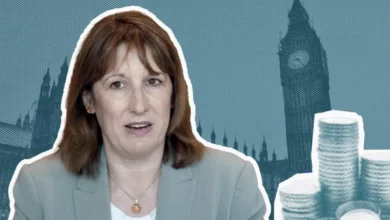
The broader fiscal damage is severe. Niesr calculates that the economic impact of the Iran war could add almost £24bn to UK government borrowing by the end of the decade, potentially wiping out Chancellor Rachel Reeves’s remaining fiscal headroom. Higher interest rates on new government debt are also expected as markets anticipate sustained inflation and interest rate rises in the future.
Growth in disposable incomes is forecast to slow sharply, to 1 per cent next year and just 0.6 per cent the year after, compounding the pressure on household finances.
How the conflict drives up energy prices and inflation
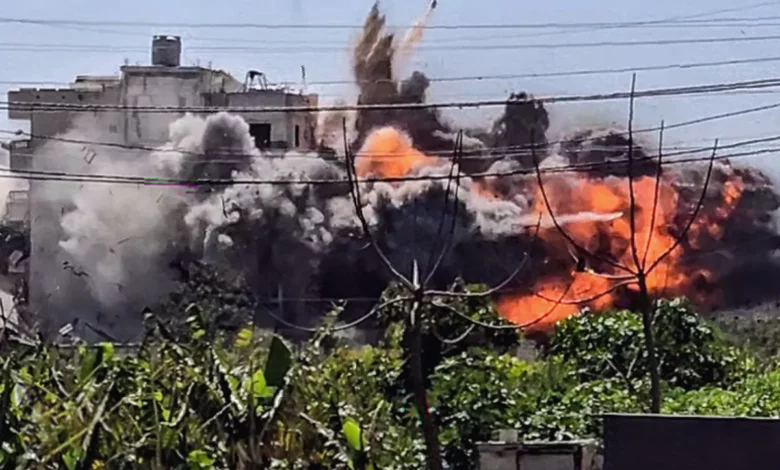
The root cause of the economic shock lies in the disruption to global energy supplies caused by the US–Israeli conflict with Iran, centred on the Strait of Hormuz. This narrow maritime chokepoint carries approximately 20 per cent of the world’s liquefied natural gas (LNG) and 25 per cent of seaborne oil trade. Around 20 million barrels per day of oil and petroleum liquids passed through the strait in 2024, equivalent to about 20 per cent of global petroleum liquids consumption. It is the only sea route for several Gulf states including the UAE, Qatar, Bahrain, Kuwait and Iraq, making it critical for Europe’s energy supply.
Although the UK imports only a small proportion of its oil and gas directly from the Middle East — around 1 per cent of gas supplies came from Qatar in 2025 — the UK is a net energy importer and heavily reliant on global markets. Disruption to the strait triggers global price rises because it reduces overall supply; the UK cannot insulate itself from these international shocks. The effect has been dramatic. Between late February and late March 2026, wholesale natural gas prices in the UK rose by roughly 75 per cent. Over the same period, petrol prices increased by approximately 10 per cent, or 14 pence per litre, while diesel prices jumped by 29 pence per litre.
These energy cost increases are feeding directly into inflation. The consumer prices index stood at 3.3 per cent last month, and Niesr predicts it will slow temporarily to 2.5 per cent before shooting up again as higher energy prices feed through. The think tank expects inflation to peak at 4.1 per cent in January 2027 and not return to the Bank of England’s 2 per cent target until 2028. Industry leaders have warned that grocery inflation could reach 9–10 per cent in the coming months.
The EU’s energy commissioner has cautioned that the energy crisis could last for months or years, even if a peace deal is reached, because the structural damage to supply chains will take time to repair. The aviation sector faces a jet fuel shortage within the next five to six weeks, with about half of the EU’s jet fuel imports coming from the Middle East. The UK has temporarily reopened a bioethanol plant in Wilton, Teesside, to shore up CO₂ supplies for the food and drink, healthcare and nuclear industries. The Ensus plant will operate for a three-month period with government backing following disruptions to European fertiliser production and maintenance issues at European CO₂ plants. Demand for alternative fertiliser sources has also risen since the war began, putting further pressure on manufacturing and hospitality businesses exposed to high industrial energy costs and increased fuel prices.
The Bank of England is widely expected to raise interest rates this summer. Niesr predicts an increase to 4 per cent in July but warns that if inflationary pressures from the conflict persist, rates could climb as high as 5.25 per cent. The current base rate stands at 3.75 per cent. Financial markets expect the Bank to keep rates unchanged at its Monetary Policy Committee meeting on 30 April, but traders assign an outside probability of a quarter-point rise. Recent polls suggest rate cuts are more likely in April or June 2026 rather than March, with rising energy prices and inflation risks reducing confidence in near-term cuts. Some analysts say four MPC members voted to keep rates unchanged at a recent meeting, highlighting internal divisions.
The current crisis has echoes of the 2022 energy crisis triggered by Russia’s invasion of Ukraine, but the UK economy is in a weaker position to absorb the shock this time. Many households are still feeling the effects: household energy debt has doubled over the last three years, and an estimated 2 million households were in some form of energy debt in February 2026.
Government response and political fallout
Prime Minister Sir Keir Starmer has urged the public not to panic but acknowledged that people may have to change their shopping habits and holiday plans. Speaking on the Cathy Newman Show on Sky News on 27 April, he said: “There is going to be an impact on the UK. There already is. I think it’s really important that I level with the public that we are doing everything we can to get the Strait of Hormuz open, because obviously that is vital in terms of minimising the impact. But I don’t want anybody to think that, once the strait is open, that’s the end of the damage. It will go on longer than that.”
He confirmed the government had reopened a CO₂ plant in the North East and that airlines had assured the government they had enough jet fuel for the moment, but added: “We’ll see how long the conflict goes on.” Starmer said: “I can see that, if there’s more impact, people might change their habits… where they go on holiday this year, what they’re buying in the supermarket, that sort of thing.” He is due to chair a meeting of the ministerial Iran crisis committee to discuss the economic impact.
Chancellor Rachel Reeves has indicated that “nothing is off the table” regarding a targeted and temporary support package for households. But Niesr warned that supporting poorer households will be “very, very difficult” because the UK’s economic position is weaker than it was during the 2022 energy crisis. The deterioration also casts uncertainty over Labour’s ambitions to secure the highest sustained growth in the G7, build 1.5 million new homes and invest in infrastructure.
The political dimension has been sharpened by comments from US Vice President JD Vance, who criticised the UK government and claimed “middle-class Brits” cannot afford to get to work because of soaring energy costs. Vance attributed the price hikes to UK government policy making energy too expensive, rather than acknowledging that the increases have been driven by the Trump administration’s conflict with Iran. He also accused Iran of “economic terrorism” over the Strait of Hormuz blockade.