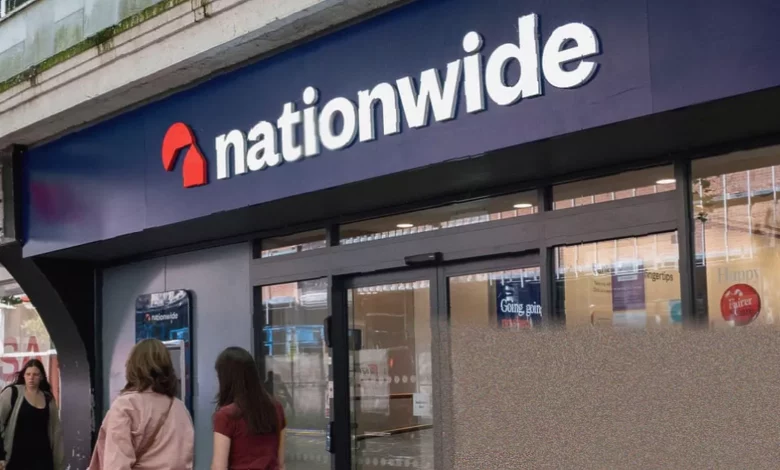
Nationwide Building Society is cutting 600 jobs in the first major round of redundancies directly linked to its controversial £2.9bn takeover of Virgin Money, a move that has reignited criticism over the mutual’s refusal to give members a say on the deal or on executive pay.
The job losses will affect staff from both Nationwide and Virgin Money whose roles have become duplicated as the two lenders’ operations are fully integrated. The cuts are understood to target back-office positions rather than customer-facing staff, and the building society has pledged to keep all its nearly 700 branches – including the former Virgin Money sites – open until at least 2030. Nationwide, which employs about 25,000 people, is now in a weeks-long consultation with the Nationwide Group staff union and Unite, which represents Virgin Money bank staff. The plans were revealed to colleagues last week.
Nationwide said it “is now the UK’s fastest-growing banking provider, continuing to attract more customers and expand into new areas such as business banking. As we integrate Virgin Money, we are making some modest changes in areas where activities overlap. However, we’re committed to retaining the talent and skills of our colleagues wherever we can.” The society is understood to be recruiting for about 270 roles, though none are specifically reserved for staff affected by the cuts.
These redundancies follow a series of earlier job losses that Nationwide undertook in the months leading up to the Virgin Money takeover, amounting to about 800 job cuts by early 2024. That included 200 staff whose redundancies were announced shortly before Christmas 2023, shortly after chief executive Debbie Crosbie rescinded a “work anywhere” policy introduced by her predecessor, Joe Garner, during the pandemic.
Merger details and branch network
Nationwide completed the acquisition of Virgin Money in October 2024, with the formal legal transfer of Virgin Money’s business taking effect on 2 April 2026 after court approval on 23 February 2026. The merger created the UK’s second-largest provider of mortgages and savings accounts. Nationwide recorded a £2.3bn gain from the acquisition, which it said provided significant headroom for integration costs. For the year ending 31 March 2026, statutory pre-tax profit was £1.49bn, down from £2.3bn the previous year – a figure that had been boosted by a one-off accounting gain from the takeover. Underlying profit before tax rose 9% to £2.03bn.
The integration is ongoing, with customer migrations under way in 2026. The Virgin Money brand is expected to be phased out, with a migration to the core Nationwide brand scheduled to begin later this year, leading to the debut of Nationwide-branded business banking suites in early 2027. The takeover gave Nationwide access to Virgin Money’s commercial banking expertise, an area it had previously sought to expand into. As of 4 June 2026, Nationwide operates a network of 696 branches – 605 under its own name and 91 Virgin Money outlets. The society is set to become the UK’s largest branch network, overtaking Lloyds Banking Group, and is also expanding services within branches, including dementia clinics and digital skills lessons.
Sir Richard Branson, who held a 14.5% stake in Virgin Money, secured an estimated £724m from the deal. Chris Rhodes, who led Virgin Money after Nationwide’s takeover, is set to retire as an executive director in May 2026 and from Nationwide entirely in September 2026.
Executive pay and member vote controversy
The takeover has also fuelled a long-running controversy over governance at Nationwide, which as a member-owned building society is expected to operate under mutual principles. Nationwide refused to give its members a binding vote on the Virgin Money acquisition, and it subsequently used the takeover – and the resulting expansion of its operations – to justify a 43% increase to Debbie Crosbie’s maximum pay package, allowing her to earn up to £7m if all criteria were met. Members were not given a binding vote on Crosbie’s pay rise at last year’s annual general meeting.
The lender’s annual report, released earlier this month, showed Crosbie was handed £3.2m in bonuses – a combination of payouts for annual and longer-term performance – pushing her overall pay packet to £4.7m for the year to March 2026. That represents an 88% jump from the previous year, partly driven by a three-year incentive plan that started in June 2023. The society’s board defended the increase, saying it reflected the heightened responsibilities following the Virgin Money takeover. The CEO-to-median employee pay ratio rose from 63:1 to 109:1.
Critics have argued that the refusal to grant members a binding vote on either the acquisition or executive pay deviates from mutual values and governance principles. A member-nominated candidate for Nationwide’s board has highlighted concerns including the use of advisory-only remuneration votes and the “Quick Vote” mechanism employed at annual general meetings. Unite, which represents Virgin Money staff, had previously warned of potential job losses during earlier restructurings at the bank.