North West entrepreneurs unite to place neurodivergent professionals in major global companies

A significant and often overlooked pool of talent in the UK is set to gain a powerful new advocate, as three North West entrepreneurs launch a tech firm aimed at dismantling the barriers neurodivergent people face when seeking work with the world’s largest companies.
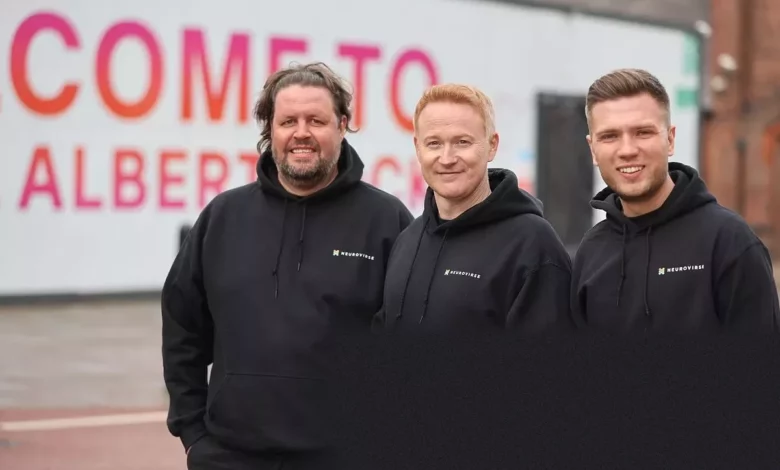
Kevin Blair, Mike Hulse, and Ben Usher have founded Neurovirse, an AI-powered recruitment platform built on the mission to turn “stigma to superpower”. Their venture launches against a stark backdrop: while an estimated 15-20% of UK adults are neurodivergent—a term encompassing autism, ADHD, dyslexia, dyspraxia, and Tourette’s syndrome—employment rates for this group are critically low. Government statistics indicate only around 22% of autistic adults are in employment, a figure that exposes a vast reservoir of untapped potential.
The Personal Drive Behind the Platform
For two of Neurovirse’s founders, the mission is deeply personal. Kevin Blair and Mike Hulse, friends of 25 years with senior talent acquisition careers at firms like Salesforce, IBM, and Microsoft, were motivated by their own children’s experiences. Blair’s son has autism and Hulse’s son has ADHD, both having encountered the hurdles of conventional hiring processes firsthand.
They were later joined by Ben Usher, a 31-year-old from Wirral who transitioned into recruitment after a career as a child actor. Usher, whose face became familiar in Nerf gun adverts during X Factor breaks and in shows like *Hollyoaks* and *Waterloo Road*, brought senior recruitment experience from organisations including the University of Manchester and Manchester United.
“Our mission is ‘from stigma to superpower’,” said Usher. “It’s to give these candidates access to jobs in enterprise environments.” The company aims to eventually help over a million candidates globally connect with major corporations.
Redesigning a Flawed Process
The trio argue that standard recruitment at large “enterprise” companies is fundamentally designed for neurotypical candidates, creating a series of obstacles. Usher outlined a typical process involving five or six stages, including large assessment centres and multi-person panel interviews, which can be uniquely challenging for neurodivergent individuals.
Research supports this view, identifying barriers such as complex interview questions, vague job descriptions, timed tasks, and pressure to “mask” natural traits. Alarmingly, half of neurodivergent adults report discrimination during recruitment, and 20% have experienced harassment or discrimination at work.
Neurovirse’s alternative model bypasses the traditional CV. Instead, candidates complete a neurodiversity assessment—approximately 90 questions taking 10 minutes, with no formal diagnosis required—to generate a “success profile”. This profile maps an individual’s behaviours, traits, and strengths. The platform’s AI then matches these profiles to suitable vacancies, using algorithms the company says are based on clinically valid scientific tests and designed to be free from biases related to race, gender, or religion.
“The reaction from candidates so far to the platform has been really positive,” Usher noted. The year-old business is now fundraising to support a global launch.
A Growing Movement for Inclusion
Neurovirse enters a growing national conversation about neurodiversity in the workplace. Its launch coincides with Neurodiversity Celebration Week (March 16-20, 2026), an initiative that challenges misconceptions and champions the unique strengths neurodivergent individuals often possess, such as exceptional pattern recognition, attention to detail, and creative problem-solving.
This shift is also being driven from the top. The UK government has established an independent expert panel, chaired by Professor Amanda Kirby, to advise on improving employment prospects for neurodivergent people, part of a wider “Plan for Change”. Initiatives include £7.6 million in funding to help adults with autism and learning disabilities into work, and the long-standing Access to Work scheme which provides grants for support.
Furthermore, the landmark Buckland Review of Autism Employment, published in 2024, recommended national campaigns for employers and autism-friendly recruitment practices. The Equality Act 2010 already mandates that employers provide “reasonable adjustments” for disabled job applicants and employees.
AI and the Future of Hiring
Neurovirse is also tapping into a significant trend within its own industry. The use of AI in recruitment has surged, with approximately 48% of UK recruitment agencies and 68% of recruitment professionals now leveraging the technology for tasks like screening and candidate engagement. Proponents argue it can improve efficiency and reduce unconscious bias, though concerns about algorithmic bias persist.
The founders envision Neurovirse evolving into a “one-stop shop,” potentially offering an AI-powered onboarding coach and workforce insights for companies. Their ambitious five-year goals include reaching £29.5m in annual recurring revenue.
They are not alone in seeing the value of neurodivergent talent. Global firms like EY have established Neuro-Diverse Centres of Excellence, including one in Manchester, focusing on areas like AI and data analytics. Regionally, organisations like Manchester Digital advocate for autism-friendly processes, suggesting home-based tech challenges over traditional interviews.
As high-profile entrepreneurs from Richard Branson to Jo Malone have reframed their dyslexia and ADHD as commercial “superpowers,” the business case for inclusion grows stronger. For Blair, Hulse, and Usher, Neurovirse represents a practical, technological pathway to turn that emerging awareness into meaningful opportunity for a vast, under-utilised section of the workforce.