Hopes for an imminent cut in borrowing costs have been dealt a severe blow, with a stark warning that interest rates may instead need to rise this year to control inflation, dashing the prospects of cheaper mortgages for millions.
The alert comes from Michael Saunders, a former member of the Bank of England’s rate-setting Monetary Policy Committee (MPC). He warned that the spiralling cost of food and fuel, driven by the conflict in Iran, has made the prospect of lower borrowing costs “increasingly less likely.”
Saunders, now a senior economic adviser at Oxford Economics, argued it would be “less costly” for the Bank to tighten policy this year and then loosen it if needed, rather than hold rates and risk having to implement “sharp tightening next year” if inflation becomes entrenched.
The Geopolitical Spark to an Inflationary Fire
The core of the warning lies in the intricate link between Middle East conflict, energy prices, and the UK’s cost of living. The Iran war has triggered a significant surge in global energy and commodity prices. Brent crude oil jumped 10-13% in its immediate aftermath, while European natural gas futures soared by 59%.
This matters profoundly for the UK, a net energy importer particularly exposed to such shocks. The disruption to the Strait of Hormuz—a vital corridor for 20% of the world’s oil—has fuelled fears of a sustained inflationary supply shock.
As a result, the Bank of England’s inflation outlook has darkened. Before the conflict, the Bank and City economists believed the Consumer Prices Index (CPI) inflation, currently at 3.0%, would fall close to the official 2% target this spring. The Bank now anticipates CPI will be between 3% and 3.5% in the second and third quarters of 2026 due to higher energy costs. Saunders warned the figure could reach as high as 4.5%.
“A decision to hike rates while CPI inflation is rising sharply could have a better impact in signalling the MPC’s commitment to the inflation target,” Saunders said.
Diverging Views Within the Bank
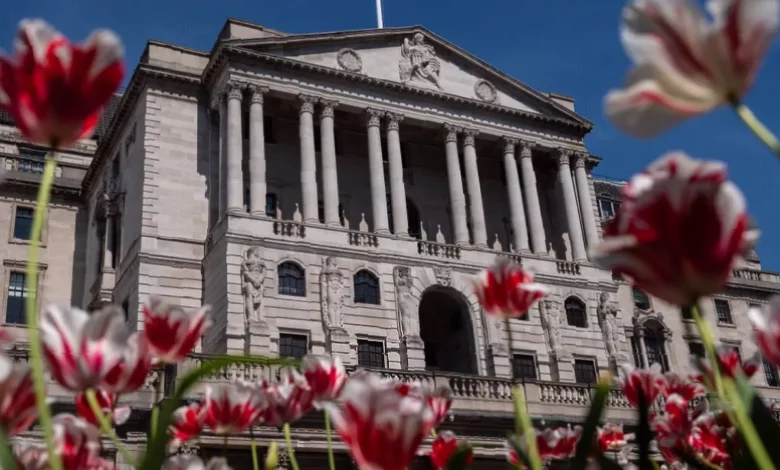
The Bank’s own officials are grappling with the appropriate response. At its last meeting on 19 March, the nine-member MPC, which includes the Governor, Chief Economist, and external appointees, voted unanimously to keep the Bank Rate at 3.75%.
Governor Andrew Bailey has stated the Bank is “ready to act” to combat the war’s inflationary impact while seeking to temper market expectations of further hikes. However, Chief Economist Huw Pill has expressed scepticism about a passive “wait and see” approach to rising inflation, and has a history of voting for higher borrowing costs than some colleagues, citing concerns over wage growth.
The committee, which meets approximately every six weeks, will next convene on 30 April. It is widely expected to maintain its current stance, but the pressure for action is building.
The International Monetary Fund has warned the conflict risks triggering a global recession, cutting its UK growth forecast for 2026 to 0.8%. With UK GDP growth already projected to ease to 1.2% this year—and some forecasts suggesting it could slow to around 0.5%—the Bank faces the unenviable task of choosing between tackling inflation and stifling a weak economy.
Market Realities and Expert Analysis
The financial markets have already moved aggressively. Since the Iran conflict began, the cost of a two-year fixed-rate mortgage has leapt from around 4% to well above 5%, with lenders withdrawing the cheapest deals. The average two-year fix has risen to 5.88%, and the average five-year fix to 5.77%. As of March, the UK BBA Mortgage Rate stood at 6.60%.
This sharp reset has profound implications for homeowners and the housing market, occurring against a historical backdrop where the average mortgage rate over the past three decades has been 5.76%.
Other economists are weighing the dilemma. Paul Dales, Chief UK Economist at Capital Economics, acknowledged Saunders’s reasoning was “sensible,” agreeing that if CPI inflation rises to 4.5%, a rate hike is possible.
However, Dales offered a more cautious interpretation. “In our baseline scenario, CPI inflation rises to 4.0%, which is probably just about a level the BoE can tolerate, especially when the economy is weak,” he said. “After all, CPI inflation rose to 3.8% last year, and the BoE carried on cutting rates.”
His conclusion suggests a potential gap between rhetoric and action: “My hunch is that it is more likely that the BoE will talk tough, but won’t actually deliver a rate hike, unless inflation rises much above 4.0%.”