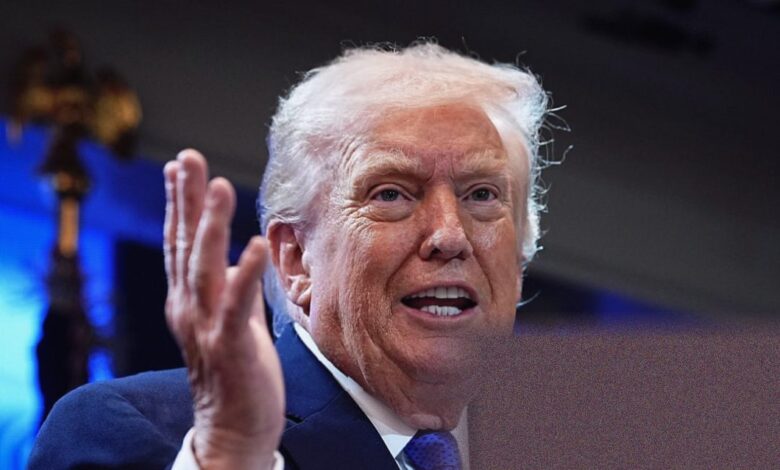
President Donald Trump has invoked a never-before-used trade statute to impose a sweeping 10% tariff on all imports, a dramatic move that came just hours after a stinging rebuke from the US Supreme Court.
The new temporary import duty, announced from the Oval Office on Friday, will take effect on 24 February at 12.01 AM Eastern Time, according to a White House fact sheet. It will apply to all countries except for key exemptions, chiefly Canada and Mexico, which are excluded in alignment with the North American trade pact.
A Swift Response to a Supreme Court Defeat
The global tariff is President Trump’s immediate counterpunch to a Supreme Court ruling earlier the same day. The court ruled 6-3 that the president had exceeded his authority by imposing previous tariffs under the International Emergency Economic Powers Act (IEEPA). In the majority opinion, Chief Justice John Roberts stated the act’s language does not grant the president the power to levy duties, a power constitutionally reserved for Congress.
Trump, who called the ruling “deeply disappointing,” unleashed a furious attack on the six justices who formed the majority. “It is my opinion that the court has been swayed by foreign interests and a political movement that is far smaller than people would ever think,” he said during remarks at the White House, though he offered no evidence when pressed. He labelled the justices a “disgrace to the nation” and said he was “ashamed of certain members of the court.”
He reserved particular criticism for two of his own appointees, Justices Amy Coney Barrett and Neil Gorsuch, calling them “an embarrassment to their families” and “very unpatriotic and disloyal to our constitution.” He said they were “barely” invited to the upcoming State of the Union address. By contrast, he praised the three dissenting justices: Brett Kavanaugh, who wrote the main dissent, Clarence Thomas, and Samuel Alito.
The Legal Path to a “Global 10% Tariff”
To enact the new duty, the Trump administration is relying on Section 122 of the Trade Act of 1974. The White House stated the president had signed a proclamation invoking this authority to impose “a temporary import duty.” In a post on his Truth Social platform, Trump announced: “It is my Great Honor to have just signed… a Global 10% Tariff on all Countries.”
According to an explanation from the Congressional Research Service, Section 122 allows the president to impose measures like a temporary import surcharge to address “large and serious United States balance-of-payments deficits” or other “fundamental international payments problems.” The provision, enacted in response to President Nixon’s 1971 import surcharge, has never been used before and therefore has never been interpreted by the courts.
The law places clear limits on its use: the tariff may not exceed 15% and can only be imposed for a period not exceeding 150 days, unless extended by Congress. Trump’s 10% tariff falls within this ceiling. The president asserted he had the authority to impose these additional tariffs under existing statutes without needing congressional approval.
He also signalled his intent to continue using other trade tools, stating that tariffs imposed under Section 232 of the Trade Expansion Act of 1962, which are for national security grounds, and Section 301 of the Trade Act of 1974, used to counter unfair trade practices, would remain “in place and in full force and effect.”
Exemptions and Economic Fallout
The new tariff proclamation includes significant carve-outs. Alongside Canada and Mexico, exemptions cover certain food products such as beef and tomatoes, critical minerals, energy products, pharmaceuticals, electronics, automotive products, and aerospace products. Goods already covered under existing Section 232 tariffs and duty-free textiles from Central American countries are also excluded.
The economic implications are vast. The Supreme Court’s invalidation of all previous tariffs imposed under IEEPA—including so-called “reciprocal tariffs” and “trafficking and immigration tariffs”—means importers who paid those duties may now be entitled to refunds. Some estimates suggest the reimbursement total could reach as high as $175 billion, though the process is expected to be complex.
Economists warn that tariffs generally increase costs for consumers and businesses and can slow job growth. The new across-the-board duty is expected to affect a wide range of goods, with costs likely to be passed on to consumers, disproportionately impacting low-income families facing higher prices for necessities.
Internationally, Canada and Mexico welcomed the Supreme Court’s earlier decision, with some hoping it could help revive negotiations on the Canada-United States-Mexico Agreement (CUSMA). Other nations are now reviewing the impact of the new global tariff on their trade deals and economies.
The court’s ruling has also sparked renewed interest in Congress to reassert its constitutional authority over trade and import taxes. By turning to the untested Section 122, President Trump has embarked on a novel and temporary legal path for his trade policy, setting the stage for both economic uncertainty and potential further legal challenges.