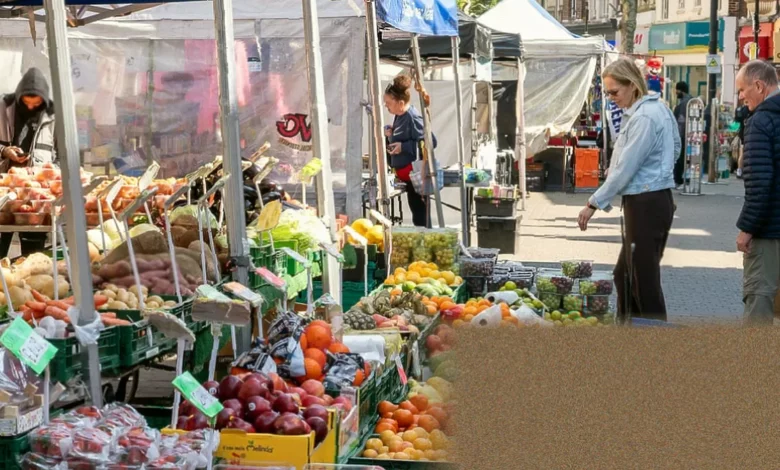
Food prices are on course to rise by 50% by November 2026 compared with mid-2021 levels, according to analysis by the Energy and Climate Intelligence Unit. The projection, driven by climate-related disruptions, global supply chain issues and volatile energy markets, would mark a significant acceleration of food inflation. Staples such as pasta, frozen vegetables, chocolate, eggs, beef and olive oil have already seen substantial price increases, and the food industry is warning the Treasury that without intervention the next wave of inflation will land on consumers already stretched to breaking point.
Price rises already squeezing the poorest hardest
The gap between what people can afford and what a healthy diet costs has become stark. Healthier foods are on average three times more expensive per calorie than less nutritious options. The poorest fifth of the UK population may need to spend up to 47% of their disposable income to eat a healthy diet, compared with just 11% for the richest fifth. The Bread and Butter Thing, which runs affordable food clubs from Maidstone to Northumberland, supports more than 10,000 households each week. Last week alone 439 new members joined the network. For many of these families, food is the first item to be cut when budgets tighten, and the freshest food is the most expensive. Whole neighbourhoods have become food deserts: an estimated 8% of deprived areas in Great Britain are classed as food deserts, affecting around 1.2 million people. In Camden, London, there are 1,153% more takeaway outlets than supermarkets.
The pattern is also visible in the national data. The Trussell Trust reported a 50% increase in emergency food parcels distributed in the first half of 2022 compared with pre-pandemic levels. By June 2024, the Food Foundation’s tracking showed that 13.6% of households experienced moderate or severe food insecurity, up from 8.8% in January 2022. An estimated 15% of households with children are now food insecure.
The health toll of unaffordable food
When households cannot afford enough nutritious food, the consequences ripple through physical and mental health – and the mechanism is already visible long before official health statistics catch up. The Bread and Butter Thing’s 2025 survey of more than 8,500 members reveals the pattern in stark detail. Among households with £0 to £25 left each month after housing and energy bills, 87% describe their overall health as not good. “By the time poor health shows up in the data, families have been cutting food quality, quantity and variety for years,” said Vic Harper, chief executive of The Bread and Butter Thing.
The link between food insecurity and mental health is particularly strong. A survey by the Food Foundation found that 28% of people with a mental health condition live in households experiencing food insecurity, compared with 11% of those without. Adults with mental illness are more than twice as likely to struggle to put food on the table. Children in food-insecure households are almost three times as likely to have a probable mental disorder. Food insecurity is associated with increased anxiety, depression and stress.
Long-term health conditions also intersect with food poverty. Studies indicate that 18% of people with a long-term limiting illness in Scotland were found to be food insecure, and the inability to afford a healthy diet can make managing these conditions more difficult. Low-income families often turn to cheaper, ultra-processed, high-energy foods, driving a rise in obesity and diet-related illnesses such as type 2 diabetes and cardiovascular disease. Projections suggest that 40% of the UK population could be obese by 2025 if current trends continue.
The problem is not limited to quantity: access to fresh produce is a key factor. “The freshest food is the most expensive,” Harper said, and in low-income neighbourhoods the prevalence of takeaway outlets far outstrips supermarket provision. The cost of healthy calories, combined with limited availability, creates a spiral in which poorer households are systematically locked out of nutritious eating.
Reversing the trajectory
Despite the bleak picture, the impact of targeted interventions is measurable. The Bread and Butter Thing now operates food clubs in 155 communities across 34 local authorities, supporting close to 60,000 families each week. The organisation has helped a significant number of members reduce or stop their reliance on food banks. More than a quarter of members with long-term conditions report improved health since joining, and three-quarters of all members say they now have better access to healthy food where they live. Among those who participate, 79% report better access to fruit and vegetables, and 82% say they have tried new foods since joining. The clubs also aim to build community and reduce loneliness by providing a safe, welcoming environment.
Harper argues that the government needs to treat affordable fresh food as prevention infrastructure, not charity. “The trajectory is reversible,” he said. “The government needs to stop treating affordable fresh food as charity and start treating it as prevention infrastructure.” The government has outlined a “Good Food Cycle” strategy intended to create a more resilient, sustainable and accessible food system, and it supports programmes such as the Healthy Start Scheme, school breakfast clubs and the Holiday Activities and Food Programme.
However, food industry bodies have warned that further price rises are likely without action on the broader cost drivers. The British Retail Consortium has warned that food inflation could remain above 5% into 2026. The Food and Drink Federation predicts food price rises of 5.7% by December 2025, driven by regulatory pressures and taxes rather than energy and agricultural inputs alone, while post-Brexit border checks have added costs to imports. Supermarket chiefs have cautioned the Treasury against imposing additional taxes on retail, arguing that such measures would land directly on consumer prices.
For the families already at the edge, the next wave of inflation – whether from climate shocks, supply disruptions or fiscal policy – will be felt first in the weekly shop, and then in their health. The data from charities, surveys and the food industry itself all point to the same conclusion: the price of food has become a public health emergency that demands a structural response.