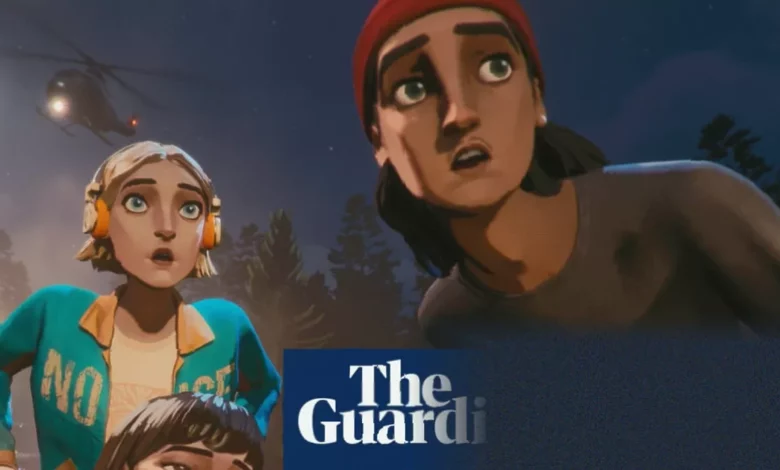
Mixtape, the latest narrative adventure from the BAFTA-winning studio Beethoven & Dinosaur, uses its carefully curated soundtrack to trigger a series of playable, visually stunning flashbacks. The game, released on 7 May 2026 for PC, PlayStation 5, Xbox Series X/S and Nintendo Switch 2 (and available from day one on Xbox Game Pass), follows three high-school friends on their final night together in a nondescript town in northern California. Rockford (also referred to as Stacy), Slater and Cassandra are heading to a legendary end-of-year party, but Rockford – who dreams of becoming a music supervisor – wants to immortalise their shared memories by creating a mixtape. Each song on the tape acts as a key to a specific moment from their teenage years, turning those recollections into a series of interactive sequences.
Playable Memories
The gameplay in Mixtape is deliberately light and experiential, focusing on atmosphere and narrative rather than punishing mechanics. With a runtime of roughly four to six hours, it presents each flashback as a distinct mini-game that matches the tone of the memory. When the grunge anthem Freak by Silverchair kicks in, players headbang along in Slater’s car in a sequence reminiscent of Wayne’s World, tapping buttons in time with the crashing cymbals and riffs. A disastrous first kiss is reimagined as a two-stick challenge in which players control a pair of flailing tongues, mashing them together with chaotic, saliva-soaked abandon. Other vignettes lean into the surreal: when the police break up a house party, Rockford and Slater must steer a passed-out Cassandra in a shopping trolley across roads and highways Frogger-style. There is also a skateboarding segment set to Smashing Pumpkins’ Love, where each obscene gesture made by the teenagers causes distant cars to explode in their minds. The game does not punish failure, and no alternate endings exist – it is, as the developer puts it, an “experiential” title built around narrative and atmosphere.
A Handcrafted World
Visually, Mixtape is a consistent delight. Its stop-motion-inspired animation, bathed in warm hues, draws comparisons to Spider-Man: Into the Spider-Verse. The game blends two-dimensional and three-dimensional elements to create a textured, handmade aesthetic that director Johnny Galvatron has described as “channel-surfing [old-school] MTV at 3 AM.” Early scenes also incorporate mixed media, splicing real-world footage with gameplay in a manner reminiscent of the Metal Gear Solid series – though here the documentary-style interjections involve a teenager explaining the wonders of the Compact Disc rather than grainy wartime footage. The art direction evokes filmmakers such as Wes Anderson, and the overall impression is of a “playable animated hangout film,” oozing a cartoony, laid-back energy whether the characters are breaking into an abandoned dinosaur theme park or skimming stones across a picturesque river.
The Soundtrack of Adolescence
The connection between the song choices and character development lies at the heart of Mixtape – but that connection is not always successful. The soundtrack is packed with 90s hits from artists including Portishead, Devo, Roxy Music, Lush, The Smashing Pumpkins, Iggy Pop, Siouxsie and the Banshees, Joy Division and The Cure, and the game’s narrative structure was built around the music, with the order of songs dictating the story’s emotional beats. Rockford introduces each track by staring straight into the camera and delivering a snarky, irreverent narration that shares facts about the artist or song – a nod to films such as High Fidelity and Juno. But where High Fidelity uses its protagonist’s music picks to reveal the inner workings of his failed relationships, Mixtape’s selections can feel impersonal and pretentious, closer to a pun-filled Wikipedia entry than something that truly enriches Rockford’s character.
The developer has said the licensed music is the “soul” of the game – which is why it does not include a streamer mode – and the soundtrack is undeniably appealing for anyone who grew up in the era. But the lack of an emotional throughline lets the adventure down. While the writing is filled with pithy one-liners, it rarely evokes anything deeper. When the trio finally arrives at the party in the finale, the moment is not a euphoric, cathartic culmination of their trials and tribulations but a booze-filled box-ticking exercise. The game curates a crowd-pleasing compilation of teenage tropes and homages to coming-of-age cinema – with influences cited as John Hughes, Dazed and Confused and Wayne’s World – but without any real conflict at its core, the adventure fails to match the memorable heights of Life Is Strange.
Mixtape has received generally positive reviews, with critics praising its art direction, soundtrack and unique blend of gameplay and narrative – some have called it a “sensational achievement” and a “must-experience game.” Yet the reviewer who spent four hours with it noted that the song selections ultimately feel impersonal and that the experience, while beautiful and inventively silly, leaves you with the nagging sense that you might have spent your time more wisely. Much like an evening scrolling through classic music videos on YouTube, there is a simple, nostalgic joy to be found. But once this four-hour spectacle is over, that joy can quickly curdle into the realisation that the mixtape played it safe.