The relaunch of England’s Women’s Health Strategy, with its ambitious pledge to tackle “medical misogyny”, risks overlooking the deep-seated inequalities embedded within the healthcare system, particularly for women of colour. While the new plans address glaring issues, experts and advocates warn that without a fundamental reckoning with how race, culture, and access shape medical outcomes, the strategy may only scratch the surface.
The Strategy’s Aims: A Direct Response to Systemic Failure
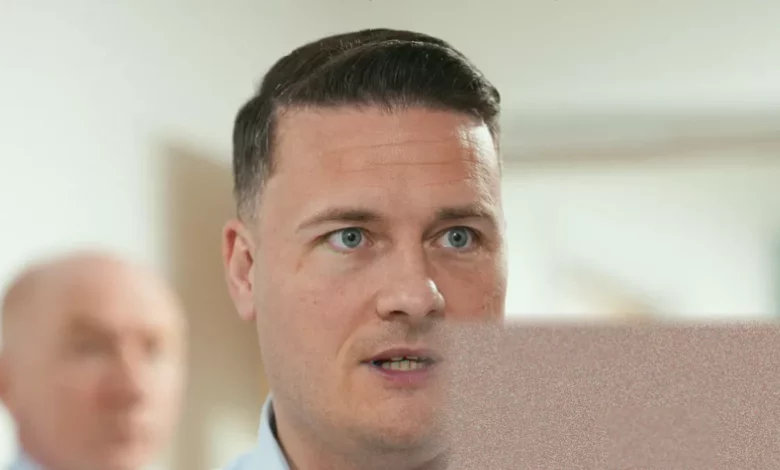
Health Secretary Wes Streeting has formally relaunched the strategy, acknowledging the NHS has historically “failed women” and vowing to end the practice of women being “gaslit” by doctors. The updated plan introduces several concrete measures aimed at transforming care. A new standard will mandate adequate pain relief for invasive gynaecological procedures like coil fittings and hysteroscopies. In a significant move towards accountability, a trial will link patient feedback on experiences directly to provider funding.
To tackle often agonising delays, clinical pathways for conditions like endometriosis, heavy periods, and menopause are to be redesigned. The strategy also backs the expansion of women’s health hubs for integrated care, a £1 million menstrual education programme for girls, and a £1.5 million FemTech Challenge Fund to accelerate innovative technologies. An overarching “Women’s Voices Partnership” is slated for 2027 to embed lived experience into policy.
The Personal Cost of Dismissal
This policy push responds to a well-documented crisis. The term “medical misogyny” describes a pattern where women’s pain and symptoms are systematically dismissed or minimised. A Mumsnet survey, analysing a decade of posts, found half of female patients felt dismissed by NHS professionals due to their sex, with 64% told their pain was “normal” or “in their head”. The consequences are severe: women who experience this medical gaslighting report significantly higher health anxiety and eroded trust.
For writer and health equity advocate Vanessa Haye, a British-Ghanaian woman, this is not abstract data but a two-decade personal reality. She describes the common ordeal of visiting a GP with severe period pain, only to be dismissed and prescribed the pill, culminating in a delayed chronic condition diagnosis years later. “That woman is me and thousands of others,” she states, highlighting a journey familiar to many navigating gynaecological care.
This personal struggle unfolds against a backdrop of systemic strain. As of December 2024, 586,013 women in England were on the gynaecology waiting list, with UK-wide estimates reaching up to 750,000. The average wait is 14 weeks, but some face delays of up to a year, with over 76% of waiting women reporting a deterioration in their mental health.
The Imperative for Inclusivity: Ethnicity, Culture, and Outcomes
Critics argue that for the strategy to be truly transformative, it must confront the stark disparities that define healthcare for ethnic minority women. Research shows Black, Asian, and minority ethnic (BAME) women consistently experience worse outcomes. The most acute example is in maternity care: MBRRACE-UK reports show Black women are nearly four times more likely to die during pregnancy or postnatally than white women, with Asian women at 1.8 times the risk.
The inequalities extend across reproductive health. Black individuals in the UK are over 25 times less likely to access fertility treatment than their white counterparts. In London, Black women experience up to three times the rate of long-term conditions like chronic pain, anxiety, and hypertension. This points to the intersection of misogyny and racism, termed “misogynoir”, which is identified as being deeply embedded in UK institutions like the NHS, manifesting as dismissal, exploitation, and silencing.
Furthermore, the strategy’s embrace of innovation through Femtech brings its own equity challenges. While digital tools hold promise for closing gender health data gaps, concerns exist that a boom in women’s health technology could exacerbate divides if development, funding, and access are not intentionally inclusive. The £1.5 million FemTech Challenge Fund will be watched closely to see which “groups or founders are funded,” and which women’s needs are ultimately prioritised.
For advocates like Vanessa Haye, whose work at the Francis Crick Institute involves gender equality initiatives, the test of the relaunched strategy is whether it moves beyond being merely responsive to becoming genuinely reflective. “Creating systems that are inclusive and reflective of the diversity of women’s experiences is the best way forward,” she concludes. The government’s commitment to tackling “medical misogyny” will be measured by its willingness to equally confront the misogynoir that dictates whose pain is believed, and whose lives are prioritised.