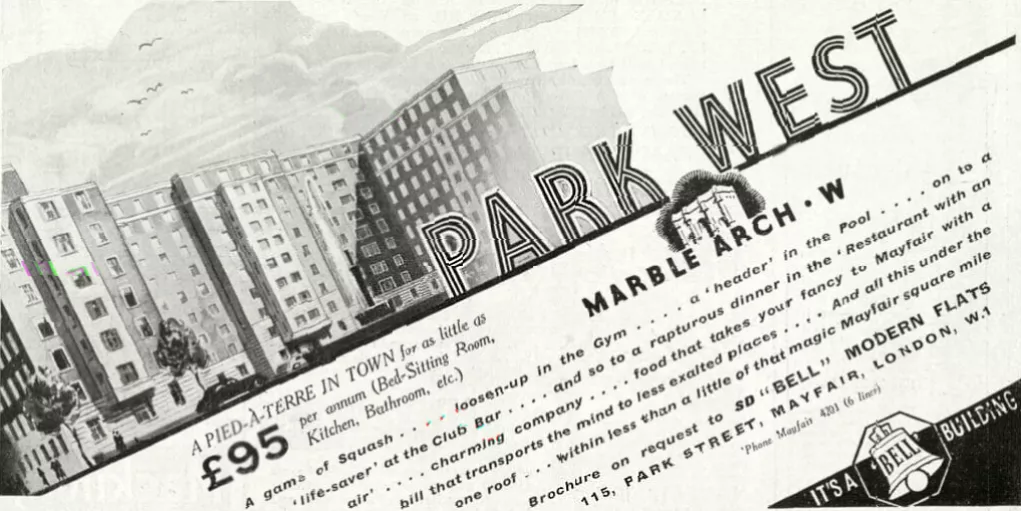
In a London housing market defined by astronomical costs, it is almost inconceivable to learn that flats in a major development just off the Edgware Road were once advertised for annual rents starting at £95, with even the most expensive coming in at under £320 for a whole year.
From Bishop’s Estate to Bell’s Bricks
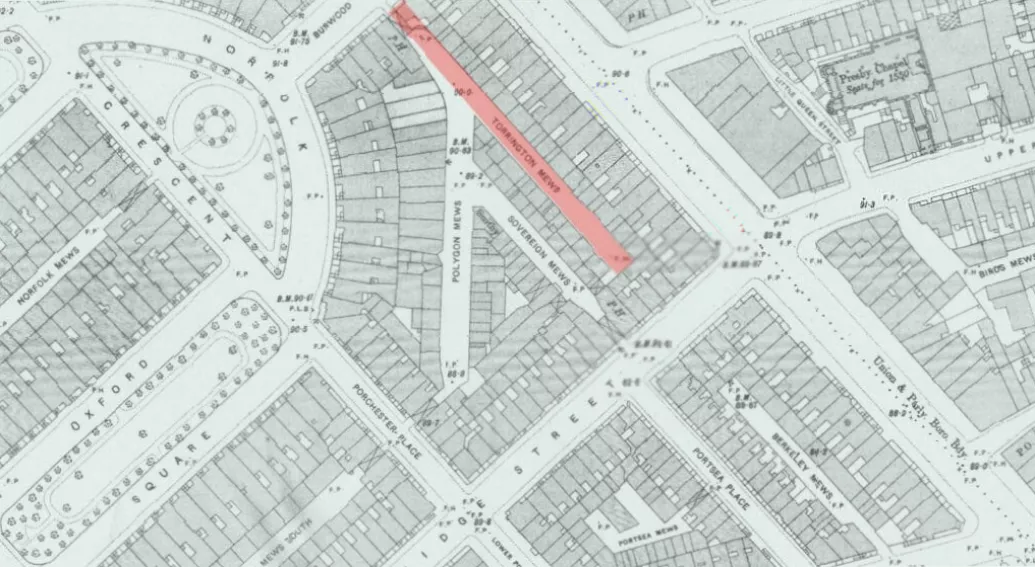
This story of transformation begins with land that was, for centuries, fields owned by the Bishop of London. The area’s development into the district known as Tyburnia – a name echoing the nearby, notorious Tyburn gallows – was masterplanned in 1824 by Samuel Pepys Cockerell, an ambitious attempt to create a rival to Belgravia. The first buildings here backed onto service passages, and one of these was Torrington Mews. As the name suggests, this was not a grand avenue but a functional lane, lined with the stables that served as the original garages for the horses of wealthy residents in the houses facing the ancient Edgware Road, itself a route paved by the Romans as part of Watling Street.
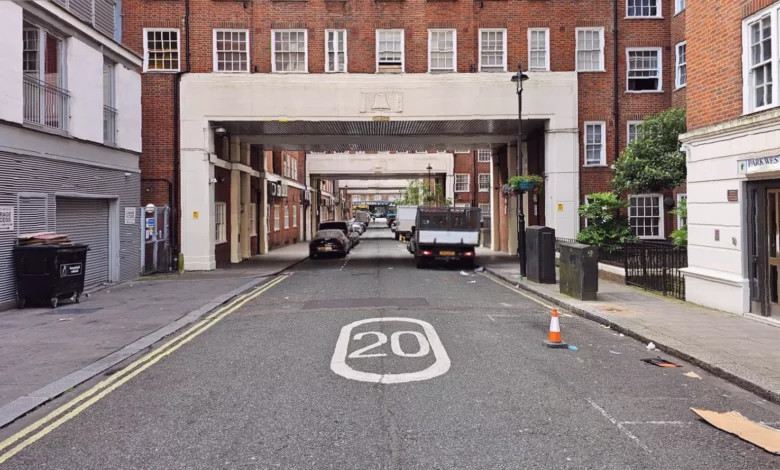
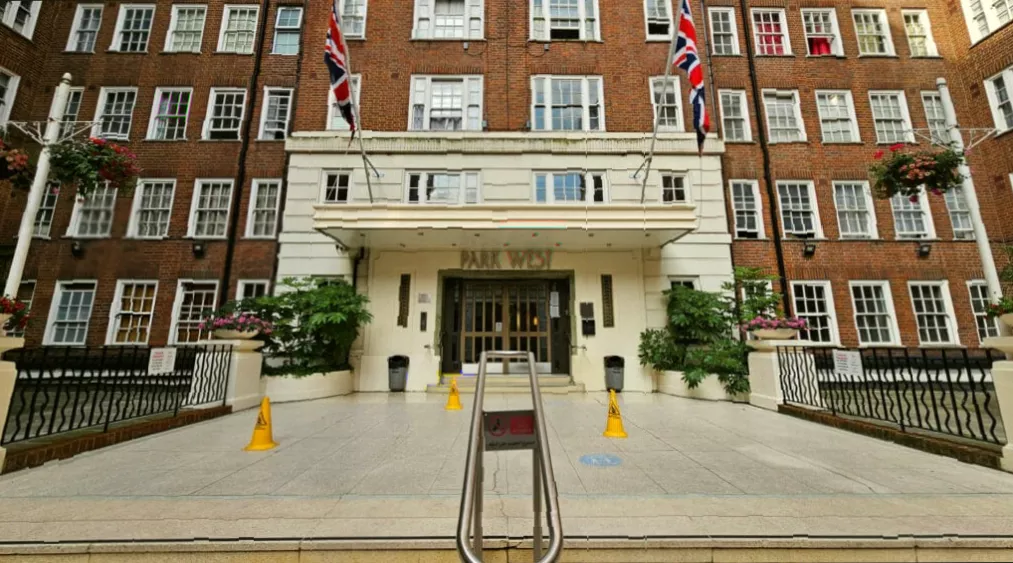
The Church’s hand in shaping the area was formalised in 1868 when the Bishop of London transferred the freehold to the Ecclesiastical Commissioners, now the Church Commissioners for England. For decades, the mews likely remained much the same. The radical change came when the Church Commissioners decided to redevelop part of the site in the 1920s and 30s. The result was the vast Park West complex, a fortress of modernity that erased the old mews alley. In its place, running through the heart of the new block, was Park Place West.
The Rise, Stumble, and Sale of Park West
The new flats, built by Bell Properties Trust, were marketed as modern, serviced rental accommodation. But the advertised annual rents, from £95 to £320, hint at a development that may have struggled from the start; records suggest flats were still available two years later, with rents being reduced. The block later gained a slice of notoriety through its connection to Sir Eric Miller, the boss of the building owner, who was alleged to have offered free accommodation in spare flats to players from Fulham Football Club, a club he helped direct.
The Church Commissioners’ relationship with the property shifted decisively in the 1970s when they abandoned a policy against selling freeholds. Park West was sold outright for £9.5 million to the building owner, with a further £2 million paid to the Church for the freehold. This transaction catalysed the block’s evolution into what it is today: primarily a collection of privately owned flats, a world away from its original purpose as managed rentals.
A Passageway with a Split Personality
Today, Park Place West itself embodies this layered history. It serves as the main entrance to the hundreds of homes in Park West, yet it retains a slightly shabby, utilitarian air in places, feeling more like a back-of-house corridor than a grand boulevard. Low railings bear warnings not to sit on them, a deterrent to loitering or a nod to questionable stability. The keen-eyed will spot decorative bells at the entrances to the covered sections—a quiet signature from the original builders, Bell Properties Trust.
The southern end of the passage tells another chapter of urban adaptation. Here lies a former public car park, built into the basement, which closed in 2013. Over the objections of the Park West Residents’ Association, who raised concerns about increased traffic, noise, and fire safety, it was later converted into a safe storage facility. Planning documents for the conversion revealed official concerns about people storing flammable objects there—an irony not lost on observers, given its previous decades housing petrol-filled cars. Prior to its formal conversion, the space had been used informally as a car workshop without permission.
The area’s journey from Roman road to bishop’s fields, from stable mews to a 1930s rental experiment, and finally to a private estate where residents now contend with issues like inconsiderate parking and short-term lets, is all encapsulated in this one functional passage. Park Place West is no grand square, but in its unassuming length, it holds the stratified history of London’s relentless reinvention.