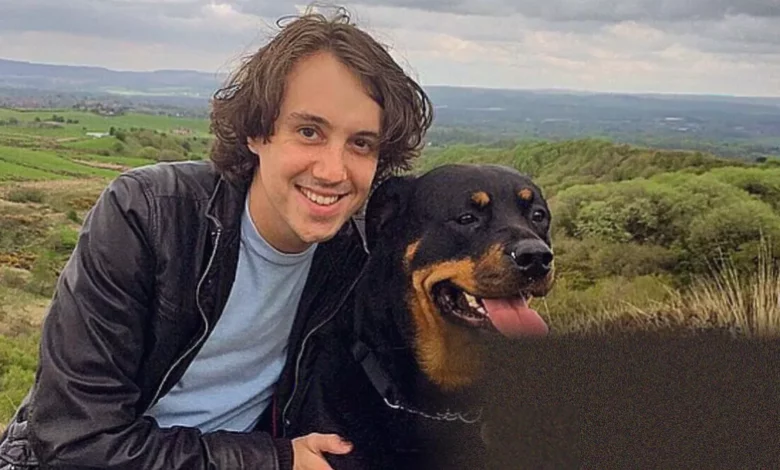
A coroner has ruled that a prescription for medicinal cannabis likely contributed to a patient’s death, in what is believed to be the first ruling of its kind in the UK. Catherine McKenna, HM Area Coroner for Manchester North, concluded that the prescription issued to 34-year-old Oliver Robinson “probably contributed to his death” and “acted as an obstacle” to him receiving appropriate psychiatric and addiction care.
The inquest into Oliver’s death in November 2023 heard that his continued use of the prescription, first issued by the private Curaleaf Clinic in May 2022, reinforced his belief that cannabis was essential for treating his depression. The coroner’s report detailed a series of failings: the prescribing decision was based on an out-of-date GP summary and incomplete information; the consultant psychiatrist involved lacked experience in treating adults with Oliver’s complex presentation; and the clinic did not communicate directly with his NHS or private psychiatrists once it became aware he was receiving other care.
Family’s campaign for “Oliver’s Law”
Following the inquest, Oliver’s brother, Alexander Robinson, is launching a campaign for tighter regulation of private cannabis clinics, warning that without change, his brother will not be the last to be harmed. “If things do not change he is not going to be the last,” Alexander said.
The campaign, dubbed “Oliver’s Law,” calls for a ban on prescribing to people with serious mental illness, mandatory consultation with NHS mental health teams, and face-to-face assessments for complex cases rather than video consultations. It also advocates for tougher oversight by the Care Quality Commission (CQC), including routine audits and publication of prescribing data, mandatory reporting of serious harms, and clearer General Medical Council sanctions for unsafe prescribing.
Alexander described the final 11 months of his brother’s life as “the most traumatic and hellish of my life,” marked by aggressive and vitriolic messages that were completely out of character. Oliver’s behaviour had become violent and threatening, leading to police being regularly called and his mother being classified as a victim of domestic abuse. He lost his job, took out a payday loan to fund his prescription—which cost up to £1,000 a month—and ended up living in a tent after being evicted from an Airbnb.
A rapidly expanding private market
The case has cast a spotlight on the UK’s rapidly growing private medicinal cannabis industry. Legalised in 2018, cannabis-based medicinal products can be prescribed by doctors on the GMC’s specialist register. However, the NHS typically prescribes only a small number of licensed products for conditions like severe epilepsy or multiple sclerosis.
The private market, in contrast, is dominated by unlicensed products which have not been approved by the Medicines and Healthcare products Regulatory Agency (MHRA). Freedom of information data shows 659,293 unlicensed cannabis products were privately prescribed in 2024, more than double the figure for 2023. Approximately 80,000 people in the UK are thought to hold a private prescription, and the market has nearly tripled in size since 2022.
This growth occurs despite limited evidence for cannabis as a treatment for depression. Dr Pavan Chahl, an expert psychiatrist who gave evidence at Oliver’s inquest, stated that under current British National Formulary guidance, medicinal cannabis should not be prescribed to someone with a history of severe psychiatric disorder. “There is a lack of evidence for efficacy in depression and evidence it can cause or worsen depression,” he said.
This concern is amplified by the potency of some prescribed products. Medicinal cannabis can contain up to 27% tetrahydrocannabinol (THC), the psychoactive compound, compared to an estimated 15-20% in typical street cannabis. There is a noted trend in the UK market towards these higher-THC products.
Questions of oversight and intent
The coroner has issued a prevention of future deaths report to Curaleaf Clinic, which submitted its response in February. The report was also sent to the CQC, which rated Curaleaf as “Good” overall last year. A CQC spokesperson said it was reviewing the report to consider if regulatory action was needed.
In a statement, Curaleaf Clinic offered condolences and said many improvements identified were already in place before the inquest. It emphasised that prescribing decisions are made by a multidisciplinary team and said it would engage constructively with any review aimed at strengthening patient safety.
The case has prompted broader criticism of the sector. Professor Sir Robin Murray, a psychiatrist at King’s College Hospital, has described some private clinics as “nothing more than drug dealers for the middle classes,” suggesting the sector has become a money-making business rather than fulfilling the original legislative intent.
For Oliver Robinson, who had a long history of depression and cannabis use since age 13, the legitimising effect of a prescription proved catastrophic. After leaving the Priory hospital, he found temporary relief in cannabis and sought a legal prescription. Following a video consultation with Dr Urmila Bhoskar, a child and adolescent psychiatrist, Curaleaf’s multidisciplinary team agreed a trial was appropriate. Dr Bhoskar is now being referred to the GMC.
Oliver subsequently rejected an NHS diagnosis of bipolar disorder and cannabis dependency, and refused to engage with addiction services. His family believe the private prescription entrenched his dependency and isolated him from the professional care he desperately needed. The coroner concluded his death was multi-factorial, stemming from longstanding depression, psycho-social stressors, and cannabis dependency, with his final act seen as one of communicating distress.