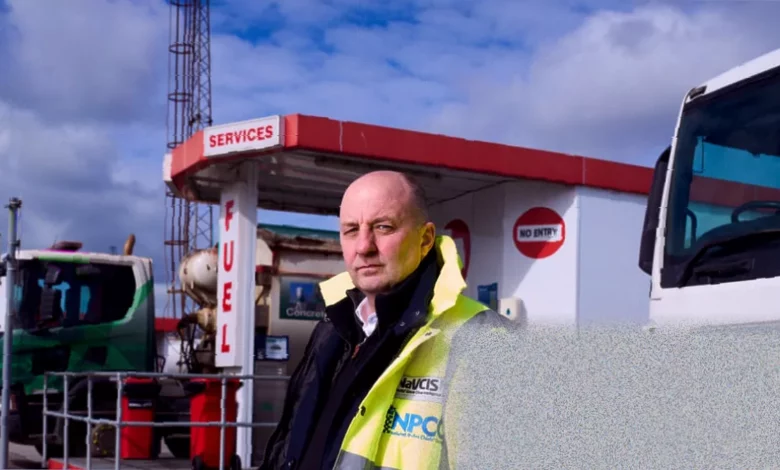
Ask Detective Mike Dawber to recall a stolen consignment, any one of the thousands he has dealt with, and the details emerge with startling precision. The Cadbury Creme Eggs lifted in Telford? That was 11 February 2023, with a market value of £250,000. The 2,300 bottles of Martell cognac found in a Mercedes Sprinter on false plates? Stolen from Daventry hours earlier, worth a quarter of a million. As the UK’s leading field intelligence officer for cargo crime, Mike Dawber doesn’t just consult the records; in many ways, he is the record.
That unique repository of knowledge is a critical asset in a growing crisis. Cargo crime is estimated to cost the UK economy approximately £700 million a year, a figure encompassing lost goods, VAT, and spiralling insurance costs. The direct value of stolen goods has surged, from £68.3 million in 2023 to £111 million in 2024, according to industry data. Dawber’s own caseload at the National Vehicle Crime Intelligence Service (NaVCIS) has more than tripled since 2017, to around 5,000 investigations annually. The goods targeted have shifted from the bullion of yesteryear to the staples and luxuries of modern life: baby formula, olive oil, PlayStation 5s, and even, as he once discovered, a pallet of ‘eyelash technology’ worth over half a million pounds.
The Method in the Madness
The work is far from opportunistic. Today’s cargo thieves are highly organised, employing sophisticated methods that exploit systemic vulnerabilities in the UK’s logistics network. The most common point of attack is the humble curtain-sided lorry, a revolutionary but vulnerable piece of haulage technology where goods are protected by little more than a sheet of PVC-coated polyester.
Dawber estimates about a quarter of the thefts he sees are from ‘curtain-slashing’. Gangs operate with such routine that some develop signature cuts—an incision shaped like a number seven for whisky, a letterbox flap for peering at laptop pallets. Data from NaVCIS indicates 43% of thefts occur at the roadside and 32% at motorway service stations, where drivers are legally required to rest. A typical raid involves a spotter, under cover of darkness, moving truck-to-truck to identify valuable loads. Accomplices then arrive in a side-loading van, park flush against the trailer, cut a matching hole, and transfer the goods without their feet ever touching the ground.
But the audacity does not stop there. A more dangerous tactic, known dubiously as the “Romanian rollover”, involves targeting trucks on the move. In footage seen by investigators, criminals tailgate a lorry on the motorway, climb onto their own bonnet, and break into the rear doors to throw boxes back to their vehicle at speeds over 50mph. Deputy Chief Constable Jayne Meir, the National Police Chiefs’ Council’s first lead for freight crime, has intelligence suggesting perpetrators “fly into the country to undertake a series of offences”. Det Ch Supt Jim Taylor of Opal, the national organised crime unit, described the precision of these moving thefts as akin to a “police interceptor… it’s military precision”.
The sophistication extends to fraud and cyber exploitation. ‘Fictitious pickups’ see criminals posing as legitimate subcontractors using fake or hijacked company details to steal entire loads from haulage exchanges. Meanwhile, cybersecurity expert David Benford has warned the industry that gangs are hacking mobile phone masts near fulfilment centres to read drivers’ texts, preying on those in financial difficulty to turn them into insiders.
A System Under Strain
Combating this industrial-scale theft is hampered by a series of structural and legal challenges. A critical issue is the severe shortage of secure parking. The Road Haulage Association estimates the UK is about 11,000 lorry parking spaces short, forcing drivers to use unlit laybys. Ross Mendenhall of Extra MSA, which operates several service stations, laments that planning permission for new secure sites can take decades due to local opposition, while existing service areas have little incentive to invest in high-security fencing and guards when their parks are full every night by 7pm.
Legally, cargo theft is categorised merely as ‘theft from a motor vehicle’, the same as stealing from a car glovebox. This masks the true scale and hampers appropriate sentencing. A private member’s bill championed by Labour MP Rachel Taylor, which had its second reading in March 2025 and another scheduled for June, seeks to create a specific offence of freight theft, enabling better data collection and potentially tougher sentences.
Enforcement itself is a patchwork. NaVCIS, the central intelligence hub, is not government-funded but relies on annual subscriptions from around 70 logistics and retail firms. Dawber’s one-man cargo crime department exists on this precarious footing. “We need more Mikes,” says Ashton Cull of the RHA. Conviction rates are low: of Dawber’s 5,000 annual cases, only about 300 result in arrests, with just 10% of those leading to a conviction. Spotters caught slashing curtains can typically only be charged with criminal damage.
The new Opal unit focusing on freight crime, which began work in 2026, aims to look higher up the chain. “We’d look up the hierarchy: a 21-year-old with a few stolen pallets is not Mr Big,” says Taylor. This aligns with a push from Deputy Chief Constable Meir, who notes that companies are often reluctant to report thefts for fear of appearing unsafe, allowing criminal networks to operate with impunity.
For now, the epicentre of the crisis is often identified as the so-called ‘Golden Logistics Triangle’ of Leicestershire, Northamptonshire, and Warwickshire—home to Europe’s largest distribution hub, Magna Park. Here, the constant flow of high-value goods and the chronic parking shortage create a perfect storm. As patrols increase in service stations, Dawber notes a recent reduction in thefts there, but suspects the problem is merely displaced to darker, quieter laybys. The thieves, adaptable and patient, will be waiting. They know the trucks, by law, have to stop somewhere.