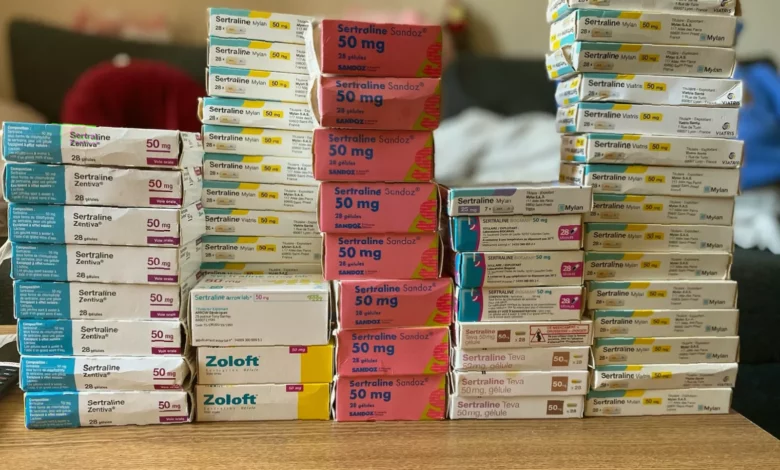
Eighty thousand packs of a commonly prescribed antidepressant are being recalled across the UK after a patient opened a sealed carton and found the wrong pills inside.
The patient, who had been prescribed Sertraline 100mg film-coated tablets, discovered a strip of Citalopram 40mg film-coated tablets — a different antidepressant — inside the packaging, the Medicines and Healthcare products Regulatory Agency (MHRA) said. The mix-up, which the agency said “appears to have occurred during secondary packaging of the blister strips into the cartons,” prompted UK-based pharmaceutical company Amarox to initiate a “precautionary recall” of a specific batch of Sertraline 100mg tablets: batch number V2500425.
Both drugs are manufactured by the same company at the same facility, the MHRA confirmed. The total batch size is 81,872 packs.
The recall, classified by the MHRA as a Class 2 medicines recall, was announced on April 28, 2026. A Class 2 recall means the use of the affected product may cause temporary or medically reversible adverse health consequences.
How the error was discovered
The error came to light when a patient — who had been issued Sertraline 100mg — noticed that the blister strips inside the carton were labelled Citalopram 40mg. The tablets themselves were correctly manufactured, the MHRA said; the problem arose during the final stage of packaging, when blister strips should have been placed into the correct outer cartons.
Dr Alison Cave, the MHRA’s chief safety officer, urged patients who have been prescribed Sertraline 100mg to check the batch number on the side of the outer packaging. If the number is V2500425, they should open the carton and verify the labelling on the blister strips inside.
“If the blister strips inside the carton are labelled Citalopram 40mg, please contact your pharmacy as soon as possible,” Dr Cave said. “If they are labelled Sertraline 100mg, no further action is needed.”
The risk of taking the wrong antidepressant
Both Sertraline and Citalopram belong to the same class of drugs — selective serotonin reuptake inhibitors (SSRIs) — which work by boosting serotonin levels in the brain. However, taking Citalopram instead of, or in addition to, Sertraline carries serious risks, particularly due to the potential for “heightened serotonergic side effects,” as Dr Cave described.
Combining the two drugs significantly increases the chance of developing serotonin syndrome, a potentially life-threatening condition. Mild symptoms can include agitation, confusion, sweating, tremor, diarrhoea, nausea, headache, sleep changes and mild anxiety. Severe cases may involve rapid heart rate, high blood pressure, muscle rigidity, fever, hallucinations and seizures, according to the MHRA’s guidance.
Additional risks from accidental co-administration include an increased bleeding tendency, hyponatremia (low sodium levels), and potential cardiac arrhythmias — specifically QT prolongation.
Patients who believe they may have already taken Citalopram 40mg by mistake, or who are experiencing any side effects, should seek medical advice immediately. The MHRA also advises that patients may need to be monitored by their doctor, particularly those over 65, under 18, with cardiac or liver conditions, or who have been told their body processes certain medicines differently. Anyone who suspects an adverse reaction should report it via the MHRA Yellow Card scheme.
Company action and next steps
Amarox, the manufacturer of the affected batch, is a UK-based pharmaceutical company established in 2017 and a wholly-owned subsidiary of the Indian pharmaceutical giant Hetero Group. The company specialises in the marketing and distribution of generic medicines and holds more than 190 marketing authorisations in the UK. Its corporate office is located at Congress House, 14 Lyon Road, Harrow, Middlesex HA1 2EN, England. In December 2018, Amarox acquired Tarbis Farma SL, expanding into the Spanish market.
The MHRA instructed pharmacists to stop supplying batch V2500425 immediately, quarantine all remaining stock and return it to suppliers. They must also identify and contact any patients who may have been dispensed the impacted product and request its return. If batch or product traceability information is unavailable, pharmacists should identify all patients dispensed this product from November 28, 2025, onwards, prioritising those dispensed most recently — within the last 28 days. Where appropriate, pharmacists should also contact the patient’s GP or healthcare provider.
Packaging errors are a known vulnerability in pharmaceutical manufacturing: industry estimates suggest that 50% of all medicine recalls are due to packaging issues, and over 60% are caused by human error. In the UK, wider concerns have been raised about medicine barcode errors, with patient safety commissioners warning that such errors can pose “critical patient safety risks” and have “potentially fatal consequences.” Since the UK left the EU, manufacturers are no longer required to include 2D barcodes on packs intended only for the UK market, raising further traceability questions.
Broader context of antidepressant use
Sertraline and Citalopram are among the most commonly prescribed antidepressants in England. In 2019, GPs issued more than 16.7 million prescriptions for Sertraline, and over 71 million items of Citalopram were dispensed over a five-year period up to 2019. By 2018, Sertraline had become the most prescribed SSRI in England, overtaking Citalopram. Between 1998 and 2018, antidepressant prescriptions in England more than tripled.
The COVID-19 pandemic further accelerated demand: in 2020, approximately 78 million antidepressant prescriptions were dispensed — 4 million more than in 2019 — costing the NHS in England an additional £139 million. Sertraline alone accounted for an extra £113 million in 2020 compared with the previous year, with the cost of the drug rising by more than 500% between 2019 and 2020/2021, despite only a 12% rise in the number of items dispensed.