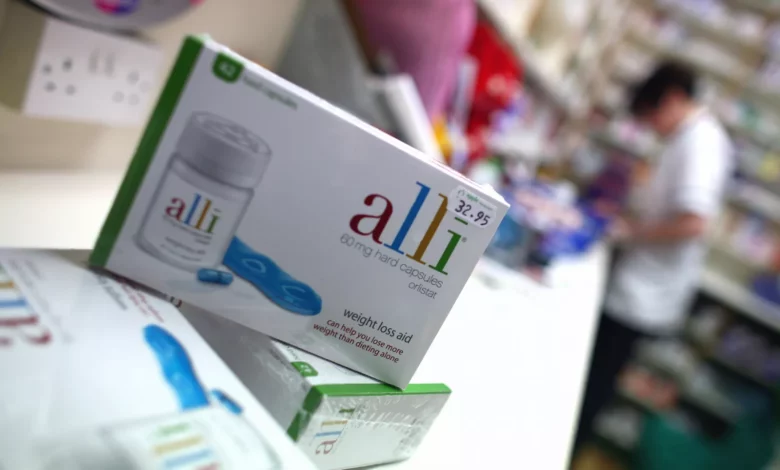
The US Food and Drug Administration (FDA) has warned consumers that the widely available weight loss pill Alli may, in rare cases, trigger acute kidney injury, prompting updated labelling that advises those with existing kidney problems to seek medical advice before use. The over-the-counter medication, first approved by the FDA in 2007, has been linked to 12 reported cases of kidney complications since its introduction, according to an agency review of adverse event reports and medical literature spanning from February 2007 through December 2023.
The FDA Warning
The agency has approved label changes for Alli (orlistat) 60 mg capsules to highlight rare risks including acute kidney injury (AKI), kidney stones and oxalate nephropathy. The updated labelling instructs consumers to stop taking Alli and consult a doctor if they develop symptoms such as back or groin pain, painful urination, blood in the urine, swelling in the feet and legs, or less frequent urination. People with a history of kidney disease or kidney stones are advised to speak to a healthcare provider before using the drug.
Of the 12 identified cases – nine from the FDA’s Adverse Event Monitoring System and three from medical literature – eight involved acute kidney injury, two involved acute kidney injury with oxalate nephropathy, and two involved hyperoxaluria with calcium oxalate kidney stones. Eight of the individuals required hospitalisation and five needed dialysis. The median age of patients was 61, with seven cases in females and five in males. The median exposure to orlistat before the onset of kidney injury was 2.5 months. The FDA noted that the actual number of cases could be higher because not all side effects are reported by consumers or healthcare professionals.
The risk applies to both the over-the-counter 60 mg dose and the prescription-strength 120 mg version (sold as Xenical). The FDA said the difference in fat absorption inhibition between the two doses is only about 5%, meaning the risk is not dose-dependent. While mild cases of AKI may be reversible, untreated severe cases can be fatal. Between 2018 and 2023, 569,877 deaths were related to acute kidney injury, researchers reported last year. In England alone, there were approximately 13,345 AKI episodes per million population in 2024, with the average age of those affected being 73.9 years.
The warning follows a review initiated by the FDA. Alli is manufactured by Haleon, the consumer healthcare company spun off from GSK in 2022. A spokesperson for Haleon told The Independent that the newly required updates “expand the existing warning to include kidney disease, and provide additional detail to help consumers identify the signs and symptoms of potential kidney injury, a rare side effect for those who took Orlistat over-the-counter or prescription medicines”. The company said the updates reflect its commitment to transparency and patient safety.
How Orlistat Works and the Mechanism of Kidney Injury
The active ingredient in Alli is orlistat. It works by reducing the amount of dietary fat absorbed in the intestines by approximately a quarter. To achieve this, it blocks the digestive tract enzyme lipase, which normally breaks down fat so it can be stored for energy. The pill is taken up to three times a day with meals.
The FDA believes orlistat can cause kidney injury through a process called “enteric hyperoxaluria”. When fat is not absorbed by the body, it remains in the small intestine and binds with calcium, forming calcium soaps. This reduces the availability of free calcium in the gut. With less calcium available to bind oxalate, more oxalate is absorbed into the bloodstream and excreted by the kidneys. When oxalate becomes supersaturated in the renal tubules, it can precipitate as calcium oxalate crystals, leading to acute kidney injury, kidney stones or oxalate nephropathy. Research from a 2011 study published in the Archives of Internal Medicine suggested a potential link, noting that 2% of Xenical users in Canada were hospitalised for kidney damage over a year, compared to 0.5% of the general population, though the study cautioned that this did not prove a direct cause-and-effect relationship.
Common side effects of orlistat include oily or fatty stools, oily discharge, urgent bowel movements, increased flatulence, headaches, stomach pains and diarrhoea – all related to unabsorbed fat, especially after a high-fat meal. More serious but rare side effects include liver damage, allergic reactions, pancreatitis and reduced absorption of fat-soluble vitamins A, D, E and K. A daily multivitamin taken at bedtime is recommended for users.
A History of Safety Concerns
This is not the first time Alli has come under scrutiny. In 2010, the FDA published a safety review following rare reports of serious liver injury, though the review found no evidence that confirmed orlistat as the cause. There have also been problems with counterfeit versions of Alli containing sibutramine, a compound linked to an increased risk of heart attack and stroke. Approximately 40 million people are estimated to have taken orlistat (as Alli or Xenical) since Xenical’s FDA approval in 1999. In the UK, orlistat is available both on prescription (Xenical) and over the counter (Alli) under pharmacist supervision. The NHS advises taking orlistat only as part of a calorie-controlled diet and recommends against use for more than three months if 5% of body weight has not been lost. It is not suitable for individuals with chronic kidney disease or conditions that impair vitamin or mineral absorption.
The Rise of GLP-1 Drugs
While Alli has been a staple of weight loss treatment for nearly two decades, newer drugs have transformed the market. Semaglutide, the active ingredient in Ozempic and Wegovy, works differently by mimicking the body’s GLP-1 hormone, which suppresses appetite. GLP-1 products are generally more effective for weight loss and are taken as once-weekly injections or once-daily pills. Newer oral GLP-1 medications such as Eli Lilly’s Foundayo and Novo Nordisk’s Wegovy pill have recently become widely available. At least three million people have received prescriptions for the Wegovy pill since January, Novo Nordisk has said, while more than 20,000 were taking Foundayo, according to Eli Lilly. The UK’s Medicines and Healthcare products Regulatory Agency (MHRA) has approved a daily pill version of semaglutide (Wegovy) for weight loss and management, though it remains prescription-only and requires evaluation by the National Institute for Health and Care Excellence (NICE) before potential NHS use. The oral semaglutide tablet is approved for adults with obesity (BMI of 30 or above) or overweight (BMI 27–30) with at least one weight-related condition.