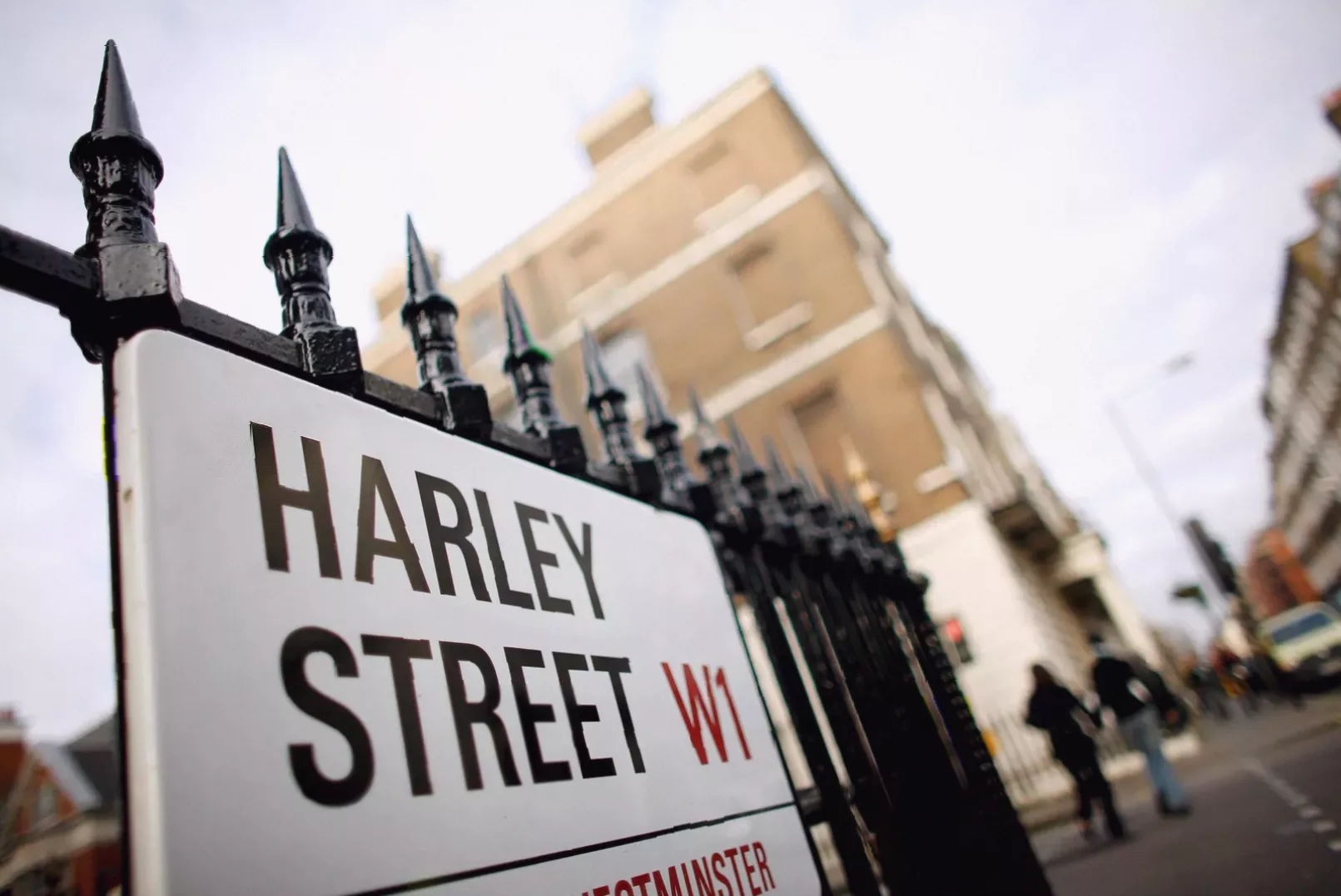
For a global symbol of elite private medicine, the postcode of London’s Harley Street carries a powerful allure. Yet doctors within that very district are warning that this hard-won reputation is being systematically exploited by a booming and dangerous grey market in cosmetic injections, run by practitioners with little to no medical training.
The UK’s non-surgical aesthetics industry, worth over £11 billion and accounting for nine in ten cosmetic procedures, operates in a regulatory void. There are no legal requirements stipulating who can administer treatments like Botox or dermal filler, a fact rogue operators are using to their advantage by setting up temporary “Botox hotels” on the famous street.
The Scale of the Problem
New data reveals the alarming growth of this unqualified sector. According to Save Face, a government-approved register for non-surgical cosmetic treatments, complaints about unqualified practitioners operating from temporary offices around Marylebone Street—the Harley Street district—have soared from 18 to 118 in the last five years. Nationally, the problem is even starker: Save Face received 2,824 complaints about unregistered practitioners last year alone, up from 2,083 in 2020.
Research by University College London underscores the prevalence of non-medical practitioners, finding that 68% of those administering injectables like Botox and fillers are not qualified doctors. It is estimated that up to half of all Botox treatments are performed by individuals who are not doctors or nurses.
On Harley Street, rooms in these “hotdesking” clinics can be rented for as little as £120 an hour. “Anyone is able to set up an aesthetics clinic and start administering these treatments with no qualifications,” explains Dr Ed Robinson, a GMC-registered doctor and NHS anaesthetist who also practises on Harley Street. “You can just set up shop and start delivering a service without having any specific qualifications.”
This allows individuals who may otherwise operate from public bathrooms or Airbnbs to cloak themselves in the legitimacy of a W1 postcode. Ashton Collins, director of Save Face, notes that “patients automatically trust practitioners of Harley Street and assume they will provide high quality surgery,” a trust she says is being profoundly betrayed.
Inadequate Training and Severe Risks
Many practitioners obtain credentials through online courses costing as little as £300 and taking only days to complete. Dr Robinson is unequivocal: “24 hours or 48 hours is not enough to teach someone how to safely perform injectables. It is completely irresponsible.”
Dr Sach Mohan, a cosmetic physician with over two decades of experience on Harley Street, warns that non-medics lack the formal training “to pick up on patients’ psychological welfare” and, more critically, to manage complications. He sees two to three patients a day who have suffered from procedures carried out by unqualified individuals.
The risks are severe and more pronounced with dermal filler, which is classed as a medical device, not a prescription medicine. While Botox legally requires a face-to-face consultation and prescription from a doctor, nurse, or dentist, filler can be bought online for as little as £20 with no medical training required for its use.
“Strangely enough, whilst fillers do not have the same regulatory scrutiny as a prescription medicine like Botox, it actually carries far greater risks,” says Dr Mohan. He has treated patients for consequences including abscesses, necrotic lip tissue, and necrotising fasciitis. The most catastrophic outcome of improperly injected filler is blindness.
These dangers are amplified in procedures like the non-surgical Brazilian butt lift (BBL), also offered by unqualified practitioners. The surgical version is considered one of the most dangerous cosmetic procedures, with a high mortality rate; complications from non-surgical versions can include infection, sepsis, and pulmonary embolism. The British Association of Aesthetic Plastic Surgeons (BAAPS) has previously advised its members not to perform BBLs due to safety concerns.
Adding to the peril is the prevalence of counterfeit products. Dr Mohan warns of “unscrupulous providers of both legitimate and fake versions,” with estimates suggesting 30% of products used by some practitioners are imported and may not meet UK standards.
A Regulatory Vacuum and Ghost Practitioners
The current system offers patients little protection. Legitimate clinics are regulated by the Care Quality Commission (CQC), but non-medical practitioners answer to no professional regulator and few are properly insured. The “hotdesking” model facilitates a complete lack of accountability.
“They operate like ghosts, taking on a generic name. Then, they block communication, they have no fixed address, and they are never to be seen again,” says Ashton Collins of Save Face.
The industry’s promotional tactics compound the issue. Rogue services are heavily advertised on social media platforms like Instagram and TikTok, using bargain prices to attract clients. A striking 81% of those who complained to Save Face about non-surgical procedures found their practitioner online.
The human cost is significant. Surveys indicate half of women who undergo non-surgical cosmetic procedures need medical attention afterwards, with 15% ending up in hospital or A&E. A separate study found 79% of patients receiving anti-wrinkle treatment experienced side effects, from headaches to anxiety.

Pathways to Reform
After years of campaigning by groups like Save Face and the Joint Council for Cosmetic Practitioners (JCCP), a self-regulating body, the government has proposed a licensing scheme to clean up the sector. The plan involves categorising procedures by risk (red, amber, green). High-risk treatments like BBLs would be restricted to qualified healthcare professionals in CQC-registered premises, while lower-risk treatments like Botox and facial fillers would require local authority licensing for both practitioner and premises.
A public consultation concluded in August 2025, but a bill is yet to be drafted. Some fear full implementation could take up to three years, leaving a dangerous gap. Furthermore, doctors like Robinson and Mohan report being approached by non-medics seeking illegal prescriptions, facilitated by black-market apps, suggesting any future regulation must close such loopholes.
For the established medical community on Harley Street, the damage is already being felt. They are now urging patients to conduct stringent checks. “Patients need to be asking ‘Is this person just hotdesking? Are they truly a Harley Street practitioner? Or are they just renting a room by the hour?’” advises Dr Mohan.
Until a robust regulatory framework is enforced, the warning from physicians is clear: the prestige of a world-renowned medical address is no guarantee of safety, and in the current “wild west” climate, it may be actively masking serious risk.