Our tolerance for uncertainty is in decline, and the devices in our pockets are largely to blame. Research has found a correlation between the rise of the internet – and particularly smartphones – and a growing inability to sit with the unknown. These pocket computers, says author Simone Stolzoff, create the expectation that answers should be instantly available. Ten years ago, he recalls, he might have been comfortable not knowing the name of an actor; now he feels an almost involuntary need to find out immediately. The same devices that deliver real-time updates also drag every global uncertainty to the forefront of our attention, fuelling anxiety and robbing us of the very practice we need to cope.
A personal struggle with the known and unknown
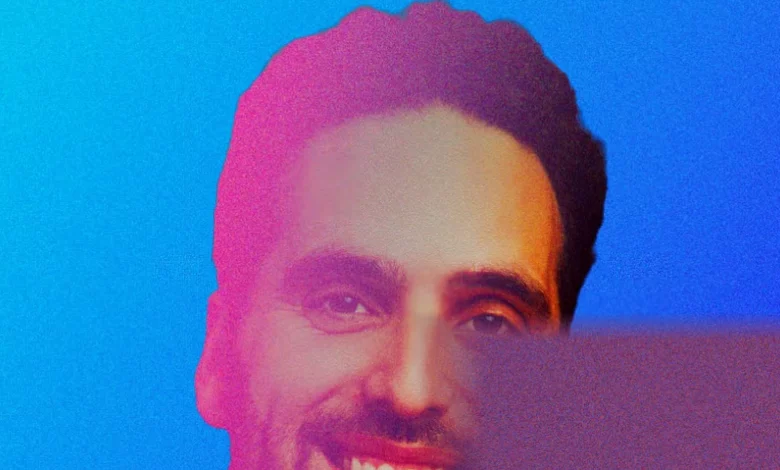
Stolzoff describes himself as “naturally an uncertain person” – prone to rumination and self-doubt, a trait that serves him well as a journalist but cuts both ways. While working for a magazine in New York, he was offered a job at a design firm in San Francisco. Looking back, he laughs at how tortured he felt “having to decide between two attractive career paths”. At the time, “it really sent me for an existential loop. I could see these two diverging paths – Simone the journalist, Simone the designer – and, for the life of me, I could not make up my mind.” He talked it through with everybody: his yoga teacher, his Uber driver, all his friends and family. “I was insufferable,” he admits. He chose San Francisco, a new home and an unfamiliar industry. That experience shaped his new book, How to Not Know: The Value of Uncertainty in a World That Demands Answers. His mistake, he now realises, was aspiring to feel certain. “It was my intolerance of uncertainty that was causing so much of the angst.”
The book grew out of the response to his first work, The Good Enough Job, which examined why work became so central to identity. Readers kept asking how they should think about their careers given AI and other disruptive forces. Stolzoff’s honest answer was that he was not sure. “That is not a very gratifying response to receive,” he says, “so I wanted to explore this question of uncertainty, and not just insofar as it relates to career.” The cliché holds: he wrote the book he needed to read. “I went on this multi-year journey of exploring the science and psychology of uncertainty partly so that I could hopefully get better at dealing with it myself.”
Why the modern world makes uncertainty harder to bear
Trying to anticipate the future and plan with confidence is a uniquely human trait, evolved to keep us safe. But, in a world full of triggers, that wiring can lead us astray. “We have these brains that are wired to get out of uncertainty as quickly as possible,” Stolzoff says. The result is a psychological state known as intolerance of uncertainty (IU) – a tendency to react negatively to uncertain situations as though they are unbearable and stressful. Psychologists liken it to an allergic reaction: a small amount of uncertainty can trigger a disproportionately strong response, leading to excessive anxiety, avoidance and difficulty making decisions. IU is considered a transdiagnostic risk factor, linked to anxiety, depression, obsessive-compulsive disorder and eating disorders.
The modern world is not only psychologically demanding but objectively turbulent. Stanford economist Nicholas Bloom has tracked global uncertainty since the early 1980s; the five highest measurements have all occurred in the past five years. This level of volatility deters business investment and depresses worker productivity. Yet the real novelty, Stolzoff argues, is that our capacity to tolerate uncertainty is shrinking even as the world becomes more uncertain. The internet and smartphones create an expectation of immediate answers, and they also expose us constantly to the world’s uncertainties – from political instability to climate change. “But often these real-time updates and access to information just fuel our anxiety, and rob us of practice in sitting with what we don’t know,” he says. “The best way to increase your tolerance for uncertainty is through exposure, and resisting easy answers, but the internet makes it much easier to avoid that discomfort.”
The erosion of a shared basis of truth amplifies the problem. “There’s no toehold,” Stolzoff observes. While the age of chatbots and deepfakes demands more scepticism, it also makes it harder to find common ground. He sees intolerance of uncertainty as the root of much political polarisation: “I think our world would be much more connected if we didn’t jump to conclusions – about exactly who someone is, based on who they voted for.” Even the loneliness epidemic, he suggests, is connected. “You have to be willing to enter into an interaction with a stranger, not knowing how it will go. We have to put ourselves out there, because that’s how we develop the data and evidence that uncertainty is not necessarily something to fear.” (Around 27% of UK adults report feeling lonely at least some of the time, research shows; loneliness has been linked to health harms comparable to smoking 15 cigarettes a day.)
Our ability to predict the future is famously poor. Psychology professor Philip Tetlock analysed 20 years of public predictions and found the average expert “roughly as accurate as a dart-throwing chimpanzee”. Some individuals – “superforecasters” – do better, but most experts are unreliable. Tetlock distinguishes between “foxes”, who know many things and adapt, and “hedgehogs”, who cling to one big idea; foxes tend to make better short-term predictions. This unreliability underscores why embracing uncertainty is not a weakness but a rational approach.
How to cultivate a higher tolerance for uncertainty
Stolzoff’s central message is that we can learn to cope better with not knowing – and the most effective method is exposure. “The best way to increase your tolerance for uncertainty is through exposure, and resisting easy answers,” he says. This means deliberately sitting with the discomfort of not knowing, rather than reaching for the nearest certainty. Psychologists also highlight the importance of slowing down. “When you’re facing uncertainty, you need to go from your reaction brain into your more analytical brain,” Stolzoff explains. Regulating the nervous system is key: research shows that when you are in a fight-or-flight state, your perception narrows; when you feel grounded, you can see more possibilities. “We spend so much time up in our heads – particularly knowledge workers – but a lot of wisdom is embodied. Often our brains are catching up.”
Action, not paralysis, is the best response. The metaphor Stolzoff returns to is “rowing through the fog”: you may not see very far ahead, or know exactly where you will end up, but you have to keep rowing. “None of us have perfect information – we’re just doing the best we can for this version of us, at this moment in time.” He advises making decisions that reinforce the kind of person you want to be. “If you act in alignment with your values, you can still stand by the choice, even if you don’t get the outcome that you desire.” At the same time, he warns against applying a hyper-analytical framework to everything. “There’s a huge cost if we take that highly analytical framework and apply it to decisions like what to watch on Netflix. Part of my goal is to help people not see uncertainty or doubt as something that should prevent them from making choices or acting.”
Another practical tool is to identify “anchors” – things that remain constant through change. “One of the most practical pieces of advice in the book is to identify your anchors, the things that will remain constant through the changing winds. I think about my family, my values and my commitment to my home.” A degree of certainty in some areas makes it easier to hold uncertainty elsewhere.
The psychological benefits of embracing uncertainty are substantial. Accepting the unknown builds resilience and adaptability, nurtures creativity (by opening a “question-answer gap” that invites exploration), and reduces anxiety because fighting uncertainty often makes it worse. It also improves decision-making by encouraging deeper deliberation, and fosters curiosity – transforming anxiety about the unknown into exploratory excitement. In social contexts, comfort with uncertainty leads to warmer relationships, even across political divides, by promoting perspective-taking.
Stolzoff points to a real-world example from his reporting in the tiny Pacific nation of Tuvalu, which faces imminent threat from rising sea levels. “The climate crisis is literally lapping against the shore,” he says. He was struck by how Tuvaluans approach it. One interviewee was a homesteader focused on self-sufficiency; another was an international diplomat aiming to build collective reliance. “They’re two approaches to uncertainty: it’s not either-or; it’s both-and.” That duality applies equally to AI and jobs. “You might want to insulate yourself from the coming technological disruption, get really good at using the tools and think about how AI might improve your workflow. Or you might build collective solidarity and resilience through your network and relationships. Both approaches are good.” (Research on the UK job market suggests 10–30% of roles are automatable, with professional occupations such as finance, law and business management most exposed. Firms with high AI exposure have reduced hiring, particularly for entry-level roles. Customer-facing roles appear more resilient.)
The “end-of-history illusion”, a concept from psychologist Daniel Gilbert, helps explain why we struggle with uncertainty. We assume that who we are today is fixed, and fail to recognise that our future selves – in work, relationships, even taste in food – may be very different. “That gives me some solace,” Stolzoff says. “Recognising that I’ve faced lots of uncertainty in the past, and come out the other side. Often we discount our ability to course-correct or adapt.” Some decisions, like buying a house or marrying someone, deserve careful deliberation because they are hard to reverse. But most are somewhat reversible.
At the deepest level, Stolzoff connects intolerance of uncertainty to a fear of death. “Reckoning with death helps us get clear on how we want to live. The cost of our tendency to shield our eyes from our mortality is that we aren’t able to see the preciousness of life in its finitude.” He argues that the quest for immortality misunderstands meaning. “If we had certainty about exactly when, or how, we were going to die, I think that would be a bad thing.” Uncertainty, properly held, is the birthplace of possibility. “In general if you want change, or to make a difference, you shouldn’t have a fixed idea of what the world will look like in 2050, because that’s disempowering – it removes your agency to be that change. In the uncertainty, that’s where magic, surprise and delight lives.”