Inquiry told mother of Nottingham killer Valdo Calocane requested hospitalisation for son following outburst

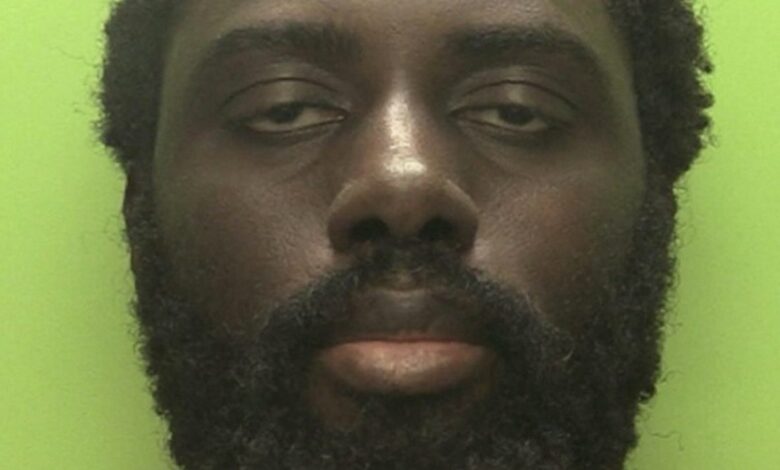
A public inquiry examining how the NHS, police, and prosecutors managed a man who went on to kill three people in Nottingham has begun hearing evidence of a litany of missed opportunities to intervene, against a backdrop of family warnings and systemic failures.
The statutory inquiry, chaired by Her Honour Deborah Taylor, is scrutinising the events leading to 13 June 2023, when Valdo Calocane stabbed to death University of Nottingham students Barnaby Webber and Grace O’Malley-Kumar, both 19, and school caretaker Ian Coates, 65. He also attempted to kill three others—Sharon Miller, Wayne Birkett, and Marcin Gawronski—using knives before stealing Mr Coates’s van to drive into pedestrians.
A History of Violence and Missed Chances
The inquiry heard that Calocane’s documented mental health crisis began over three years before the attacks. On 24 May 2020, he was found “repeatedly kicking and punching a door” trying to get into a neighbour’s flat. Assessed as suffering a psychotic episode, hearing voices and having not slept for five days, he was nevertheless deemed suitable for community treatment with antipsychotic medication rather than hospital admission.
Counsel to the inquiry, Rachel Langdale KC, said the assessing doctor, Dr Gandhi, had leaned towards detaining Calocane but that the team also “considered the research evidence that shows overrepresentation of young Black males in detention.” Dr Gandhi told the inquiry his awareness of such data would not have affected the clinical decision, which was based on need and risk.
Shortly after this decision, Calocane was arrested for attempting to enter another neighbour’s flat, causing the woman inside to jump from a first-floor window and suffer serious spinal injury. Following this arrest, his mother, Celeste Calocane, told mental health nurse Anna Palmer that “she would prefer that her son goes into hospital for treatment, as he’s a risk to others in his current mental state”. Only after this second serious incident was he sectioned.
The inquiry will examine why, prior to his discharge later, services recorded “no incidents of violence” despite these episodes and an earlier one where he entered a flat confronting neighbours he believed were spying on him.
Repeated Admissions and Disengagement
Calocane, who had been diagnosed with paranoid schizophrenia, was admitted to hospital on four occasions between 2020 and 2022. Each time he displayed “threatening and assaultive behaviour as a result of psychosis,” the inquiry was told. He admitted to professionals in 2021 that he had stopped taking his medication, believing he was not unwell and that the voices were real. He also refused depot antipsychotic injections each time he was sectioned, citing a dislike of needles.
His family repeatedly contacted Nottinghamshire Healthcare Foundation Trust with concerns about his deterioration, but these were not always acted upon. A risk assessment updated in February 2022 noted his “history of violence and aggression” and stipulated no solitary home visits for community staff. Ms Langdale said the inquiry would ask why this recognised risk to medical staff “did not apply equally to other students and the wider public.”
During his final admission in early 2022, he largely kept a low profile, spending most of his time on his phone. Analysis of that phone after the attacks showed he had researched “mind control technology” and watched videos including footage of a shooting. In Christmas 2022, he sent his parents files containing a document claiming the voices he heard were due to “mind control technology,” not mental illness. The inquiry will explore whether clinicians ever asked what he was viewing online.
A ‘Lacuna’ in Care
In September 2022, Calocane was discharged from the Early Intervention in Psychosis team back to his GP after the team could not contact him despite attempts and he provided an incorrect address. The inquiry will consider whether discharging a non-engaging patient should have been a signal of deteriorating mental health.
In the months leading to the attacks, his GP sent text messages asking him to arrange an appointment, but he was not seen and received no medication. Ms Langdale said a “lacuna” in monitoring appeared to exist, as the GP practice claimed managing prescriptions was the trust’s responsibility. “VC was essentially in the community disengaged from any health service and unmedicated,” the inquiry heard.
This period of disengagement followed multiple external reviews. A Care Quality Commission report found a “series of errors, omissions and misjudgements” in his care, while an independent review by Theemis Consultancy Ltd identified “clear failings” in his NHS treatment. These led to recommendations for better risk assessment, family engagement, and inter-agency collaboration, and the trust was placed under the highest oversight programme by NHS England.
Broader Context and Ongoing Scrutiny
The inquiry, which formally had its terms of reference laid in Parliament in May 2025, is expected to hear from over 100 witnesses and report within two years, by May 2027. It will scrutinise the roles of all agencies involved.
Other relevant incidents include Calocane visiting MI5 headquarters in May 2021 to “hand himself in,” believing they were controlling him. He was also arrested for assaulting a police officer in September 2021. The Independent Office for Police Conduct reopened a probe into Leicestershire Police over allegations he assaulted two co-workers in May 2023, weeks before the attacks.
In January 2024, Calocane was sentenced to an indefinite hospital order after pleading guilty to three counts of manslaughter by diminished responsibility and three counts of attempted murder—a sentence criticised by the victims’ families.
Addressing the racial dimension discussed in testimony, Ms Langdale noted the Royal College of Psychiatrists’ evidence states “there is no evidence that psychiatrists are not admitting patients because they are black,” and that detention rates are going up. She said the inquiry may consider whether race was a factor in Calocane’s case but noted evidence so far does not suggest it was.
The inquiry continues.