Plastic surgeons across Britain are reporting a surge in patients arriving for consultations clutching AI-generated images of themselves—digitally perfected faces they believe are achievable through surgery. Dr Nora Nugent, a cosmetic surgeon based in Tunbridge Wells and president of the British Association of Aesthetic Plastic Surgeons, said colleagues are increasingly encountering clients whose expectations have been shaped by artificial intelligence. “I can only predict an increase, given the rate AI has been incorporated into every aspect of life,” she warned.
The phenomenon, often described as “AI face”, sees patients present briefs demanding flawless skin, sharply sculpted cheekbones, refined noses and near-perfect symmetry. Many of these features reflect what researchers have called the “Bratz doll” aesthetic: plumped lips, enlarged eyes and a hyper-defined jawline that pays little regard to individual facial structure or ethnicity. Dr Alex Karidis, a surgeon based in west London, said AI can control every single pixel, but “surgery certainly doesn’t work on that microscopic detailed level”.
The psychological grip of AI-generated images is powerful. “Once you see an image, it’s wired into you,” said Nugent. Karidis agreed, describing the images as being “seared” into patients’ minds. This can fuel what experts call “algorithmic dysmorphia”, where the boundary between computer-generated aesthetics and surgical reality blurs. Social media platforms such as TikTok and Instagram amplify the trend by flooding feeds with hyper-perfect faces, reinforcing an ideal that is often physically unattainable.
The physical limits of surgery
Surgeons stress that the gap between AI’s pixel-perfect alterations and real anatomy is vast. Dr Julian de Silva, a Harley Street cosmetic surgeon who specialises exclusively in facial procedures, pointed to one common request: correcting uneven eye levels. “It’s impossible to change because that’s actually set in bone, and your brain sits behind the orbits,” he said. “You cannot safely change the position of the orbits.” Rearranging pixels, he added, is not the same as rearranging anatomy.
Nugent emphasised that surgical outcomes are never guaranteed. “The patient has to understand that there is human variation in how they heal, how they age and what can be done,” she said. “I say to patients beforehand: it’s not limitless what I can do in surgery. Neither of us control everything.” Even when clients research procedures extensively, Karidis noted, they often fixate on the images and ignore the surrounding caveats. “That’s the bottom line for everybody. The moment you show them something like that, that’s it.”
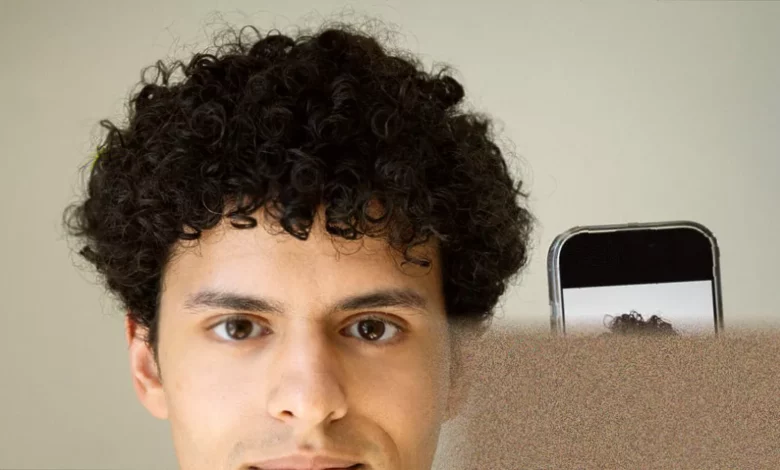
The practical consequences of chasing an AI-generated look can be severe. In one test, a journalist asked an AI agent to generate increasingly dramatic alterations to his appearance. The initial recommendations—a rhinoplasty and septoplasty to “refine the nasal tip and straighten the bridge”, plus a subtle blepharoplasty—were estimated by Karidis to cost about £25,000. When the request shifted to “hunter eyes and a more masculine face”, the AI suggested chin implants, buccal fat removal, infraorbital augmentation, another blepharoplasty and facial stubble grafts. Karidis dismissed the chin implant as unnecessary and warned that buccal fat removal would make the patient “pay the price” later as the face naturally becomes more gaunt with age. For all the suggested procedures, he put the cost at “£100,000-plus” and said the result “still probably wouldn’t look anything like this, not to mention you’d be exposed to potential significant side-effects and recovery”.
A third request, “make me look like more of a chad”, prompted the AI to recommend a neck lift, brow lift, two types of custom implant and full ablative laser resurfacing. “This is where things start to look scary,” Karidis said. “What’s with the whopping great big dents along your jawline angle? It looks like chunks of tissue have been removed. As to neck lift and brow lift, that’s frankly untrue. I don’t see any evidence of any lifting in these areas. Tissues like the eyebrows seem to have been lowered rather than lifted. Your original complexion looks much better than this.”
De Silva raised a further concern: he suspects some clinicians are themselves using AI-generated images to promote surgical results on social media. He recalled watching a video that appeared to show a patient made to look 30 years younger. “I looked at it over and over,” he said. “And then the third time I watched it, I could see … the hands had six fingers.”