Resident doctors’ strike prompts advice for Londoners to keep appointments despite expected cancellations

Londoners have been urged by health officials to continue attending planned NHS appointments next week, unless contacted directly to cancel, as a fresh six-day strike by resident doctors threatens widespread disruption to services already under severe strain.
The Call to Attend and Expected Disruption
Dr Chris Streather, the Medical Director for NHS London, issued a direct appeal, stating it was “disappointing” that resident doctors were once again taking industrial action and that it would “take a real toll on patients and NHS staff across London and the country.” He confirmed that while the health service was doing everything possible to limit cancellations, patients should attend appointments as scheduled unless told otherwise.
The industrial action, called by the British Medical Association (BMA), is set to begin at 7am on Tuesday 7 April and run until 7am on Monday 13 April, encompassing the Easter holiday period. Hospital trusts across England have enacted contingency plans, but the NHS has warned that cancellations and delays are expected.
A System Under Unprecedented Pressure
The strike will heap further pressure on an NHS in London that is already grappling with a perfect storm of challenges. Services are contending with the aftermath of record winter demand, a vast backlog of care, and the cumulative impact of previous rounds of industrial action. The London Ambulance Service, for instance, experienced its busiest month ever in December 2025, treating over 129,000 patients.
Underpinning these operational pressures is a workforce crisis in morale. The latest NHS Staff Survey, published in March, ranked London as the second-worst region for staff morale nationally. It found that a third of health workers in the capital often or always feel burnt out—a figure that reflects a national picture where staff engagement and motivation are at their lowest recorded levels.
The backlog remains a colossal undertaking. In January 2026, the waiting list for treatment in England stood at 7.25 million cases, with projections suggesting over 8.8 million people across the UK could be waiting longer than six months for care by the end of the year.
Contingency Plans and Safety Disputes
In response to the walkout, the NHS has stated its intention to maintain life-saving care and keep routine services running wherever possible, only rescheduling appointments in exceptional cases where patient safety is at risk. All other clinical staff, including consultants and GPs, will continue to work.
The health service points to its performance during the last resident doctors’ strike in December 2025, when approximately 95% of planned routine care was maintained, as evidence that such a strategy can work. A formal “patient safety mitigation approach” is also in place, allowing for the recall of striking doctors in unexpected, extreme circumstances to maintain safe care, subject to approval.
However, the BMA has warned that this approach of not cancelling non-urgent care risks patient safety by stretching safe staffing too thinly. The union argues that consultants cannot safely cover for striking resident doctors and provide elective care simultaneously, marking a departure from previous strike agreements where non-urgent procedures were postponed.
For the public, the advice is to use the NHS App or 111 online for non-urgent medical help, or to visit a local pharmacist or GP. For life-threatening emergencies, people should dial 999 or attend A&E as normal.
The Pay Dispute at the Heart of the Strike
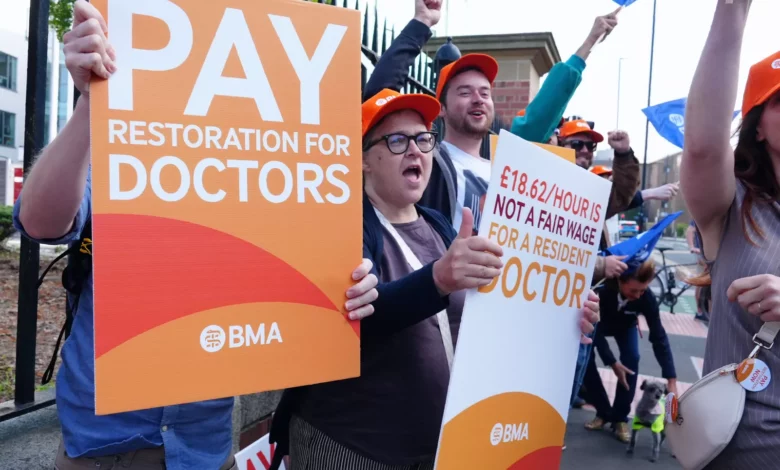
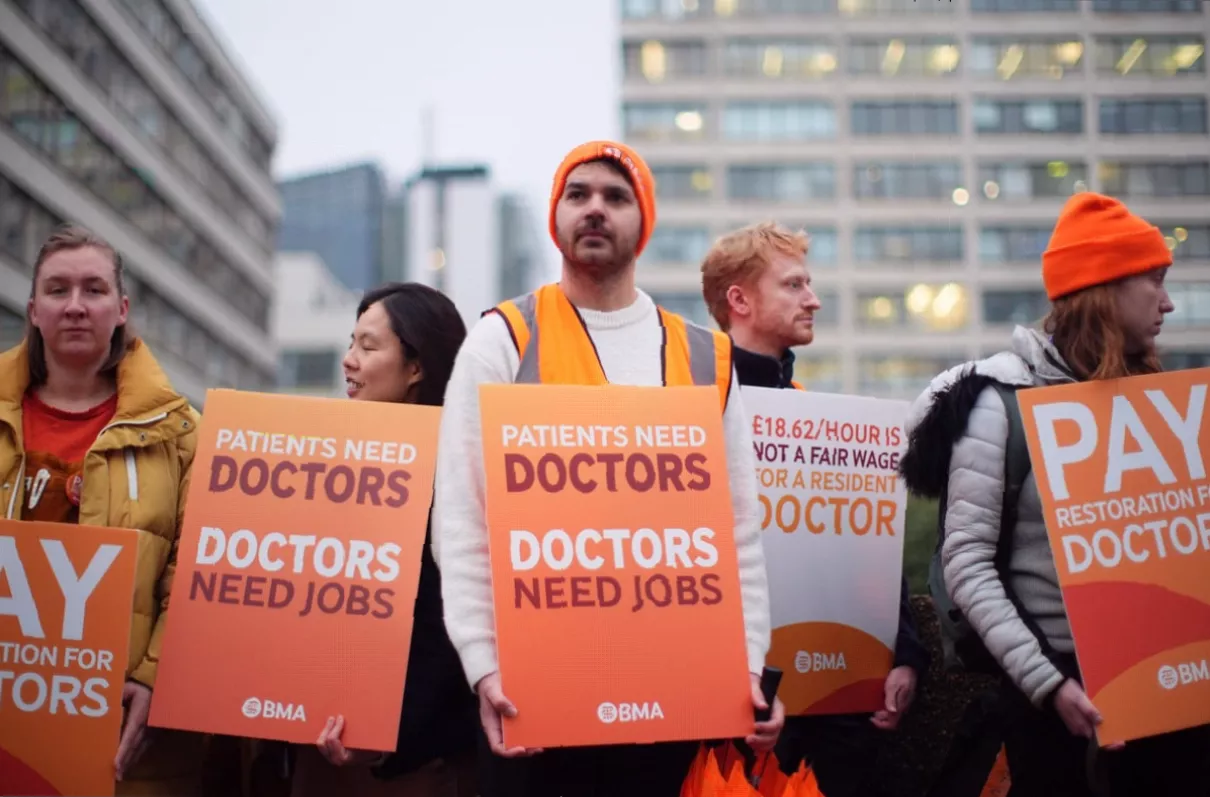
The strike follows the collapse of negotiations between the government and the BMA’s Resident Doctors Committee. The dispute centres on pay restoration, with the BMA stating resident doctors have seen their pay fall by more than a fifth since 2008-09.
The union rejected the latest offer from Health Secretary Wes Streeting, claiming it moved the goalposts at the last minute, effectively provided less funding in real terms, and failed to offer sufficient protection against inflation. The BMA is pushing for a pay rise higher than the government’s offer of 3.5%, which it states is below the current RPI inflation rate of 3.6%.
Mr Streeting has described the strikes as “disappointing,” stating the rejected deal would have made resident doctors 35.2% better off on average than four years ago. The Department of Health and Social Care has also said that an offer of 1,000 extra training places, part of the proposed deal, would no longer be “financially or operationally” possible.
Adding a further layer of complexity, staff at the BMA union itself are also due to strike concurrently over a separate pay dispute with their own employer.