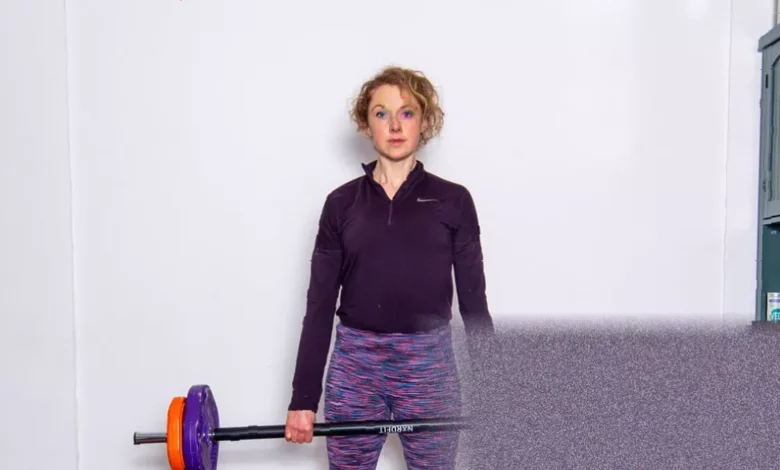
Dr Stacy Sims’s controversial mantra that “women are not small men” has moved from the fringes of sports science to the mainstream of fitness culture, attracting millions of followers and a growing chorus of critics who argue her ultra-specific advice for women over 40 may be doing more harm than good. The phrase, coined by the Stanford-affiliated sports scientist, has become a rallying cry for those who believe decades of exercise research based largely on male subjects have left women with second‑best guidance. But as her prescriptions gain traction on social media and podcasts, a debate is intensifying over whether the science behind them is as solid as it sounds.
Sims, who holds an MSc and a PhD and has published dozens of scientific papers, argues that women over 40 should abandon conventional cardio in favour of heavy lifting and what she calls “polarised” cardio — either all‑out sprint interval training (repeated short bursts of maximum effort) or gentle walking, with nothing in between. The rationale, she says, is rooted in sex differences in muscular structure and metabolic profile that become critical as reproductive hormones begin to fluctuate during perimenopause. On the Mel Robbins podcast, she warned that women over 40 who stick with moderate cardio risk becoming “skinny fat” — low in quality muscle, with fatty tissue infiltrating muscle and bones “like chalk.” The age of 40, she explains, is a proxy for perimenopause; she has slightly different protocols for women in their sixties and beyond.
The research gap
Sims’s rise comes at a moment when the evidence base for women’s exercise is widely acknowledged to be thin. A 2023 editorial in the British Medical Journal highlighted that women are under‑represented in exercise research, creating “distinct knowledge gaps” in areas including sport performance, cardiovascular health, musculoskeletal health, postpartum physiology and lactation. A study from the University of Melbourne found that sports psychology research is disproportionately focused on men, and another paper noted that only 6–9% of reputable sports science studies look exclusively at female athletes. This vacuum has been filled by a wave of female‑specific fitness influencers — Sims the most prominent among them — offering certainties where official guidelines remain broad.
Yet critics point out that the existence of a research gap does not automatically validate every claim made to fill it. Laurel Beversdorf, a strength and conditioning coach, and Sarah Court, a physical therapist, co‑host the podcast Movement Logic. They acknowledge the appeal of Sims’s message. “It really feels good that someone is finally standing up for us, bringing attention to inequalities,” says Beversdorf. “But it’s actually the same misogynistic playbook that we’ve seen across many decades. Let’s problematise women’s bodies. Let’s fragilise women. Let’s make it all about their hormones, and let’s treat them all the same. She’s saying men can do a much wider variety of things and benefit, but for women she’s taking exercise options off the table.”
Counterarguments and evidence
Beversdorf and Court argue that Sims’s prescriptions could be “potentially extremely harmful” because they scare women away from moderate‑intensity cardio — an activity with some of the most consistent and robust evidence behind it. A major 2022 study that tracked more than 100,000 adults over 30 years found that people who engaged in high levels of moderate physical activity were up to 38% less likely to die from heart disease. “Moderate‑intensity cardio delivers some of the most reliable health benefits, and there’s a lot of evidence to support that,” they say. Sprint interval training, by contrast, is not accessible to beginners and may set an intimidating bar.
The UK government’s physical activity guidelines for adults aged 19–64 recommend at least 150 minutes of moderate‑intensity activity (such as brisk walking) or 75 minutes of vigorous activity (such as running) each week, plus muscle‑strengthening activities on at least two days. Heavy lifting qualifies, but so do yoga, Pilates, gardening and carrying children. According to the 2021 Health Survey for England, only 59% of women met the aerobic guidelines and just 29% met the strength‑training target (compared with 70% and 36% of men respectively). Elizabeth Davies, a fitness coach and author of the forthcoming book Training for Your Old Lady Body, argues that when so many women are not meeting even these basic targets, “it’s our responsibility not to overcomplicate movement by creating arbitrary rules for women or for certain life stages, unless there is an evidential basis to do this.”
Sims’s emphasis on heavy lifting — weights you can manage for only one to six repetitions — is backed by some research, including the well‑known LIFTMOR trial on bone density, which used heavy loads of 80–85% of one‑rep max. Strength training is indeed crucial for women over 40 to counteract age‑related muscle loss (sarcopenia), support metabolism, protect bones and improve cognitive health. Women typically lose 3–8% of muscle mass per decade after 30, with accelerated loss after menopause. However, the evidence does not support the idea that only heavy weights will do. Research from McMaster University found that lifting lighter weights (30–50% of one‑rep max for 20–25 reps) to the point of failure produced similar gains in muscle mass, fibre size and strength as heavier weights (75–90% of one‑rep max for 8–12 reps) in experienced lifters. “The research is very clear that we can build strength and muscle with lighter weights, so long as we work close enough to the point of failure,” says Davies. Training to failure with lighter weights can be more uncomfortable, but it remains a viable option for those without access to a gym.
Sims defends her approach, telling critics they are conducting “a very nasty and personal misinformation campaign against me.” She insists that her recommendations come from randomised controlled trials on sex differences in ageing, and that her goal is to “make women stronger, both physically and mentally. To not follow male data blindly. Yes, a lot is the same, but there are also differences, and they are critical, especially as we age.” She has also stated that her advice is not designed for sedentary women, and in her book Next Level she recommends lifting heavy three days a week (or twice for endurance athletes), combined with sprint interval training to maintain fat‑burning metabolism, and a higher protein intake of 1.8–2 grams per kilogram of body weight daily.
Yet even if the science were settled, some question whether a one‑size‑fits‑all plan is appropriate for every woman over 40. The principle of progressive overload — gradually increasing intensity, volume, frequency or duration — is the established route to improvement, and that can be achieved through many different methods. Davies is a proponent of autoregulation, where training is adjusted daily based on how an individual feels. “For most of the women I’ve worked with, the challenge isn’t motivation or discipline, but capacity,” she says. “When you’re running on broken sleep, programmes that rely on ‘no excuses’ or ignoring fatigue can backfire, increasing injury risk or simply making exercise feel like another thing you’re failing at.”
Beversdorf and Court suggest that if women over 40 do need specially tailored advice, it may have less to do with physiology and more to do with culture. “The message that you need to start weight training in your 40s is not incorrect, but it’s not to say that you should be doing cardio up to that point and then switch to weights,” says Court. “Cardio and weights are appropriate for women across their lifespan. But the benefits of strength training are a new message to us, which is why it’s been emphasised so much to this age group.” Recent research from the Smidt Heart Institute at Cedars‑Sinai suggests women may actually achieve greater cardiovascular benefits from less exercise than men: they reached the same survival benefit from 140 minutes of moderate‑to‑vigorous activity per week that men got from 300 minutes, and peak benefit from strength training with about one session per week versus three for men.
For some women, Sims’s message has been life‑changing. A 39‑year‑old friend of the original article’s author, Amy, started strength training after hearing Sims and says it shifted her relationship with exercise away from a lifelong pursuit of thinness. Yet the narrowing of options — the dismissal of fitness classes, long runs, yoga and lighter weights — can feel diminishing, particularly when the evidence for those activities remains strong. As Court puts it: “We’re used to things being overcomplicated for us as women. We have a 10‑step face skincare routine that we’re supposed to do every night. But it doesn’t need to be that way. Chase the performance goals that you have, or meet the minimum guidelines. Either way, you’re doing better than a lot of people.”