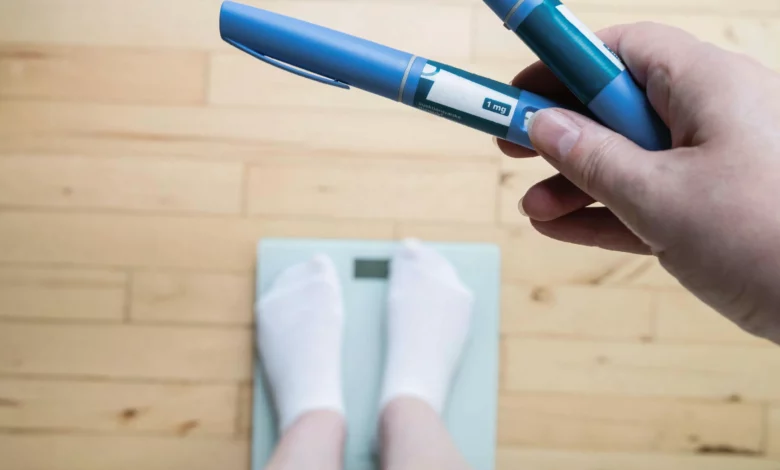
Patients who stop taking powerful weight-loss injections like Wegovy or Mounjaro can expect to regain the majority of their lost weight within a year, and see associated health benefits reverse soon after, according to a comprehensive analysis of the evidence.
The research, from the University of Cambridge, indicates that the regained weight piles back on rapidly—faster than after traditional diet and exercise programs—but may eventually plateau, leaving individuals retaining about a quarter of their initial weight loss.
Medical student Brajan Budini, part of the Cambridge team, warned the consequences could be serious if the composition of that returning weight changes. “If the regained weight is disproportionately fat, individuals may ultimately be worse off than before in their fat-to-lean mass ratio, which may have adverse consequences for their health,” he said.
Predictable Reversal of Gains
The Cambridge study, published in eClinicalMedicine, analysed six trials involving over 3,200 people. It projected that 52 weeks after stopping a class of drugs known as GLP-1 receptor agonists (GLP-1 RAs), people had regained 60% of the weight they lost. By 60 weeks, the regain started to taper off at 75% of the original loss.
This trajectory is consistent with broader research, which suggests weight regain is predictable and decelerating, with one study projecting a return to baseline weight within 1.7 years of stopping any weight-loss medication. The speed of regain is notable; one analysis found weight increased by an average of 0.4 kg per month after stopping these drugs, approximately 0.3 kg per month faster than after behavioural weight loss programs.
For the newest and most effective medications, semaglutide (sold as Wegovy for obesity) and tirzepatide (Mounjaro), the regain is steeper, averaging 0.8 kg per month. Specific studies indicate an average regain of 9.69 kg in the first year after stopping these particular drugs.
Critically, the reversal is not limited to the scales. Cardiometabolic improvements achieved while on the medication—such as better blood sugar control (HbA1c), lower systolic blood pressure, and improved cholesterol levels—also tend to revert towards baseline. One analysis estimated these health markers return to their starting point roughly 1.4 years after treatment cessation.
Uncertainty Over Muscle and Fat
A key unknown flagged by the researchers is what exactly is regained. While on treatment, GLP-1 RAs predominantly reduce adipose tissue, including harmful visceral fat. However, they also lead to an absolute reduction in lean mass, which generally represents 20-30% of total weight loss.
“What we currently don’t know is if the same proportion of lean mass is recovered,” said Mr Budini. Some research indicates lean body mass is proportionally maintained during treatment, but the long-term impact on muscle function after stopping is unclear. Experts suggest resistance exercise and adequate protein intake may help preserve lean mass during treatment.
Barriers to Staying on Treatment
The findings underscore the chronic nature of obesity management, yet multiple factors push patients to stop treatment. High cost is a primary barrier, with monthly prices ranging from $800-$1,200 without insurance, and coverage varies significantly between plans.
Side effects also lead to discontinuation. Gastrointestinal issues like nausea, vomiting, and diarrhea are common, especially early in treatment. While concerns about serious risks like pancreatitis have been largely dispelled by long-term trials, other potential adverse effects remain, including gallbladder problems, acute kidney damage, and a possible increased risk of thyroid cancer. The drugs’ slowing of gastric emptying also increases aspiration risk during procedures requiring anaesthesia.
Furthermore, some patients may start treatment with the misconception it is short-term. “Some patients may initially believe they will use the drugs to reach a healthy weight and then stop, not fully understanding the chronic nature,” the research briefing notes.
Guidelines and the Path Forward
The Cambridge researchers concluded that current prescribing guidelines for GLP-1RAs “are inconsistent and largely inadequate in addressing the risk of weight regain following treatment cessation.”
For instance, the UK’s National Institute for Health and Care Excellence (NICE) recommends semaglutide for weight loss for a maximum of two years on the NHS, but sets no such limit for tirzepatide. NICE also states GLP-1 agonists can be prescribed for adults with type 2 diabetes when other treatments fail.
Medical student Steven Luo, who co-authored the analysis, stressed the need for a holistic approach. “When stopping weight loss drugs, doctors and patients should be aware of the potential for weight regain and consider ways to mitigate this risk,” he said. “It’s important that people are given advice on improving their diet and exercise, rather than relying solely on the drugs.”
Experts emphasize these medications should be part of a comprehensive strategy including counselling, sustained lifestyle changes, and regular monitoring. The researchers called for future trials to explore the drugs’ effect on body composition during and after treatment.
Meanwhile, the treatment landscape continues to evolve with oral GLP-1 formulations and new “dual and triple agonist” drugs showing even greater efficacy, though their long-term safety, optimal use, and the fundamental challenges of cost and access remain pressing questions for healthcare systems.