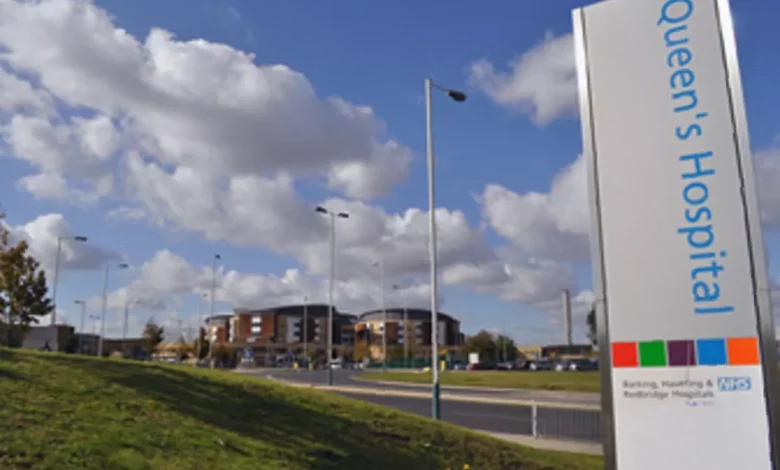
A vulnerable child with complex behavioural disorders spent more than 70 days—over two months—in the accident and emergency department at Queen’s Hospital in Romford because no suitable care placement could be found for them. This extraordinary wait, believed to be among the longest seen by the hospital trust, highlights a deepening crisis where A&E units are becoming default shelters for society’s most vulnerable young people.
A History of Extreme Waits
The case is not an isolated incident at Barking, Havering and Redbridge University Hospitals Trust (BHRUT). In September 2024, another child waited 44 days in A&E, while a separate case saw an 11-day wait for a local authority placement. This follows a 26-day wait revealed in 2022. The trust’s chief executive, Matthew Trainer, told the Health Service Journal that hospitals were being used as a “place of safety” for children and young people with mental health problems and challenging behavioural needs. “This means several young people have experienced long waits for the right support in A&E,” he said. “It’s unacceptable and distressing for both patients and our staff.”
Both children in the most recent cases had been in council-arranged care, such as foster homes, but these placements had broken down with no alternative provider prepared to take them on. The local commissioner, the North East London Integrated Care Board (ICB), confirmed another example: an out-of-area care-experienced young person who had spent over 50 days in a side room at Queen’s Hospital A&E following a placement breakdown.
Why Hospitals Are Becoming ‘Places of Safety’
The shift of A&E departments into a last-resort shelter is driven by severe systemic failures elsewhere. Children with autism are the largest cohort being admitted to A&E under a “mental health diagnosis,” according to the North East London ICB. Emergency hospital admissions for autistic children in England have soared by 86% since 2019, reaching 20,839 in 2023/24. Experts link this rise to critical gaps in early intervention, specialist education, and community-based mental health care.
Data shows the most common reasons for these A&E admissions among children and young adults are “self-injurious behaviour, bizarre behaviour, anxiety, physical aggression and hallucinations.” For these vulnerable individuals, when community support fails and residential placements collapse—often due to their complex needs—the hospital emergency department becomes the only option. The ICB stated this could be linked to pressures on local Child and Adolescent Mental Health Services (CAMHS) and a growing number of children’s care homes in the London Borough of Havering.
The strain on the hospital is immense. Queen’s Hospital A&E was built for around 325 patients a day but now routinely sees over 750, with peaks exceeding 1,000. The trust is campaigning for £35 million to rebuild and expand the department. Furthermore, BHRUT spends £6 million annually on registered mental health nurses, additional healthcare assistants, and security guards to look after mental health patients in A&E, who often wait too long before being transferred to a specialist provider.
A Broken Care System
The root cause lies in a children’s social care system described as “dysfunctional.” There is a critical national shortage of suitable placements, particularly for those with complex needs, leading local authorities to compete for limited spaces and driving costs to unsustainable levels. The average cost of a residential children’s care home place has nearly doubled in five years to approximately £318,400 per year. In extreme cases, councils have been charged up to £63,000 per week for a single child with the most complex needs.
Geographical disparities are stark, with no secure children’s home places currently available in London, forcing 49% of children in England to live in homes more than 20 miles from their families. The market is dominated by private providers, some funded by private equity; the National Audit Office found the biggest operators had average annual profit rates of 22.6%. Meanwhile, in September 2024, almost 800 children were living in unregistered homes not subject to Ofsted inspection, staying for an average of six months.
The government is pursuing reforms, including a potential profit cap, but the Department for Education has indicated it will take two years for improvements to address the placement shortage.
The National Picture
This local crisis mirrors a national emergency. Latest NHS data for February shows that across England, 3,511 mental health patients out of 38,517 waited more than 24 hours in A&E. In October 2025, 9% of mental health patients nationally waited over 24 hours, a figure that exceeded 20% at 19 hospitals. At some, like Royal Blackburn Hospital, about one-third of mental health patients faced such extreme delays.
The problem is compounded by a broader rise in need; in 2023 about one in five children and young people aged 8 to 25 had a probable mental disorder. With community and social care systems buckling under pressure, A&E departments—themselves overcrowded and under-resourced—are being left to pick up the pieces, with vulnerable children paying the highest price.