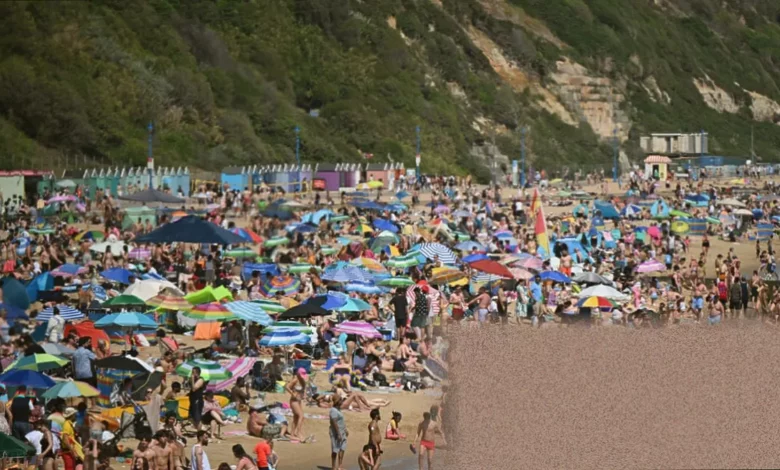
At least nine people have drowned in recent days as Britain swelters in a heatwave that has sent crowds to rivers, lakes and beaches in search of relief. Emergency services have reported that seven of the victims were young people, prompting urgent warnings from water safety experts about the lethal dangers hidden beneath the surface of apparently inviting open water.
The deaths span multiple regions and age groups. In Cheshire, police recovered the body of a 17-year-old boy from Pick Mere lake in Northwich after he was last seen in the water. In Yorkshire, a 13-year-old boy died at Leadbeater Dam near Halifax and a teenage boy at Rother Valley Country Park. A teenage girl died at Kingsbury Water Park in Warwickshire, while another teenage girl died in an incident in Hampshire. In Lincolnshire, 15-year-old Declan Sawyer drowned at Swanholme Lakes near Lincoln; his father has since issued a public warning to other families about the dangers of children playing near rivers and lakes in hot weather. In Lancashire, a 12-year-old boy drowned in the River Ribble near Ribchester. Two older victims also died: a man in his 60s suffered a cardiac arrest after entering the water at Tregirls Beach near Padstow in Cornwall to help two relatives who had got into trouble, and a 72-year-old woman was pulled from West Angle Bay beach in Pembrokeshire, Wales, and later died. Separately, in Dublin, Ireland, 15-year-old Abbie Carmody-Pepper died at Burrow Beach in Sutton.
Cold water shock: the hidden killer
While the soaring temperatures explain why so many people are heading into open water, the primary danger is not the heat but the cold. Dr Heather Massey, an associate professor in extreme environments and physiology at the University of Portsmouth, said the pattern is a tragically predictable one. “Unfortunately, this is something we see every year,” she said. “It’s a known problem when the air temperature increases rapidly but the water is still very cold. At this time of year, it hasn’t had time to warm up.”
Data published by the UK’s National Water Safety Forum confirms that the number of water-related fatalities rises in May and stays high throughout the summer. Most drownings occur in inland waterways – rivers, lakes, reservoirs – rather than on the coast, and the vast majority of victims are young men. Research from Bournemouth University in 2024 found that accidental drowning deaths were three times higher on days when the temperature rose above 25C compared with average UK summer temperatures. The risk of drowning increased by more than 7% for every 1C rise in air temperature, and for individuals suspected of drinking alcohol, that risk jumped to more than 20% per 1C.
Cold water shock is the mechanism behind many of these deaths. Even on a scorching day, UK water temperatures can remain dangerously low – sea temperatures average around 12C, and inland waters can be even colder. The definition of cold water is anything below 15C. When a person with hot skin from prolonged sun exposure suddenly enters cold water, the body triggers an involuntary set of responses: a gasp reflex, rapid breathing or hyperventilation, a sharp increase in heart rate and blood pressure. These reactions can cause panic, disorientation, loss of swimming ability, cardiac arrest and drowning. The initial effects peak in the first 30 seconds and last around one to two minutes. Cold water shock is especially dangerous when people jump or dive in, because the gasp reflex can cause them to inhale water before they surface.
“If you’ve been on a beach or by the side of a river and you’ve been in the sun for some time, your skin is going to be really hot,” Dr Massey explained. “But some of our waterways may still be very cold, and when you enter the water, the rapid reduction in skin temperature triggers involuntary gasps and rapid breathing and a big increase in heart rate.”
Safety advice: float, wait, and get help
Dr Massey advises people to cool off only at supervised locations with lifeguards. Wherever they enter the water, they should do so gradually, allowing their breathing to settle before attempting to swim. “The cold shock peaks in about the first 30 seconds and lasts for two to three minutes,” she said. “Once you’ve let your breathing settle down, and you’re able to swim around and control your breathing, you can dip under the water.”
For those who find themselves in difficulty unexpectedly, the National Water Safety Forum’s Float to Live campaign provides clear guidance. Swimmers should roll onto their back and tilt their head back until their ears are in the water, protecting the nose and mouth. “Allow your breathing to calm down and then move your arms and legs as much as you need to stay afloat,” Dr Massey said.
For bystanders who see someone in trouble, the advice is summarised as “phone, float, throw”. First, phone the coastguard (999 or 112) or fire brigade for help. Then tell the person to float on their back and stay calm. Finally, throw them something buoyant to hold onto until help arrives. The RNLI, which runs the Respect the Water campaign alongside the National Water Safety Forum, also advises calling 999 or 112 for the Coastguard in an emergency.
Gavin Ellis, the drowning prevention lead at the National Fire Chiefs Council, said: “No family should have to experience the devastation of losing a loved one in the water. We know that warm weather encourages people to visit rivers, lakes and reservoirs, but these places can be extremely dangerous. We’re asking parents and carers to have open conversations with children and teenagers about the risks, and for young people to look after each other and make safe decisions around water. These incidents can happen very quickly, but many are preventable.”
The National Water Safety Forum’s data for 2023 recorded 236 accidental drownings in the UK, 83% of which were male, with over half occurring in inland waterways. Recreational activities accounted for 44% of accidental fatalities that year. In 2024, the total number of water-related fatalities from all recorded causes fell to 597, with accidental fatalities dropping to 193. May saw the highest number of accidental fatalities in 2024.
Beyond cold water shock, alcohol consumption is a significant risk factor. The “Don’t Drink and Drown” campaign, led by the Royal Life Saving Society (RLSS UK), targets substance-related drownings. Bournemouth University’s research found that 57% of those who accidentally drowned on days exceeding 25C were swimming. Seasonal safety campaigns such as Drowning Prevention Week, run by RLSS UK in partnership with Swim England and the RNLI, aim to educate children and young adults, while the Swim Safe programme offers free outdoor swimming and water safety sessions for 7–14 year olds. The National Water Safety Forum also promotes the “Find Your Float” campaign, encouraging people to practise the floating self-rescue technique, and the Coast Clever campaign warns about coastal risks.
Dr Massey said it was vital that parents ensure children visit supervised swimming locations and understand what to do if they or others get into trouble. The stark reality, she noted, is that the water remains lethal even when the sun is at its strongest. “You’ve been in the sun for some time, your skin is going to be really hot. But some of our waterways may still be very cold.”