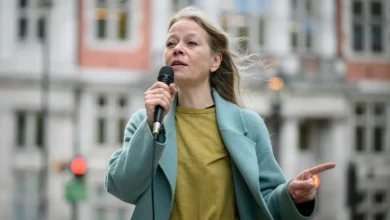
A leading US civil rights scholar has drawn a direct line between the closure of a Black studies master’s degree at Birmingham City University and the political assault on diversity, equity and inclusion programmes in the United States, warning that an “ideological, extremist-led campaign” has crossed the Atlantic.
Kimberlé Crenshaw, professor of law at the University of California, Los Angeles and Columbia University, and the scholar who coined the term “intersectionality”, said the decision to withdraw the MA in Black Studies and Global Justice just months after it was launched represented an “escalating assault on black studies”. In a statement shared on social media during her UK book tour, she described the move as part of a “systematic dismantling of black studies” that is “mirroring a dangerous parallel in the United Kingdom”.
Crenshaw was unequivocal that this was not simply a routine institutional realignment. “This dismantling is not merely an institutional realignment; it is a direct attack on the production of critical knowledge,” she said. She framed the closure within a wider campaign she has fought against in the US, where she has been involved in opposing censorship and bans on teaching concepts such as intersectionality and critical race theory, measures she has described as a “threat to democracy”.
Birmingham City University announced it would withdraw the MA from September 2026, less than a year after the programme began. The university cited “low student recruitment” and “low demand”, stating that only eight students were currently enrolled. The decision followed a broader review of the university’s postgraduate portfolio, which analysed subject areas against market-led assessments, competitor analysis and industry insights, categorising courses into GROW, IMPROVE, STOP, MAINTAIN and START categories. The university said a “small number” of postgraduate courses would be cut, and that existing students would be able to complete their studies.
‘Total erasure’ and the pattern of cuts
Critics argue that the closure is part of a pattern, not an isolated decision. The MA withdrawal follows the controversial discontinuation of BCU’s undergraduate Black studies programme in 2024. Academics and campaigners have warned that the move risks the “total erasure” of Black studies from UK higher education. Professor Kehinde Andrews, who pioneered the Black studies programme at BCU and is among five Black members of staff at risk of redundancy, described the decision as “erasure” rather than simply low uptake, adding that “there’s no appreciation for the importance of Black intellectual thought”. He noted that in the UK, the discipline suffers from “neglect” because “so little of it is on offer”.
The broader context is stark. Financial pressures across the UK higher education sector have led to widespread cost-cutting, but critics argue that programmes focused on race and inequality are disproportionately vulnerable. The closure at BCU echoes other recent cuts, including the termination of the MRes in the History of Africa and the African Diaspora and the redundancy of Professor Hakim Adi at the University of Chichester. Despite advances in creating dedicated lectureships and curriculum development in Black history and culture over the past decade, less than 1 per cent of professors in the UK are Black, a persistent racial disparity that campaigners say is being deepened by such closures.
For Crenshaw, this is not just a domestic UK issue. She described the closure as an “ideological, extremist-led campaign that has now explicitly travelled across the Atlantic”. Her intervention is significant because of her role as a founder of Critical Race Theory and her prominent legal work on intersectionality. She was in the UK for a book tour, including a launch for her book “Backtalker” at the Royal Birmingham Conservatoire on 24 May 2026, hosted by the BCU Black Studies team, and a conversation with Professor Andrews at the university itself. She described Black studies as an “essential space of critical inquiry” and said the community built around the subject at BCU was “globally renowned”.
‘Deeply flawed’ process and lack of consultation
The decision-making process has itself come under fire. Professor Andrews told the media that staff and students were given no meaningful opportunity to challenge the decision. He said he and four colleagues were given only 24 hours’ notice of the closure. Students expressed “extreme disappointment by the lack of communication”, describing the mid-semester announcement as a “significant failure in the University’s duty of care”. Professor Andrews further alleged that the university admitted to not completing an equality impact assessment, which he believes is a breach of the law. Critics say the redundancy pool was defined around the specific course rather than the wider department, creating a “foreseeable and disproportionate impact on Black staff”.
Professor Kalwant Bhopal, director of the Centre for Research in Race and Education at the University of Birmingham, warned that the closure “signifies a turn towards reinforcing Eurocentric knowledge and Whiteness in which Black students and academics will no longer have the space to challenge structural, institutional and individual acts of racism in higher education”.
Some commentators have also questioned the university’s marketing and support for the MA. The course was designed to equip students with the intellectual tools, interdisciplinary knowledge and practical skills to critically analyse and address racial, social and economic inequalities affecting Black communities. Its modules included Intersectional Identities and Inequalities, Insights into Black Psychology and Global Health Issues, and Black Diaspora History. It sought to build connections with public, private and voluntary sector organisations locally, nationally and internationally, with students engaging stakeholders for their final projects. BCU’s Black Studies cluster had been described as a “highly profile and successful research activity since 2014,” producing world-leading research and securing funding. The “Blackness in Britain” book series, edited by Professor Andrews, aims to fill gaps in knowledge overlooked by academia concerning the experiences of African and African Caribbean populations.
Despite this, the university’s review found that low demand justified withdrawal. A spokesperson for BCU said the university was consulting affected staff and “exploring opportunities for alternative provision”. The consultation period regarding staff impacts was scheduled to continue until 29 May 2026. The university has confirmed that students already registered will be able to complete their degrees.
Overwhelming academic and public opposition
An open letter calling for the closure to be reconsidered has attracted support from more than 130 academics, politicians and cultural figures. Signatories include Professor Kalwant Bhopal, musician and writer Akala, journalist Yomi Adegoke, and Labour MP Marsha de Cordova. A Change.org petition launched by Professor Andrews has gathered over 500 signatures. The letter frames the closure not as a matter of economics but as a threat to critical scholarship. Crenshaw’s intervention, coming from a scholar of her stature, has amplified the pressure on BCU.
Crenshaw’s broader warning remains central. “The systematic dismantling of black studies in the United States is mirroring a dangerous parallel in the United Kingdom, where the discipline now faces the threat of total erasure,” she said. “It remains absolutely essential that the truth regarding the history, contributions, perspectives and lived experiences of black people in Britain and across the global diaspora is preserved, taught and championed.”