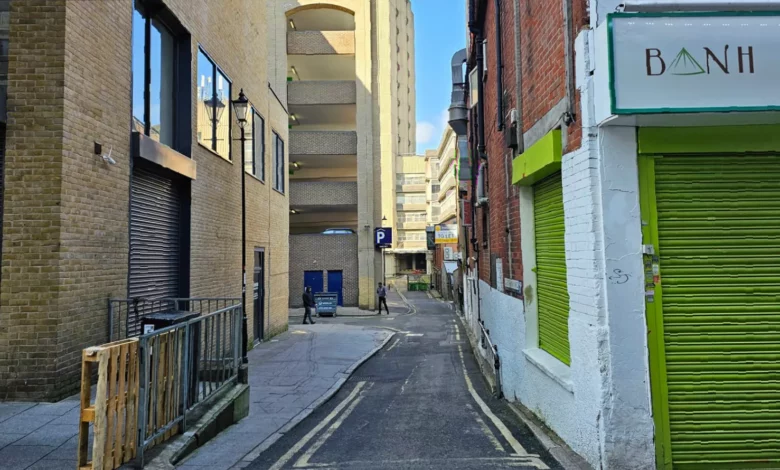
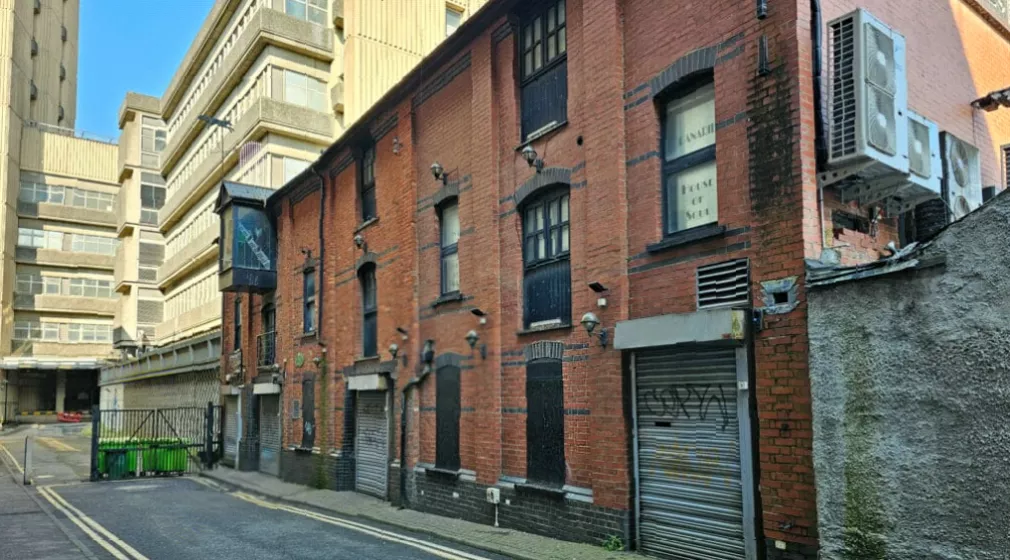
At the end of a narrow Croydon alley, overshadowed by a multi-storey car park, a lone red-brick building stands as the last physical link to the area’s industrial past. This former brewery, now a nightclub, is the sole surviving heritage structure in Overton’s Yard, a quiet passage that once hummed with the production of beer and coal gas.
From Brewery Vats to Nightclub Beats
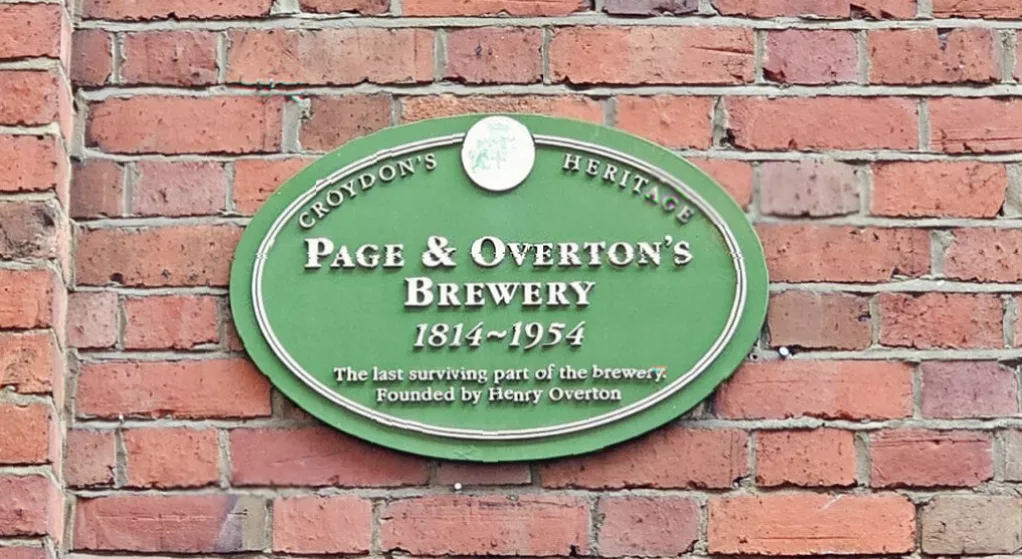
The story of this building begins with two Victorian entrepreneurs. In August 1892, brewers Nathaniel Page and Henry Overton formally merged their businesses—Page’s Shirley Brewery and Overton’s Royal Oak Brewery—to create Page & Overton’s Brewery Ltd. The operation was centred on Overton’s Yard, a space that took its name from the industrious Henry. Overton was a major local figure, owning numerous pubs and beer houses alongside his brewing interests.
His ventures extended next door, where he owned and ran Croydon’s first coal gas works, which opened in 1827. He managed it until 1847, when it was sold to the Croydon Gas Light & Coke Co., a precursor to the Croydon Gas Company. The presence of both industries made the yard, by contemporary accounts, a foul place to walk. The brewery itself was implicated in polluting the nearby River Wandle following floods in 1859.
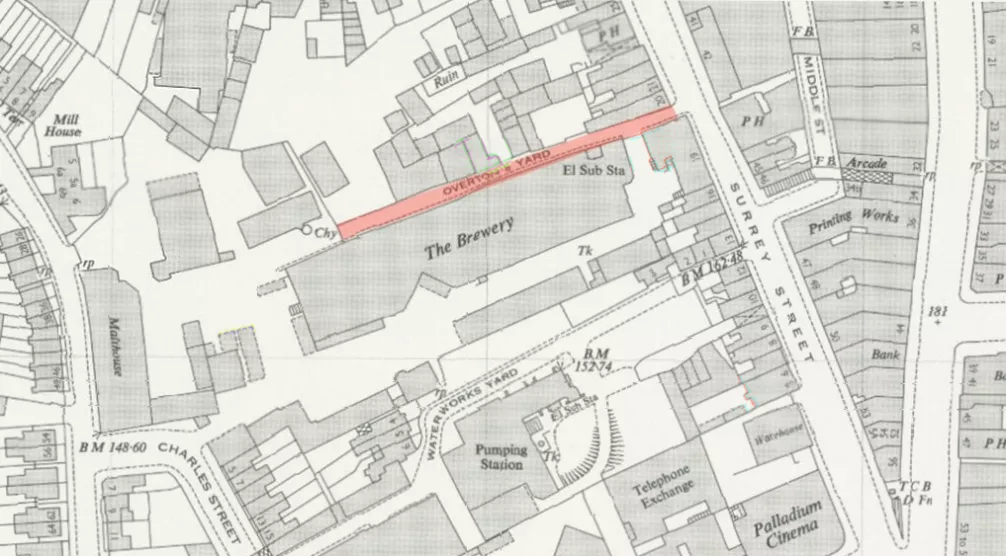
Page & Overton’s was acquired by Hoare & Co. Ltd. in 1929, and then became part of the Charrington empire in 1933, which adopted Hoare’s famous Toby jug logo. Brewing on the site ceased in 1954. The Post Office briefly used the main building for mail sorting before leaving in the early 1970s, leading to the demolition of most of the brewery complex in 1972 to make way for the car park that dominates the alley today.
Yet, one fragment was spared. The surviving building found a new life in 1990 when it was converted into a nightclub, a use that has continued for over three decades. This transition from industrial site to entertainment venue encapsulates a broader shift in Croydon’s Old Town, the historic Saxon settlement area that evolved into a thriving 19th-century market town. Now, that chapter may be closing: the building was recently put up for sale, suggesting it could be on the cusp of another transformation.
The Cold War Fortress Next Door
The rest of the alley’s character is defined by a starkly different kind of architecture. Dominating the view is the brutalist form of Ryland House, a 15-storey tower built between 1975 and 1977. It was originally a telephone exchange for the Post Office, which ran the UK’s network before British Telecom (BT) was formed in 1981.
Ryland House was no ordinary exchange; it served as the control centre for the entire south-east of England. This critical function dictated its fortress-like design, with few visible entrances at ground level. Its strategic importance led to persistent rumours during the Cold War that it was listed as a key target for the Soviet Union in the event of an attack on the UK. The building, constructed on rafts to counteract damp from the low-lying land near the River Wandle, remains a BT office building today, though now housing more computers than telephone switches.
The alley around these two landmarks continues to evolve. Overton’s Yard now includes modern apartments, with properties marketed as first homes or investments, and other commercial spaces in buildings dating from the 1920s. The area is subject to Croydon’s ongoing Old Town Masterplan, adopted in 2014, which aims to preserve heritage while supporting new homes and businesses. As for the old brewery building, its fate awaits a new buyer, poised to write the next line in a history that has spanned brewing, mail, nightlife, and an uncertain future.