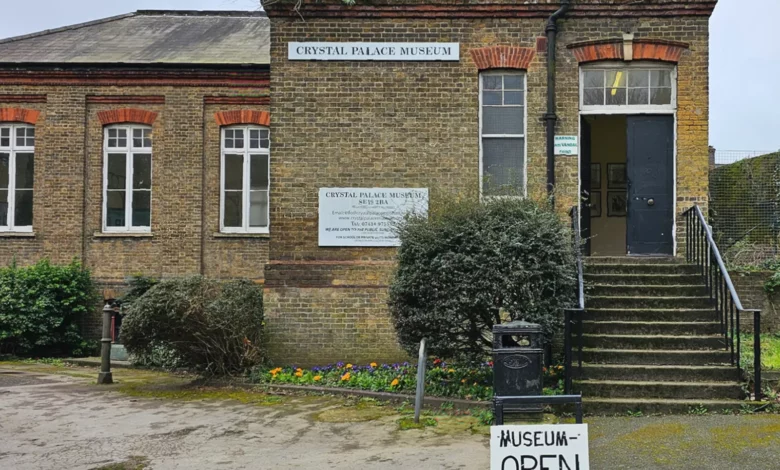
The Crystal Palace Museum will reopen its doors on Saturday 6th June, more than 16 months after a fire forced it to close, the museum has confirmed. The reopening weekend on 6th and 7th June runs from 10am to 4pm, and admission is free, with donations accepted.
Reopening after the fire
The museum, housed in one of the few surviving buildings from the original Crystal Palace complex, was shut following a blaze on 24 January 2025 that caused significant damage. No one was injured. After the reopening weekend, the museum will be open every Friday and Sunday from 10am to 4pm – an improvement on its pre-fire schedule, when it was only open on Sundays.
Visitors should note that the entrance is up a flight of steps and is not suitable for wheelchair access. The museum itself has no refreshment or toilet facilities, but these are available within a short walk. The easiest way to reach the museum is by train to Crystal Palace station: from the station, turn left onto the main road and head uphill; the entrance is signposted about halfway up the hill, next to the rest of the Crystal Palace’s open parkland.
The museum is now under the custodianship of the Crystal Palace Park Trust. The transfer is part of a broader plan to integrate the museum more fully into the Trust’s engagement and learning programmes. The museum was founded in 1990 and run by volunteers before the 2025 fire.
The Crystal Palace’s storied history
The museum’s collection focuses on the history of both the Hyde Park and Sydenham Crystal Palaces. The original Crystal Palace, a magnificent cast-iron and plate-glass structure, was built for the Great Exhibition of 1851 in Hyde Park. It was relocated and expanded at Sydenham Hill in south London between 1852 and 1854, becoming the largest building in the world at the time. The museum building itself was constructed around 1880 as a lecture room for the Crystal Palace Company’s School of Practical Engineering.
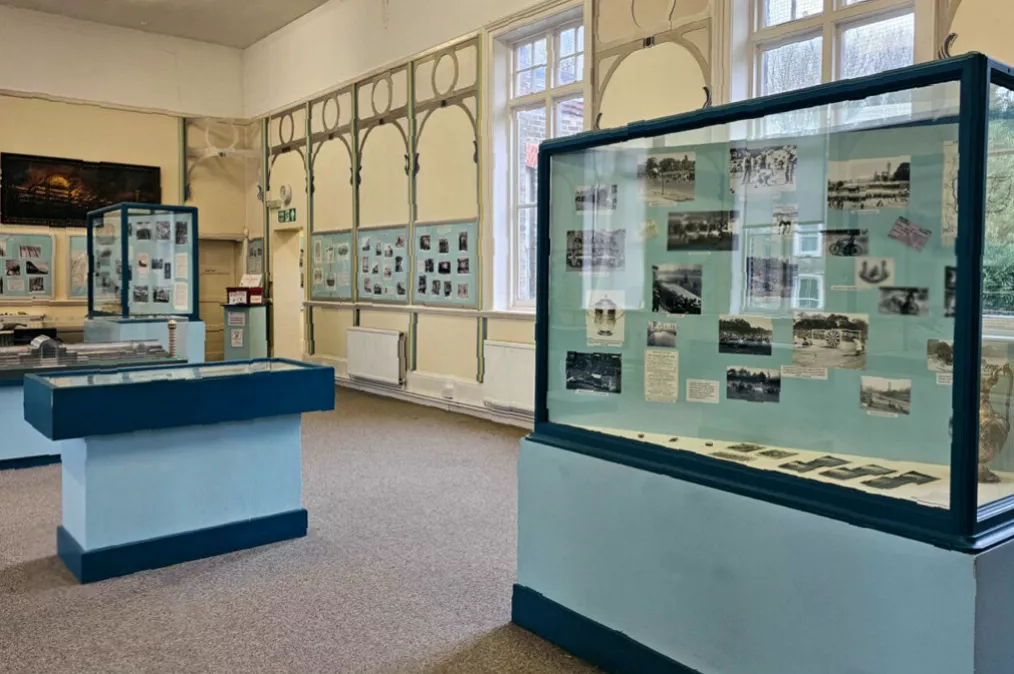
Inside, the displays tell the story of the people and the wares that filled the palace before its destruction. Among the exhibits are small displays of objects recovered from the building before it burnt down, including melted glass, alongside two large models of the structure with their tall water towers. One model shows the original long side arms, which were removed before the rest was engulfed in flames. The museum also holds images, large-scale models, ceramics and other artefacts.
The Crystal Palace was destroyed by a catastrophic fire on the night of 30 November 1936. The cause remains unknown, with speculation at the time ranging from an electrical fault to a discarded cigarette end. The fire spread rapidly through the building’s extensive wooden flooring and fittings, exacerbated by strong winds. It was so intense that it was visible from the English Channel and was described as the biggest London had seen since the Great Fire of 1666. Only the two water towers remained standing; they were later demolished during the Second World War. The palace had experienced fires before: a blaze in December 1866 destroyed the north transept.
Given this history, it is an irony that the museum itself had to close last year because of a fire of its own.
Future plans for the museum and park
Looking ahead, the Crystal Palace Park Trust says it will work to secure funding to improve accessibility through building and infrastructure improvements, and to undertake a redisplay of the unique archive relating to what it describes as an internationally significant heritage site. The museum’s volunteer programme is being integrated into the Trust’s broader volunteer initiatives. Ken Kiss, who led the museum’s board of trustees for 40 years, has been thanked for his dedication.
The regeneration of the wider Crystal Palace Park is already under way, with substantial funding secured from sources including a £5 million grant from the National Lottery Heritage Fund, as well as grants from the Garfield Weston Foundation, the Wolfson Foundation, the London Marathon Foundation and the Pilgrim Trust. A land sale has also raised £21.8 million for the park’s regeneration. The work includes restoring historic structures such as the Italian Terraces and the dinosaur sculptures – the latter created by Benjamin Waterhouse Hawkins in 1852, an early scientific depiction of prehistoric life predating Darwin’s On the Origin of Species. Plans also call for a new visitor centre and a dinosaur-themed playground. The regeneration is aiming for completion by 2027.