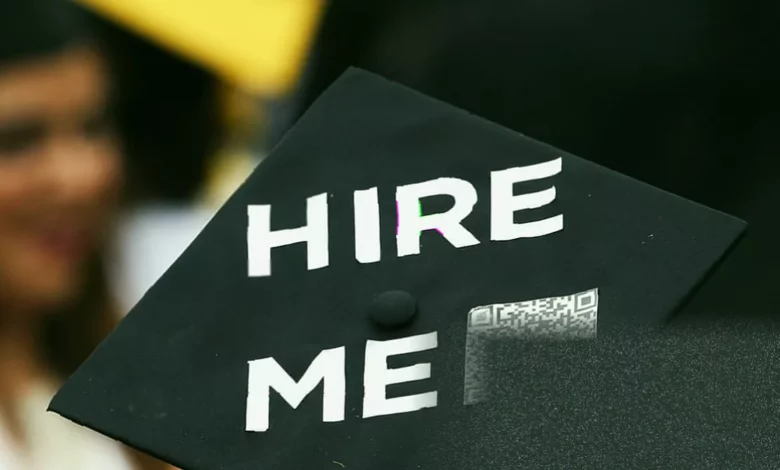
American college graduates are facing the worst entry-level job market since the pandemic, a stark reality underscored by an underemployment rate that has climbed to 42.5%—its highest level since 2020. This picture of difficulty is mirrored and magnified by trends in the United Kingdom, where the landscape for new graduates has tightened dramatically, shaped by technological disruption, economic pressures, and evolving corporate strategies.
A Market of Intense Competition and Silent Rejection
The core challenge is one of sheer volume and shrinking opportunity. In the UK, competition for graduate roles hit an unprecedented peak, with employers receiving an average of 140 applications per position in 2024—a 59% increase from the year before. At the same time, the number of available graduate jobs in the UK has fallen below 10,000 for the first time since tracking began. This imbalance means the search is often protracted, taking an average of six months to secure a role after studies, and is frequently met with what graduates describe as “silent rejection” or ghosting by potential employers.
Gillian Frost, a 22-year-old quantitative economics major at Smith College in Massachusetts set to graduate in May, has applied for over 90 jobs since last September. “I’ve been ghosted by nearly 25% of them and rejected automatically from around 55%,” she said. Despite securing interviews, the lack of communication has been a common, frustrating theme. “I feel helpless,” she added, citing the “unique conflux” of a tight labour market, the emergence of AI, and geopolitical instability.
The struggle extends to those with more life experience. Jeff Kubat, 31, of St Cloud, Minnesota, returned to university for a master’s in accounting after years in the construction industry but has found companies increasingly literal in their requirements and unwilling to train. “It seems like the only roles that are opening are due to people falling out of roles rather than genuine growth,” he noted, a sentiment reflecting data showing UK graduate vacancy growth slowing to just 1.5% in 2024, with forecasts predicting a further 7% reduction in hiring.
The Shifting Goalposts of “Entry-Level”
Compounding the scarcity of roles is a redefinition of what constitutes an entry-level position. Graduates consistently report that jobs advertised as such routinely demand three to five years of professional experience—a bar impossible for those fresh out of education. A 25-year-old New York University graduate in media, culture, and communications said this practice leads to under-qualification anxiety, deterring applications altogether.
This shift is part of a broader trend where some large UK employers in sectors like technology, banking, and consulting have significantly cut graduate hiring targets. While over half of UK employers now say they focus more on skills than degrees alone, the practical effect for many new graduates is a market where accessible rungs on the career ladder have been removed or raised impossibly high.
The Pervasive and Complex Impact of AI
The most transformative—and for many, alarming—factor reshaping the graduate market is the rapid rise of artificial intelligence. Its impact is dual-faceted: it is changing how graduates must apply for jobs, while simultaneously reducing the number of traditional entry-level roles that exist.
On the recruitment side, automated systems are now the first gatekeeper. In the UK, 68% of recruitment professionals use AI to streamline work, and 70% of large businesses use Applicant Tracking Systems (ATS) for initial candidate screening. This has created a new, exhausting layer of strategy for applicants. “For every job… it’s essential to tailor my resume explicitly for that position and include as many keywords as possible. It’s aggravating and exhausting,” said the NYU graduate, who lamented having to pass “a machine’s arbitrary and unknowable tests” before human capability is considered.
This automated gatekeeping contributes to the “apply to everything” culture, fuelling the surge in applications per role. But a more fundamental threat comes from AI’s capability to perform the routine administrative and clerical tasks that were once the province of junior staff. Research indicates that firms highly exposed to AI have reduced total employment, with the effect concentrated in junior positions. Since the launch of advanced AI tools like ChatGPT, UK entry-level job postings have fallen by nearly a third.
Some large organisations are openly downsizing their workforce and redirecting funds from graduate staff into AI investment. The consequence is a market where the very concept of an entry-level role is being reimagined, potentially away from foundational training positions and towards roles demanding creativity, strategy, and higher-value work from day one—a daunting prospect for those without a foothold in the industry.
This technological shift occurs against a difficult economic backdrop. The war in Ukraine and conflict in the Middle East have contributed to inflation and posed a downside risk to labour demand, while in the UK a severe cost of living crisis pressures both household finances and business confidence. For graduates like Anna Waldron, a 22-year-old in Chicago double-majoring in political science and journalism, these structural barriers are palpable. Despite three internships, including work for the US Senate, she finds many jobs never publicly advertised, hired internally or kept within company networks, leaving those without connections at a significant disadvantage.
While graduate starting salaries in the UK have risen to a median of £34,000, with expectations higher still, and a significant graduate earnings premium endures over a lifetime, these long-term prospects offer little immediate solace. The path from graduation to that first career-oriented job has become a gruelling gauntlet of competition, automation, and elevated expectations—a defining challenge for this generation of entrants into the workforce.