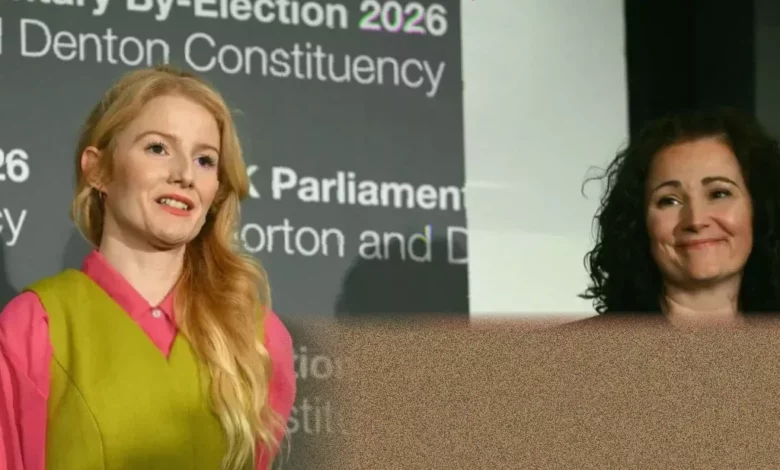
The political landscape of northern England has been fundamentally altered after the Green Party pulled off a seismic victory in the Gorton and Denton by-election, overturning a Labour majority that had stood for nearly a century and sending shockwaves through Westminster.
Hannah Spencer, a local plumber and Trafford councillor who gained fame as “Hannah the plumber,” was elected with 14,980 votes, securing 40.69% of the share and becoming the Green Party’s first ever Member of Parliament in northern England. The result, which political analyst John Curtice likened to the historic 1962 Orpington by-election, saw Labour pushed into a humiliating third place with 9,364 votes, behind Reform UK’s 10,578.
The by-election was triggered by the resignation of the former Labour MP, Andrew Gwynne, who stepped down due to “significant ill health” after having been suspended from the party for offensive comments made in a private WhatsApp group. The constituency, formed from 2023 boundary changes that merged parts of Manchester Gorton and Denton and Reddish, is a diverse mix of traditional working-class neighbourhoods, students, areas of high deprivation, and a significant Muslim population estimated at 28-29%.
Campaign of Contrasts
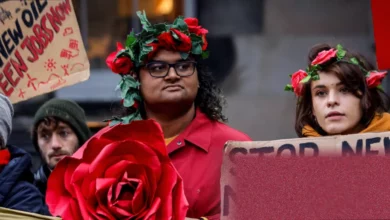
Ms. Spencer’s campaign, which mobilised thousands of volunteers from across the UK, emphasised community solidarity and a message of “hope and change.” She highlighted the cost of living crisis and called for public ownership of utilities, while also speaking out against racism and Islamophobia. Her campaign utilised Urdu in some literature to appeal to Muslim voters—a tactic that drew criticism—and she addressed misogynistic coverage she faced on the trail.
Labour’s candidate, local councillor Angeliki Stogia, was selected after Greater Manchester Mayor Andy Burnham was blocked from standing by the party’s National Executive Committee, a decision seen by some as an attempt to prevent a future leadership challenge to Keir Starmer and one that alienated local activists. The Labour campaign focused on “unity and hope” against the “toxic division” of Reform UK, warning voters that backing the Greens risked letting Reform in.
That warning underscored the intense tactical voting debate that defined the race. Some tactical voting organisations endorsed the Green Party as best placed to defeat Reform. Labour was accused by Green leader Zack Polanski of fabricating a “tactical voting website” to mislead voters, part of what he called a “shameful, dirty campaign” where Labour spread lies about Green policies.
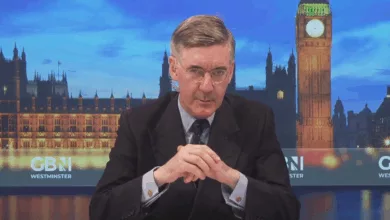
Reform UK’s candidate, academic and GB News presenter Matt Goodwin, ran a divisive campaign focused on making the election a referendum on Starmer’s leadership, despite scrutiny over his past controversial comments on women, Muslims, and British citizenship. Allegations of illegal “family voting” were raised by an election observer group, which reported a high incidence in 68% of observed polling stations, prompting calls for investigations from all three main parties. The acting returning officer stated no issues were reported during polling hours, though Reform’s Nigel Farage later linked the concerns to “predominantly Muslim areas.”
A Stunning Reversal of Fortunes
According to detailed results from the Press Association, the Green Party achieved a record-breaking 26.43% swing from Labour, more than tripling their vote share from the 2024 general election when Labour held the seat with a majority of 13,413. Turnout was 36,814, or 47.50%, a slight increase from the previous contest.
In her victory speech, Ms. Spencer said the win came from people desperate for change. “People in their thousands told me… that what we are sick of is being let down and looked down on, and we are sick of our hard work making other people rich,” she stated. She directly challenged her Reform rival, saying, “I can’t and won’t accept this victory tonight, without calling out politicians and divisive figures who constantly scapegoat and blame our communities. My Muslim friends and neighbours are just like me – human.”
Ms. Spencer, who mentioned her trade, added, “To many customers, I’m sorry, but I might have to cancel the work. Because I’m heading to parliament, and when I get there, I will make space for everyone doing jobs like mine.”
Political Reckoning and Reaction
Green Party leader Zack Polanski claimed the result showed Labour had “lost some of its old voters for good” and that “voting Green is the way to defeat Reform.” He said many ex-Labour voters told canvassers they would never return to a party they accused of supporting genocide, fuelling racism, and failing to deliver on its promises.
Labour party chair Anna Turley, quoted by PA Media, called the result “clearly disappointing,” noting that byelections are normally difficult for the party of government. “We know the majority of voters here did not want the poisonous politics of Nigel Farage and Reform,” she said, pledging that Labour would move forward with a “relentless focus” on delivering renewal.
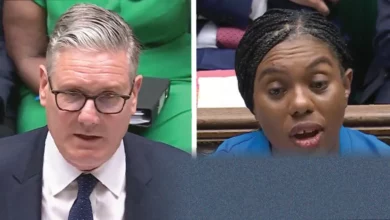
Labour’s deputy leader, Lucy Powell, said Keir Starmer was “resolute in his job” and the right person for it, acknowledging the party needed to make its politics clearer.
The Conservative Party issued a stinging response, with a spokesperson claiming, “Keir Starmer has killed the Labour party,” and arguing the government now lacked any mandate for its policies on benefits, taxes, borders, and the Armed Forces.
Nigel Farage responded on social media, calling the election “a victory for sectarian voting and cheating,” and adding, “Roll on the elections on May 7th. It will be goodbye Starmer and goodbye to the Tory party.”
Broader Implications for British Politics
The victory marks the Green Party’s first ever win in a Westminster by-election, establishes them as a serious political force with five MPs, and positions them as a credible anti-Reform alternative. For Labour, it deepens concerns among MPs that the party is haemorrhaging voters on the left in an effort to thwart Reform’s rise, with a Labour councillor in the constituency warning, “Gaza has not been forgotten or forgiven. Lots of us are now worried for our seats.”
The outcome underscores the increasingly fragmented nature of British politics, highlighting the significant influence of Muslim voters whose allegiances are shifting based on issues like the conflict in Gaza, which the Green Party actively capitalised on. It will likely force a re-evaluation of Labour’s electoral strategy ahead of the local elections and the next general election, as the party grapples with challenges from both the left and the right in what was once one of its safest seats.