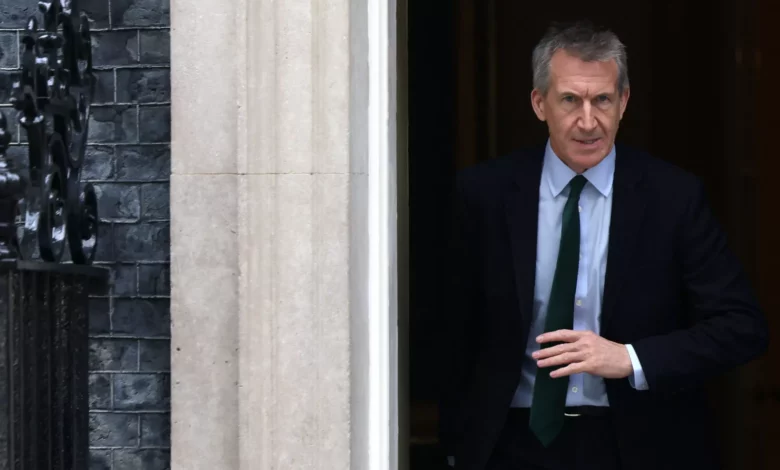
Dan Jarvis vowed in his first hours as defence secretary to “keep marching forward” and secure the resources the armed forces need, as he took command of a department in turmoil following the resignation of his predecessor over a funding shortfall that critics say leaves the country less safe.
Mr Jarvis, a former Army officer who served in Kosovo, Northern Ireland, Iraq and Afghanistan, was appointed to the cabinet role on Thursday after John Healey quit, accusing the prime minister of delegating insufficient funds for the long-delayed Defence Investment Plan (DIP). The new defence secretary acknowledged the “challenge” of “constrained fiscal resources” but said it is his job to ensure the military gets “precisely what they need”.
The funding shortfall and its impact on readiness
The core of the dispute is a yawning gap between what the Ministry of Defence says is necessary for national security and what the Treasury is prepared to release. Mr Healey’s resignation letter, sent to the prime minister on Thursday, stated that the DIP funding “falls well short of what is required”. He warned that accepting the settlement would force him to make decisions that “reduce the readiness of our Forces and increase the risk to personnel on operations, and could make the country less safe”.
Mr Healey’s specific complaint centred on the timing of the money. He argued that the “imperative to speed up readiness to fight is in the first two years” but that extra support was “backloaded” and would not arrive until after 2030. He had sought a settlement of £18 billion for the plan. The Treasury, under Chancellor Rachel Reeves, was reportedly only willing to offer £12 billion — with just £10 billion of that being new money. Broader estimates of the total funding gap over the next four years have been put at £28 billion.
The DIP was intended to translate the 2025 Strategic Defence Review into a 10-year funding programme, but its publication has been held up for months because of the stand-off between the MoD and the Treasury. It was initially expected last year, then targeted for release before the NATO summit in Turkey on 7 July. The prime minister has committed to raising defence spending to 2.5% of GDP by 2027 and 3% by 2035, but Mr Healey stated that the agreed plan would only see spending rise to 2.68% of GDP by 2030, after already reaching 2.6% the previous year — a marginal increase that critics say is far too slow given the scale of global threats.
Al Carns, who resigned as armed forces minister alongside Mr Healey, was even more damning. He described the DIP as “not fit for purpose”, “neither transformative enough nor sufficiently funded”, and argued it was “written for a calmer world”. A former Royal Marines colonel, Mr Carns suggested the plan focused on “how to fight the last war rather than the next one”, lacking innovation and lessons from Ukraine, particularly around uncrewed systems and automation.
Resignations and political fallout
Mr Healey’s departure was swiftly followed by that of Al Carns and of Pamela Nash MP, Mr Healey’s parliamentary private secretary. Ms Nash said the government’s gridlock over safeguarding the nation was “undermining public trust”. The resignations represent a serious blow to Sir Keir Starmer’s government, with some Labour colleagues calling for the prime minister to step down.
Mr Jarvis, who previously served as Minister of State for Security and Minister of State at the Cabinet Office, inherits a department facing acute pressure. He told The Telegraph that those who serve in the armed forces “look to us to provide that leadership and to work across government to make sure that they’ve got the resources in place that they need”.
Wider political offers and the welfare debate
The defence funding crisis has reignited the “guns vs. butter” debate, with political figures from both main parties suggesting that welfare cuts are the only way to free up the necessary cash. Conservative leader Kemi Badenoch wrote to the prime minister and several Labour figures — including Andy Burnham, Wes Streeting, Al Carns, Catherine West, Darren Jones and Ed Miliband — urging them to cut benefit spending to increase defence funding. “We cannot have our military inadequately funded at a time of growing threats,” she said. “The funding must also not be backloaded when the pressures are urgent.” She noted that Sir Tony Blair, the longest-serving Labour prime minister, had urged the party to accept such an approach. Ms Badenoch repeated her offer to meet the prime minister to discuss defence funding, and has previously argued that the two-child benefit cap should be reinstated as a source of revenue. She said the previous Conservative government considered increasing defence spending but found it unfeasible because of high welfare costs.
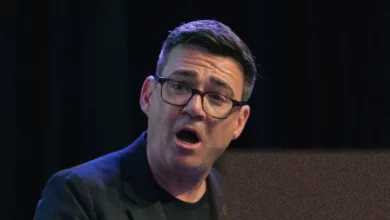
Andy Burnham, the Mayor of Greater Manchester and a potential Labour leadership challenger, has also said he would cut welfare spending to increase defence funding. Ahead of a tough by-election in Makerfield next week, Mr Burnham laid out a 10-year approach focused on moving people out of welfare and into work, describing a “more preventative state that makes the right investments to support people into work”. He told The Times he would not be “squeamish” about the trade-off. Ms Badenoch, in her letter, made clear that she has made “several offers to work with you in the national interest to reduce benefit spending so we can invest more in our defence”, and reiterated that plea in the light of the warnings from Mr Healey and Mr Carns.