Prince William has visited the site of a new Cornish development inspired by the rejuvenated market halls that have become dining destinations in towns such as Altrincham, Greater Manchester, as the Duchy of Cornwall pushes ahead with what it hopes will become a model for the future of Britain’s high streets.
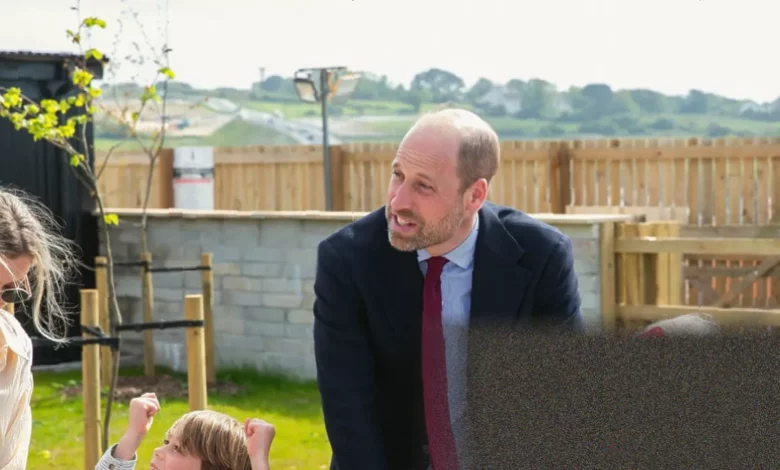
The Prince of Wales, who this week also unveiled plans to sell 20% of the Duchy’s £1bn property portfolio and invest £500m in community and nature projects, toured the Nansledan suburb on the edge of Newquay. His father, King Charles, first broke ground on the project in 2014. The prince’s visit came the morning after Aston Villa’s Europa League win, which he later joked had left him with a hangover. He was shown the construction site where a new Tesco and a market hall are taking shape, alongside the wildflower meadows and homes that have already been built.
Nansledan – meaning “broad valley” in Cornish – is a 540-acre development designed as a walkable, mixed-use community. The Duchy of Cornwall, which manages the estate and provides the Duke of Cornwall with a private income of more than £20m a year, says the aim is to create a place where employment and social connection are built into every decision. Sam Kirkness, the Duchy’s executive director of development, described the vision as “a walkable, mixed use, healthy community where they are able to support jobs as well as homes”.
A high street built for small businesses
At the heart of the project is a deliberate attempt to recreate the kind of vibrant, independent-led retail environment that has drawn crowds to modern market halls. The Duchy says it intends to keep ownership of at least half of the high street so it can support businesses through good times and bad, helping them expand or move into smaller spaces if necessary to maintain what Kirkness called a “thriving commercial and social” core. The market hall itself is being built as a space where small independent startups can thrive alongside more affordable services such as the Tesco store, which is currently under construction on a concrete pad.
Already more than 40 businesses are operating within Nansledan. In the Sabzi deli, a buzzing community vibe brings together young mothers, families, older dog walkers and well-heeled couples at lunchtime. Upstairs, a web agency called Solve Media employs 20 people in an office that feels like an outpost of east London, with trendy mid-century furniture and banks of computer screens. Next door there is a clothing boutique, a jewellery store, and up the road a pottery studio that gives classes, as well as more coffee shops. The development is cut through with parks and has set aside 300 acres of green space, including a wildflower meadow.
Housing is designed to be genuinely mixed. Of the 3,700 to 4,400 homes planned – around 900 houses and flats have already been built, housing more than 2,000 people – 30% are designated as affordable for local people on Cornwall Council’s Homechoice Housing Register. These include shared ownership and more than 100 low-cost rentals, and are integrated throughout the development, indistinguishable from market-rate homes. Holiday lets are banned, a measure intended to ensure the community remains occupied year-round rather than emptied by seasonal tourism. In partnership with the Cornish charity St Petrocs, the Duchy has also announced plans for 24 homes to provide temporary accommodation for people experiencing homelessness, an initiative that Prince William has been involved with since its conception.
The design draws on traditional Cornish and art deco architecture, and the Duchy has emphasised sustainability: low-carbon construction using local materials such as Cornish granite and slate, ground-source and air-source heat pumps, solar panels, and bee bricks made from recycled china clay waste. The development aims to be net-zero carbon by 2030 and is targeting a 24% increase in habitat units and a 48% increase in hedgerow units for biodiversity net gain, well above government requirements.
Divided opinions in the shadow of Nansledan
For all the careful planning, local opinion is split on whether Nansledan represents a hopeful new blueprint for the government’s new towns programme or a parasitic neighbour that is sucking investment away from Newquay’s struggling traditional high street.
Vicky Mills, who works in the haberdashery and gift shop Spalls Of Newquay, said she does not believe the older town will suffer from competition. She questioned whether Nansledan had anything to steal shoppers away. “Who’s going to go to Nansledan to buy a diamond or a bit of expensive jewellery?” she asked. However, she argued that Newquay needs more variety – less focus on charity and coffee shops, and more affordable clothing and footwear. After the closure of M&Co, only Peacocks survives in that vein, under pressure from online retailers and household spending constraints. “I’ve been here 17 years and I have seen massive decline from when I started,” she said.
Her colleague, Sharon, was vehemently opposed, accusing the development of funnelling investment away from the older town. “They need to invest in Newquay,” she said. “If I wasn’t working here would I bother coming in? Probably not.” She blamed the local authority. “They are killing it.” Ollie Bicknell, owner of the OJA garage nearby, agreed there was “a lack of things to entice people into town. All they are getting is charity shops. They should be spending money in town not out of town.” One Newquay resident said she felt sad about the development spreading into the green spaces many came to Cornwall to enjoy, adding: “The royals, they are making millions out there.”
Others acknowledged that Newquay’s high street has its own problems. Empty shops, the closure of Poundland and The Original Factory Shop, the cost and availability of parking, and public transport were all cited. The town council has attempted to revive the centre with more greenery, paving, improved lighting and an events space, using funding from the UK Shared Prosperity Fund. Cycle lanes, hire bikes and a summer night bus have been introduced. There has also been a deliberate shift away from the rowdy stag-and-hen reputation of the 1990s, with bars and clubs replaced by cafes – but local people say this has left the town with little to do in the evening, as many cafes close by 4pm.
Poncho, a busker who has been living rough in Cornwall for five years and now sleeps in a tent on Newquay’s high street, summed up life in a seasonal coastal town. “It’s tough. With some perseverance you can get work in the summer but if you are on minimum wage here it is a hard town to survive in and when winter hits, unless you have got support, it turns into a ghost town.” He said Newquay should aim for “more of an old-school holiday feel, with more restaurants for families with friendly waiting staff rather than order on your Apple phone”. Jackie Wright, a holidaymaker, liked the high street, calling it “vibrant, unlike most”. She said Newquay should try to retain some of its “old worldy” charm.
One shopkeeper in Nansledan said they had chosen to base themselves there because many of Newquay’s shops are old and in need of refurbishment, and they had concerns about night-time security and the hectic summer atmosphere of the older high street.
The Duchy’s long-term plan for Nansledan, which is expected to reach completion around 2045, is underpinned by a wider financial strategy. Last month, Prince William announced the sale of about 20% of the Duchy’s property holdings over the next decade, with proceeds of more than £500m earmarked for affordable housing, renewable energy and environmental projects. The Duchy insists the development is not just a commercial enterprise but “about a living, working community where employment and social connection are at the very fabric of all of our decisions”.