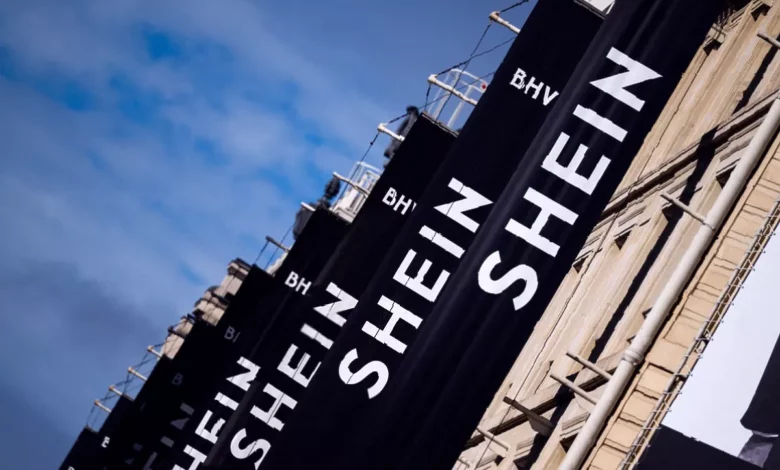
Shein, the Chinese fast-fashion colossus, is acquiring Everlane, the US retailer that built its reputation on a promise of “radical transparency” and ethically sourced clothing. The deal was confirmed to Everlane employees by chief executive Alfred Chang, though no purchase price has been disclosed and Shein declined to comment. Reports valuing the transaction at around $100m (£79m) underscore how far the once-celebrated direct-to-consumer brand has fallen from its peak valuation of $550–600m in 2020.
The fall of a transparency pioneer
Everlane was founded in 2011 by Michael Preysman and Jesse Farmer with a mission to upend the fashion industry by publicising audits of its pay, working conditions and environmental impact. For years the brand attracted a loyal, conscious consumer base willing to pay a premium for basics made with accountability. But the company’s own record soon began to fray. According to media reports, Everlane has faced controversies over the treatment of its workers and allegations of racism, and critics have long pointed out that its “transparency” did not extend to paying a living wage or addressing its use of animal products.
By 2020 the model was under pressure. Private-equity firm L Catterton – backed by LVMH and Bernard Arnault’s family holding company – began acquiring significant stakes in Everlane that September and became the majority owner in 2024. Preysman stepped down as chief executive in 2022. The leadership baton passed to Alfred Chang, a former executive at Fear of God and PacSun, who took the helm in 2024.
Under Chang’s watch the financial picture darkened fast. Sales had slumped and debt had mounted to approximately $90m, according to analyses of the company’s position. “Like many brands, we’ve faced increasing pressure in a rapidly changing retail landscape,” Chang wrote in the letter to employees announcing the Shein acquisition. He described the deal as providing “stability and resources to make a larger impact, without compromising on the quality and standards that make Everlane, Everlane.” Chang stressed that Everlane would remain an independent brand, that he would stay on as CEO and that the leadership team would continue in place. But the numbers told a bleaker story.
Neil Saunders, managing director of GlobalData Retail, said the company needed new ownership to survive. “Sales are down and debt has mounted,” he noted. L Catterton and Chang had been seeking outside investors to help manage the debt; the Shein offer, approved by the private-equity owner, provided a lifeline. Common shareholders, however, are not expected to receive any payout from the sale. The acquisition also crystallises the broader struggles of direct-to-consumer fashion brands in an era of rising customer-acquisition costs and fierce competition from the likes of Amazon, Uniqlo and Quince, which offer similar basics at lower prices or with faster delivery.
An unlikely marriage and its consequences
The pairing of Everlane and Shein strikes many analysts as an “odd couple” and a “collision of narratives”. Shein is widely criticised for its environmental record – it has been called the world’s biggest fast-fashion polluter – and for labour practices that reportedly include workers putting in up to 75 hours a week for as little as £0.03 per item, violating Chinese labour laws. The company has also faced allegations of forced labour in relation to the Xinjiang region, accusations of copyright infringement, selling items with swastikas, and using “dark patterns” to manipulate customers into purchases.
Saunders argued that Shein is unlikely to completely retool Everlane’s supply network, but even the association with the Shein group may prove “somewhat jarring for core Everlane customers”. The news of the deal has generated significant backlash among those customers, who view it as a reversal of the brand’s ethical commitments. “Ultimately, the deal likely saves Everlane,” Saunders said. “But that salvation comes at a price.”
For Shein, the purchase is part of a deliberate strategy to diversify beyond its core ultra-fast-fashion business – into home goods, beauty and toys – and to acquire Western intellectual property and market presence. Everlane offers a “cleaner” US brand identity and an “elevated basics” positioning that could be beneficial for Shein’s future IPO aspirations. The acquisition also helps Shein establish a foothold outside the fast-fashion category at a moment when growth inside that sector has become more difficult, in part because of tariffs and other trade restrictions imposed under the Trump administration on cheap clothing imports.
The deal crystallises a broader tension in fashion: the tension between price and principles. Sustainability alone, experts note, is no longer enough to guarantee sales in a retail landscape where consumers increasingly gravitate toward the lowest cost – a dynamic that has helped Shein become the dominant player in its sector while brands such as Everlane struggle to defend their margins. Everlane’s journey from a poster child for ethical consumption to a subsidiary of the world’s most criticised fast-fashion empire is a stark reminder of the economics that now govern the industry.