A young tree, cultivated from the seeds of the illegally felled Sycamore Gap tree, has taken root at one of the most symbolic starting points of Hadrian’s Wall, turning a page in a story that began with an act of vandalism and continues with a message of resilience.
The sapling was planted on Friday, 7 March 2026, at Segedunum Roman Fort in Wallsend, North Tyneside, the wall’s eastern terminus. This specific planting is a distinct addition to the National Trust’s official legacy project. It was gifted to North Tyneside, with the Friends of Segedunum playing a key role, recognising the area’s deep connection to both the Roman monument and the modern icon that grew beside it.
From Film Fame to Criminal Damage
The original Sycamore Gap tree was far more than just a plant. Planted in the late 19th century by preservationist John Clayton, the non-native sycamore grew for over a century in a dramatic glacial dip alongside the 73-mile UNESCO World Heritage Site. Its striking silhouette earned it the title of England Tree of the Year in 2016 and made it one of the most photographed trees in the UK.
It gained international fame as “The Robin Hood Tree” after featuring in the 1991 film Robin Hood: Prince of Thieves, and appeared in other productions like the TV series Vera. For many, it held profound personal significance as a site for marriage proposals, weddings, and the scattering of ashes.
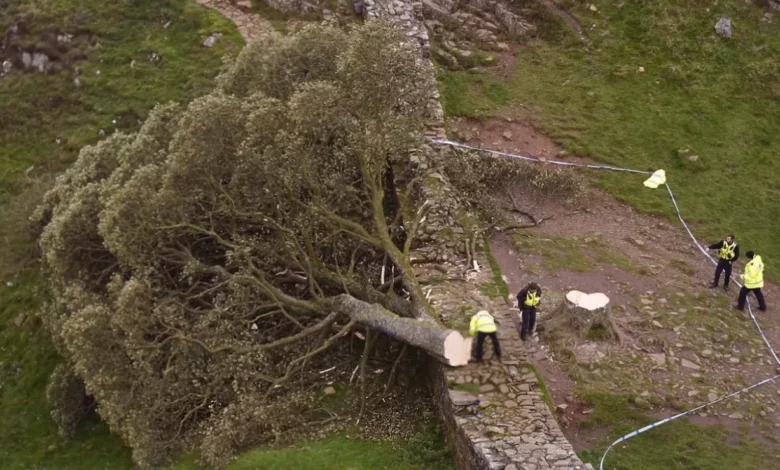
That legacy was violently interrupted in the early hours of 28 September 2023. During Storm Agnes, the tree was deliberately cut down with a chainsaw. Northumbria Police described it as an act of vandalism, noting the precision of the felling and a spray-painted line on the trunk. The 15-metre (49-foot) tree fell in under three minutes, causing damage to Hadrian’s Wall itself.
Following an investigation, Daniel Graham, 39, and Adam Carruthers, 32, were found guilty of criminal damage. At their sentencing on 15 July 2025, where they received prison terms of four years and three months, the court heard the motive appeared to be “sheer bravado” and a desire for “some sort of thrill.” The prosecution valued the damage to the tree at £622,191 and the damage to the ancient wall at £1,144.
Roots of Renewal
In the aftermath, the National Trust, which co-managed the site, launched its “Trees of Hope” initiative. Seeds from the original tree were cultivated into 49 saplings—one for each foot of the tree’s height—and distributed to individuals and community groups across the UK after nearly 500 applications. The first of these was presented to King Charles III in May 2024 for planting in Windsor Great Park.
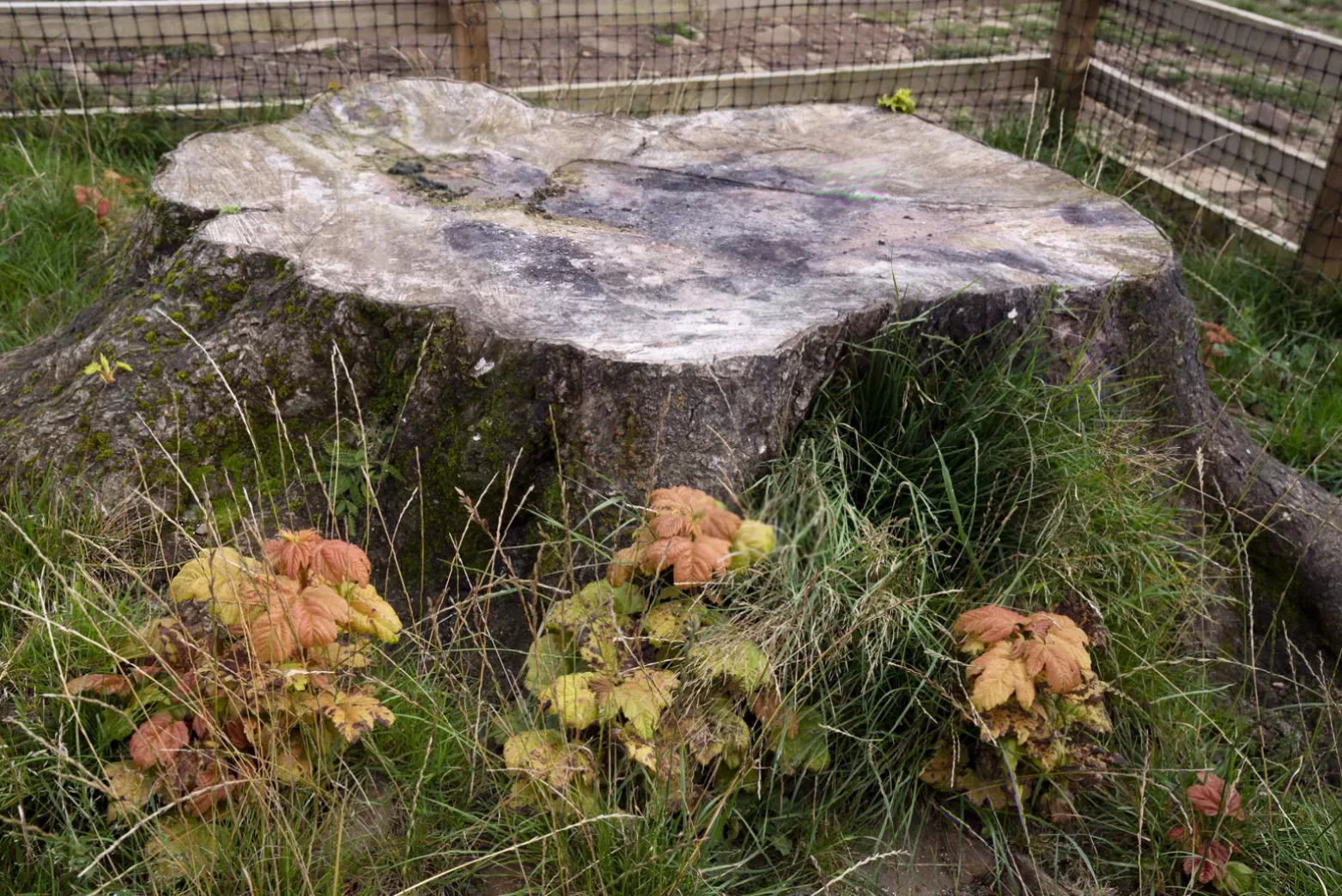
The sapling now at Segedunum is separate from these 49. It stands as a direct link between the region’s ancient Roman heritage and its recently lost natural landmark. Notably, the original stump at Sycamore Gap has shown signs of life, sprouting new shoots from its roots.

Local leaders have framed the new planting as a powerful symbol. Mary Glindon, MP for Newcastle upon Tyne East and Wallsend, said: “This is such a famous World Heritage Site and to have one of the saplings to plant here isn’t just something for the people of Wallsend, it’s going to be here for visitors to see in years to come.”
North Tyneside Mayor Karen Clark stated: “Planting this Sycamore Gap sapling at Segedunum links one of the region’s most famous natural landmarks with the site’s Roman heritage. It’s an important and meaningful moment for the museum and the community, ensuring that both the story of Hadrian’s Wall and the iconic Sycamore Gap tree continue to inspire people for generations to come.”
Bill Griffiths, vice chairman of the Hadrian’s Wall management board, added: “Segedunum Roman Fort at Wallsend marks the beginning or end of many visitors’ journeys along the eastern end of Hadrian’s Wall, and the planting of the sapling is profoundly fitting. We hope this young tree will grow as a powerful symbol of renewal, hope and continuity for our historic site and for all who visit.”